Location: Home >> Detail
J Sustain Res. 2026;8(2):e260039. https://doi.org/10.20900/jsr20260039
 ,
Laura Ismukhanova 1,3,*, ,
Christian Opp 4 ,
Zhonghua Zhao 5,6 ,
María-Elena Rodrigo-Clavero 7 ,
Javier Rodrigo-Ilarri 7 ,
Yermek Umarov 8 ,
Temirbek Chodurayev 9 ,
Inom Normatov 10 ,
Anvar Sherov 11 ,
Botakoz Sultanbekova 3 ,
Aidar Zhumalipov 2 ,
Kundyz Nakysbekova 3 ,
Askhat Zhadi 1,2 ,
Arai Sultanayeva 2
,
Laura Ismukhanova 1,3,*, ,
Christian Opp 4 ,
Zhonghua Zhao 5,6 ,
María-Elena Rodrigo-Clavero 7 ,
Javier Rodrigo-Ilarri 7 ,
Yermek Umarov 8 ,
Temirbek Chodurayev 9 ,
Inom Normatov 10 ,
Anvar Sherov 11 ,
Botakoz Sultanbekova 3 ,
Aidar Zhumalipov 2 ,
Kundyz Nakysbekova 3 ,
Askhat Zhadi 1,2 ,
Arai Sultanayeva 2
1 JSC Institute of Geography and Water Security, Almaty 050010, Kazakhstan
2 Department of Meteorology and Hydrology, Al-Farabi Kazakh National University, Almaty 050010, Kazakhstan
3 Department of UNESCO Chair on Sustainable Development, Al-Farabi Kazakh National University, Almaty 050010, Kazakhstan
4 Faculty of Geography, Philipps-Universität Marburg, D-35032 Marburg, Germany
5 State Key Laboratory of Lake and Watershed Science for Water Security, Nanjing Institute of Geography and Limnology, Chinese Academy of Sciences, Nanjing 211135, China
6 University of Chinese Academy of Sciences, Nanjing 211135, China
7 Instituto de Ingeniería del Agua y del Medio Ambiente (IIAMA), Universitat Politècnica de València, 46022 Valencia, Spain
8 Department of Ecology and Subsoil Use, JSC Qarmet, Temirtau 101407, Kazakhstan
9 Department of Geography and Ecology, Institute of Natural Sciences, Kyrgyz State University, Arabaev, Bishkek 720026, Kyrgyzstan
10 Department Meteorology and Climatology, Tajik National University, Dushanbe 734025, Tajikistan
11 Department of Operation of Irrigation and Melioration Systems, Institute of Irrigation and Agricultural Mechanization Engineers, Tashkent 100000, Uzbekistan
* Correspondence: Laura Ismukhanova
A first-time comparative scientific literature analysis of monitoring and assessing the surface water quality in five Central Asian (CA) countries (Kazakhstan, Kyrgyzstan, Tajikistan, Turkmenistan, and Uzbekistan) was carried out. The methodological approaches, surface water quality parameter, pollution indices and state acts in CA countries were compared, and benchmarked against international frameworks and practices (e.g., those of the EU, USA, and Canada). The methodological framework of the study based on a comparative analytical review of regulatory and methodological documents, official reports of national hydrometeorological services, and international guidelines. The comparison was conducted using standardized criteria (assessment logic, classification systems, quality indices, parameter coverage, monitoring organization, Quality Assurance/Quality Control (QA/QC) procedures, and transboundary comparability). The analysis reveals the emergence of three distinct developmental trajectories of water quality assessment methodologies in the region: a modernization pathway (Kazakhstan), a transitional/hybrid pathway (Uzbekistan), and an approach preserving the post-Soviet methodological architecture (Kyrgyzstan, Tajikistan, and Turkmenistan). A phased harmonization plan is proposed, taking into account the natural background characteristics of arid basins and prioritizing the comparability of transboundary water quality data. Significant discrepancies between approaches are highlighted. These range from differences in the calculation of composite water pollution indices (e.g., the Water Pollution Index—WPI) and biological indices (e.g., saprobe indices), to inconsistencies in sampling frequency and methods, as well as in the classification of pollution categories. The analysis reveals that the disparity in methodologies hinders the comparability of water quality data even for transboundary rivers, leading to potential disputes between states. The study substantiates the need for harmonizing of water monitoring and assessment approaches, drawing on successful international standards (e.g., the EU Water Framework Directive, US EPA methods, and the CCME WQI). A concept for a unified surface water quality assessment system tailored to the Central Asian region, which accounts for local environmental, sanitary, and political-legal conditions, is proposed.
Managing surface water quality is a critical challenge even for Central Asian (CA) countries, where limited water resources are shared between states and sustain ecosystems, agriculture, energy production, and drinking water supply [1,2]. The Central Asian states inherited a common foundation of water monitoring regulations and approaches from their Soviet period. However, over the past three decades, each state has developed its own standards and methodologies, which often vary in assessment parameters and criteria, thereby hindering cross-country data comparability [3]. For instance, all five CA republics traditionally employed a classification of water bodies based on their designated purpose—for drinking, domestic, and fishery water use (with the latter category further subdivided into highest, first, and second classes depending on the value of the fish species) [4–8]. Simultaneously, an integral Water Pollution Index (WPI) was used, for assigning a water body to one of seven quality classes—ranging from “very clean” to “extremely polluted” waters. Collectively, the CA national standards encompassed hundreds of quality parameters and were based on rigid Maximum Permissible Concentration (MPC) norms, often oriented towards the most sensitive (i.e., fishery-related) criteria. Although this approach historically ensured stringent water purity requirements, it faces challenges related to practical implementation and international data comparability under modern conditions [9–11]. Most of the main rivers in Central Asia are transboundary rivers (Figure 1) [12]. These transboundary systems often exhibit significant spatial variability in water quality, contributing to potential conflicts between upstream and downstream countries [13]. For example, Syr Darya, Amu Darya, Ile (Ili), Ertis (Irtysh), Zarafshan (Zerafshan), Vakhsh, Shu (Chu), Talas, among others have river basins shared by two, three, or more states. Although UNECE and World Bank reports highlight the wide spread of transboundary rivers and lakes in Central Asia. They contain nearly no comparable water surface quality parameters and indices. But comparable water surface quality parameters and indices are an urgent need for cooperation between the countries to prevent transboundary pollution and harmful effects on river water quality, fishes, and at least human health. In the abovementioned references comparable water surface quality parameters and indices were identified as knowledge lacks.
International water resource monitoring practices have evolved towards integrated approaches. With the adoption of the Water Framework Directive (WFD, 2000/60/EC), the European Union introduced a water status assessment tool, based on a five-tier system (classes: high, good, moderate, poor, and bad status) [14]. This system is aimed at achieving at least “good” status for all water bodies, assessed comprehensively based on biological, hydro-morphological, and physico-chemical indicators, including specific pollutants [3,15]. According to this European classification, if the assessment of one of the key indicators (e.g., a biodiversity index or the concentration of a priority pollutant) fails to meet the threshold for good status, the overall status of the water body cannot be classified as good [10,16–20]. The United States lacks a single, federal-level integral water quality index for all water bodies. Instead, a system of water quality standards based on designated uses (e.g., public water supply, protection of fish and wildlife, recreation) is implemented under the US Clean Water Act. Concurrently, individual states develop specific criteria (e.g., substance concentrations, dissolved oxygen requirements, pH ranges) to protect these designated uses [21]. Water bodies are assessed for compliance with these standards; those failing to meet them are placed on lists of “impaired” waters, necessitating the development of Total Maximum Daily Load (TMDL) plans for improvement. Concurrently, to summarize complex datasets, North America employs an integral Water Quality Index (WQI) [21,22]. For instance, the Canadian Council of Ministers of the Environment (CCME) developed a WQI that aggregates various parameters into a single score ranging from 0 to 100, classifying water quality as “excellent,” “good,” “fair,” “marginal,” or “poor” [23]. Similarly, various US regions utilize such indices; for example, the Washington State Department of Ecology employs a Freshwater WQI, where a score > 80 corresponds to high water quality, 70–79 to satisfactory, and below 69 to poor quality [24]. These water indices are based on the frequency of exceedance of established thresholds for a set of key parameters (e.g., temperature, dissolved oxygen, turbidity, nutrients), thereby facilitating the comparison of different rivers and the communication of data to the public [25,26]. Furthermore, the United Nations Environment Programme (UNEP), within the context of monitoring the Sustainable Development Goals (SDGs), proposes a unified approach for assessing the “proportion of water bodies with good ambient water quality” (Indicator 6.3.2). This approach is based on five core parameters: dissolved oxygen, salinity (expressed as total dissolved solids, TDS), nitrogen and phosphorus compound concentrations, and acidity (pH) [27]. For a water body to be recognized as “good,” it is proposed that measured levels be compared against target values established for ecosystem protection and human health [27,28]. Water quality issues in CA are also closely linked to public health risks, including waterborne diseases and limited access to safe drinking water [29]. Such a global indicator does not replace detailed national standards but provides a baseline for comparable reporting between countries.
Due to the identified lacks regarding comparable water surface quality parameters and indices in the Central Asian states, this study focuses on the following objectives:
(1)
(2)
(3)
(4)
The scientific novelty of the work lies in the systematization of up-to-date (2015–2025) data on the region’s water standards and their comparative analysis against advanced international water quality management standards. The practical significance is associated with the development of recommendations for standardizing monitoring and assessment criteria, which is crucial for establishing a common information basis for transboundary water cooperation between Central Asian (CA) states within the Aral Sea Basin and for preventing conflict situations between the states.
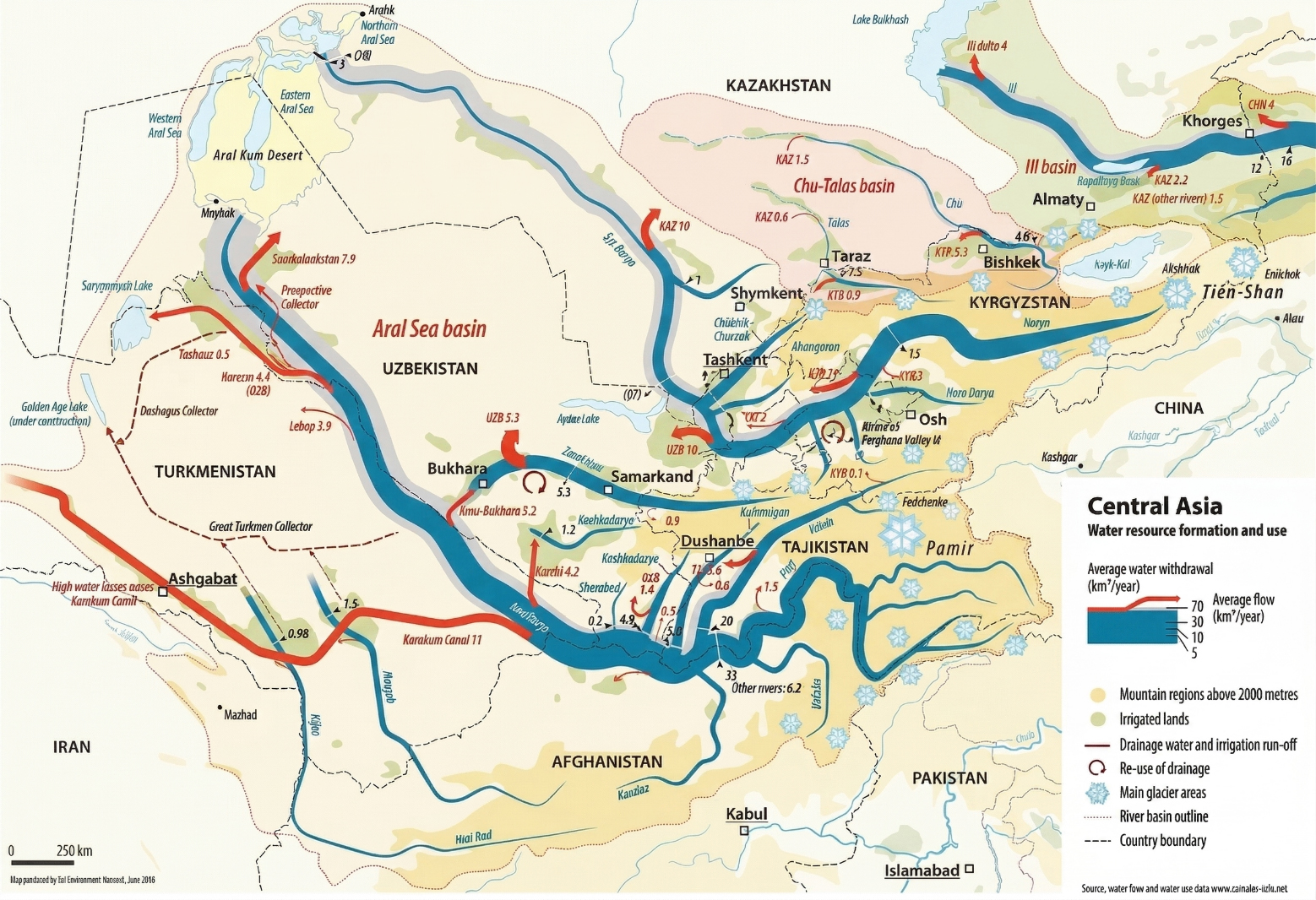 Figure 1. Major transboundary river basins of Central Asia and the upstream-downstream configuration: Amu Darya, Syr Darya, Ile River, Yertys River, Zarafshan River, Shu-Talas Rivers [10].
This study is a comparative analytical review of regulatory, methodological documents, and monitoring data. The source materials comprised official legislative acts and standards of the CA states (Water Codes, Environmental Codes, Sanitary Rules, and departmental guidelines of hydrometeorological services), reports and publications from national hydrometeorological services (e.g., Kazhydromet, Kyrgyzhydromet), as well as international reports and guidelines. The latter include, specifically, UNECE documents on water quality in Central Asia [5,28], materials from the United Nations Environment Programme (UNEP) and the World Bank, the EU Water Framework Directive (WFD) and its associated guidance documents, regulations from the United States Environmental Protection Agency (US EPA), and Canadian water quality guidelines (CCME) [27]. Data on water quality indices and classification systems from the past 5–10 years, primarily published after 2015, were used to compare national methodologies and to capture recent reforms and trends. The analysis was conducted according to the following key aspects: (1) Classification of water bodies and quality standards (number of classes, target indicators for different types of water use, lists of controlled substances and their MPCs); (2) Integrated water quality indices (calculation formulas and sets of parameters for the Water Pollution Index (WPI), saprobe indices, and other aggregated assessments); (3) Monitoring organization (density of the observation network, sampling frequency, laboratory analysis methods, quality assurance/quality control (QA/QC) procedures); (4) Transboundary data exchange (existence of joint monitoring stations, data-sharing agreements, instances of discrepant assessments at borders); (5) Examples of applying international standards in the region (pilot projects, adaptation of the EU WFD or other approaches). The used method has a limitation because of the heterogeneity in data availability across the countries. For instance, significantly fewer open data are published for Turkmenistan compared to Kazakhstan or Kyrgyzstan. Nevertheless, the incorporation of expert reviews and regional project reports (e.g., the 2012 UNECE report on water quality in Central Asia) [27] helped to compensate for these gaps.
Although regulatory documents and official reports constitute the necessary foundation for comparing national systems, the interpretation of the results is further supported by peer-reviewed publications on water quality monitoring and index-based assessment methodologies. A semi-quantitative indicator—the Methodological Divergence Index (MDI), was applied in this study for the transfer from an inventory-based description to a structured analytical interpretation of the structural differences among national systems. The MDI was developed as a tool for the comparative assessment of the degree of structural divergence between national water quality assessment architectures and the proposed harmonized framework model. The index is not intended to evaluate the effectiveness of environmental management and does not perform a ranking function. Rather, it reflects exclusively the degree of methodological divergence among systems in terms of key structural parameters.
The assessment was conducted based on six analytical dimensions:
1.
2.
3.
4.
5.
6.
Each dimension was assessed on a three-point scale ranging scale from 0 to 2:
0—highest degree of compliance with the proposed harmonized framework model;
1—partial compliance;
2—substantial structural divergence.
The aggregate index value was used to interpret the level of divergence by categories (moderate, high, very high).
Considering the heterogeneity of publicly available data and differences in the transparency of national sources across countries, an interval-based assessment approach was applied for the reflection of the methodological uncertainty and for the risk reduction of overestimating structural differences. The MDI calculation is of analytical and interpretative nature. It is based on a comparative examination of regulatory documents, institutional monitoring practices and published reports of national hydrometeorological services.
The limitations of the study are related to the heterogeneity of publicly available data across countries and to potential discrepancies between the formal regulatory framework and actual monitoring practice (sampling frequency, parameter coverage, laboratory capacity). To mitigate this constraint, regional reviews and materials from international projects were incorporated, enabling a comparison of national systems at the level of guiding principles and institutional architecture rather than solely at the level of quantitative indicators.
Historically, the Central Asian countries inherited a similar regulatory framework from the USSR, known as the system of Surface Water Quality Standards (SWQS). This standard system established stringent water quality requirements for various types of water use and covered an extensive list of pollutants. Till today, all five CA states utilize the foundations of the SWQS in this or that form, albeit with individual updates [27]. Notably, the region continues to rely on Maximum Permissible Concentrations (MPCs), developed during the Soviet period, primarily the MPCs for fishery water bodies, as the most stringent purity standards [3,4]. In the CA countries water quality is assessed by comparing measured substance concentrations with these standards. If a concentration exceeds the MPC, the water is considered polluted for that specific parameter. The composite Water Pollution Index (WPI) is calculated based on a set of priority substances as a summary indicator—typically as the sum or average of the ratios of concentrations to their respective MPCs (accounting for the several most exceeded substances) [3,4]. A classification system for the Water Pollution Index (WPI) was established in the USSR and subsequently adopted across the post-Soviet space: a value of ≤0.3 corresponds to “very clean” water (Class I), 0.31–1.0 to “clean” (II), 1.1–2.5 to “moderately polluted” (III), 2.51–4.0 to “polluted” (IV), 4.1–6.0 to “dirty” (V), 6.1–10.0 to “very dirty” (VI), and >10 to “extremely dirty” (Class VII) [4]. This seven-class WPI scheme is referenced as being used in all CA countries, although its practical application in national reporting may involve certain variations. For instance, Kazakhstan and Uzbekistan have recently begun implementing alternative classifications in parallel (see below); consequently, the WPI does not always feature in their official reports. In contrast, the WPI remains a key integral indicator in Tajikistan and Kyrgyzstan. However, a more detailed examination reveals that the national methodologies have begun to diverge significantly. The number of hydrological monitoring stations along the rivers have been reduced after the state independency in all Central Asian countries; for instance, in Turkmenistan, it has nearly halved. Due to this lack of data, it is difficult to compare water quality values over long-term periods.
An overview about some differences between the Central Asian countries regarding water quality monitoring and assessment systems shows Table 1.
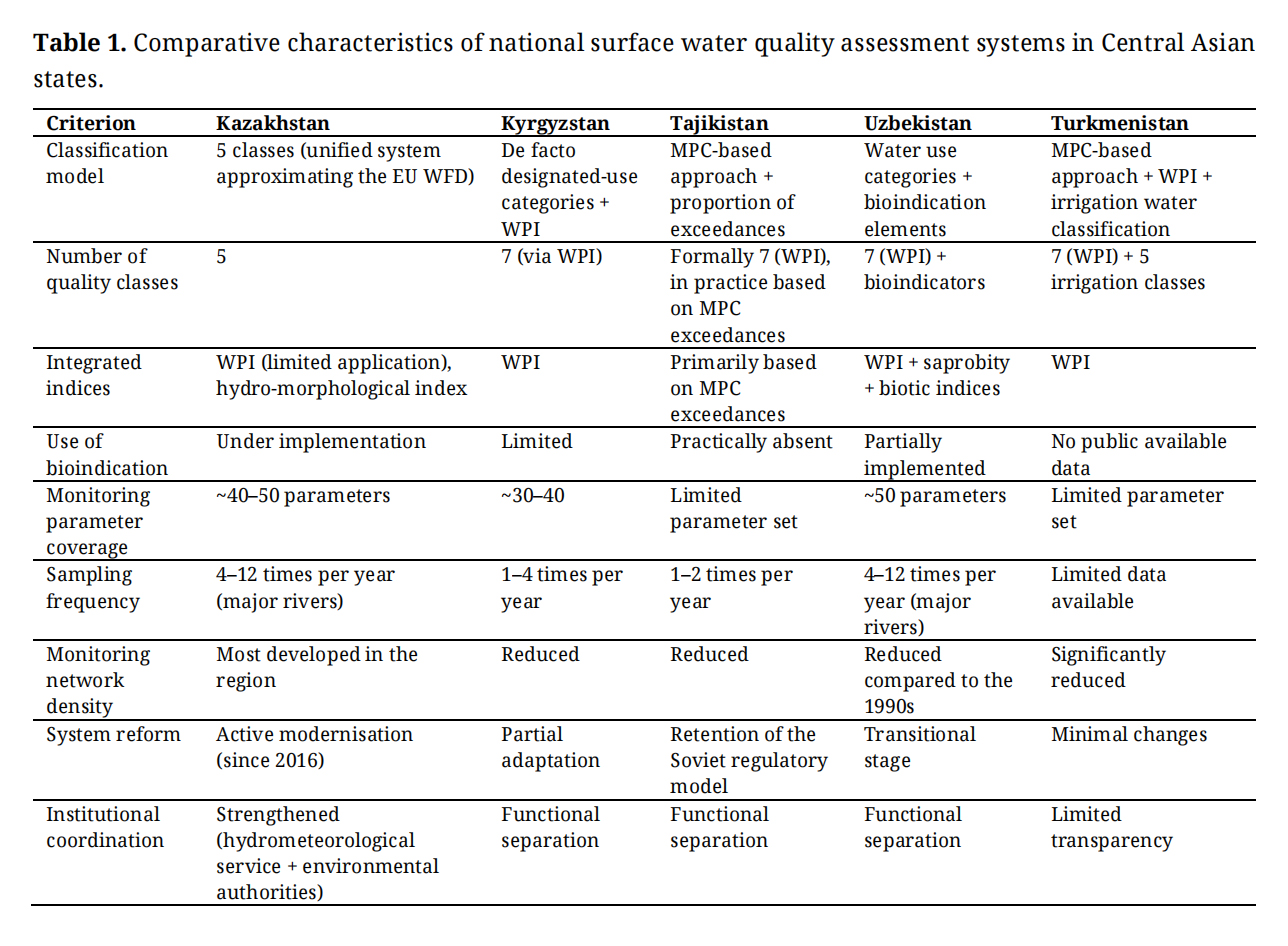 Table 1. Comparative characteristics of national surface water quality assessment systems in Central Asian states.
Kazakhstan introduced a new Unified Water Quality Classification System in 2016 (Order of the Water Resources Committee No. 151, dated 09.11.2016) [30]. This Unified System is largely aligned with EU principles and comprises five quality classes (1st-best, 5th-worst), replacing the previous seven-class system. It is based on the assessment of 42 physico-chemical indicators and one integral hydro-morphological index [31]. Numerical value ranges for the standards are established for each class and each parameter. For instance, for Class 1 waters in Kazakhstan, the ammonium nitrogen standard is ≤0.5 mg/L, for Class 3 it is up to 1.0 mg/L, and for Class 5 it is up to 2.6 mg/L. Similarly, the requirements for pH are 6.5–8.5 for the higher classes, with a permissible range expansion to 6.0–9.0 for classes 4–5. This gradation resembles the approach of the EU WFD, where targets are set in terms of deviation from baseline conditions and acceptability for ecosystems [14]. Kazakhstan’s system also incorporates a hydro-morphological index, which accounts for changes in the river channel, flow regime, and other physical characteristics of the water body, such as channel regulation and the presence of dams, reflecting a holistic approach to environmental quality [32]. Furthermore, Kazakhstan plans to enhance the system with bioindication: the introduction of an integral saprobe index for classification based on the state of hydrobiocenoses is under consideration. The proposal involves using six gradations based on the saprobe index—from “very clean” to “very polluted” waters—assessing the water body’s ability to sustain specific groups of indicator organisms [3].
Thus, Kazakhstan is progressing towards a multifactorial assessment system (similar to the EU’s “ecological status”), although the full transition is not yet complete.
Kyrgyzstan’s approach for assessing water qualityKyrgyzstan has followed a different trajectory. In 2009, the Government of the Kyrgyz Republic (KR) officially abolished the Soviet-era classification of water bodies based on three water use categories (domestic drinking, cultural and domestic, and fishery) [8]. However, a new classification was not introduced in a timely manner to replace it. As of the mid-2010s, Kyrgyzstan de facto continued to apply many of the previous standards. In 2016, the Rules for the Protection of Surface Waters were updated (Government Decree No. 128, dated 14.03.2016) [31], which once again delineated the three main water use purposes—domestic drinking, cultural and domestic, and fishery—along with corresponding water quality requirements [6]. Specifically, for fishery water bodies of the highest category (supporting the most valuable fish species), the most stringent standards are established. For instance, the concentration of suspended solids must not increase by more than 0.25 mg/L, compared to the natural background. Oil products are not permitted to form a surface film, and dissolved oxygen must not fall below 6 mg/L, among other requirements. For water bodies designated for domestic drinking purposes, several standards are somewhat relaxed; for example, an increase in suspended solids up to 0.75 mg/L is permitted. Thus, Kyrgyzstan has de jure moved away from categorizing waters by their designated purpose, but de facto continues to be guided by a similar scheme through the establishment of quality standards for different types of water use. In the realm of integral assessments, the Kyrgyz Hydrometeorological Service (Kyrgyzhydromet) applies USSR/Russian Federation methodologies. For instance, monitoring network planning principles are based on guidelines such as RD 52.24.309-92 and GOST 17.1.3.07-82, indicating a preservation of continuity in sampling procedures and the list of controlled substances. The Water Pollution Index (WPI) continues to be used in reports, although it is not officially enshrined in national standards.
Tajikistan’s approach for assessing water qualityTajikistan relies on old regulations in a similar manner: surface water quality is assessed according to guidelines RD 52.08.23-84 and RD 52.24.309-92 by comparing measured values to the MPCs for fishery waters. Tajikhydromet Survey monitors a limited set of core parameters for which MPCs have been established. An example fragment of such a list includes: suspended solids—not more than 0.75 mg/L above the natural background, transparency ≥ 23 cm, hardness ≤ 7 meq/L, dissolved oxygen ≥ 4 mg/L in summer and ≥ 6 mg/L in winter, etc., which corresponds to Soviet-era standards for water bodies designated for fishery and drinking purposes. The WPI and saprobe indices are rarely mentioned in open Tajik reports; presumably, the primary assessment is based on MPC exceedances and the proportion of samples that fail to meet the standards.
Uzbekistan’s approach for assessing water qualityUntil recently, Uzbekistan also adhered to Soviet standards and classifications. On average, surface waters are assessed by Uzbekistan authorities as “clean or moderately polluted”, with water quality being high in mountainous areas and moderate to heavily polluted in the lower reaches of transboundary rivers (due to agricultural discharge, among other factors). Uzbekistan has maintained the classification of waters by use purposes (drinking, domestic, fishery) and, accordingly, primarily monitors compliance with MPCs. However, there have been attempts to introduce bioindication: it has been reported that Uzbekistan employs three integral hydrobiological indices—a saprobe index (similar to Kazakhstan’s one), a biotic periphyton index, and a modified biotic index. The cited indices account the state of biocenoses (periphyton—communities growing on substrates, macrozoobenthos, etc.) and allow the assessment of overall ecological well-being. However, the simultaneous use of different classifiers—chemical (based on MPCs), the integral WPI, and several biological ones—complicates regulatory procedures and creates ambiguity. In recent years, the State Committee for Ecology of Uzbekistan has initiated efforts to revise the list of fishery water bodies and is likely updating the relevant quality standards. Research on adapting bioindication methods (directly or through the experience of Russia and Kazakhstan) is also underway.
Turkmenistan’s approach for assessing water qualityTurkmenistan is the least transparent state in terms of data availability; however, it is known that “GOST” (state) standards and regulations from the Soviet period remain in force there as well. For instance, a specific classification of water for irrigation according to GOST 17.1.2.03-90 is used—dividing water into five classes based on its impact on soil fertility and crop yield. This is highly relevant, considering the extensive irrigation in Turkmenistan, where the desert climate necessitates strict salinity control. Regarding water quality for ecosystems, Turkmenistan likely adheres to the same MPCs for fishery water bodies (the country practices commercial fish farming in certain water bodies and also considers transboundary rivers like the Amu Darya, Tedzhen, and Murgab). Similar to other CA countries, Turkmenistan officially states it applies the WPI classification. However, the reduction of the monitoring network has significantly affected the country: according to UNECE data, the number of hydrological stations on rivers in Turkmenistan has nearly halved, which impedes comprehensive control [4].
Comparison between the CountriesThus, the key differences between the national methodologies can be summarized as follows. First, regarding classification and indices Kazakhstan has transitioned to a 5-class system, while the other countries largely continue to use the old seven-class scheme (via the WPI or based on water use categories). Second, regarding quality benchmarks: all countries still rely on Soviet-era MPCs, but Kazakhstan is revising its standards, and Uzbekistan is selecting priority parameters for control. Third, regarding bioindicators: Kazakhstan and Uzbekistan are introducing saprobe and biotic indices, whereas biomonitoring is less developed in the other states. Fourth, regarding parameter coverage: the Soviet system required monitoring hundreds of potential substances (in the USSR, there were over 1200 substances with established water MPCs), but nowadays the countries actually monitor only a small fraction of this list—typically no more than 30–50 substances, primarily major ions, nutrients, oxygen, certain metals, and organic compounds. For instance, in Uzbekistan, the number of monitored parameters has been reduced to approximately 52 [5]. Fifth, regarding monitoring frequency and network: during the Soviet period, sampling was frequent (monthly, and at some stations, weekly). Currently, due to financial and technical constraints, observations at many sites are conducted only 1–2 times per year, which is characteristic, for example, for remote areas in Kyrgyzstan and Tajikistan. The situation in Kazakhstan is somewhat better; there, with state support, Kazhydromet maintains a denser monitoring network and conducts observations more frequently (4–12 times per year on major rivers). In Uzbekistan, according to data from approximately 2020, 120 water quality stations remained (down from 134 in the 1990s), and the number of regular sampling sites decreased from 134 to 84. Turkmenistan has only a few dozen stations (around 32) across its entire territory [4]. This reduction in the network leads to data gaps; for instance, it diminishes the ability to promptly detect pollution or track seasonal fluctuations in water quality. Sixth, regarding laboratory capabilities: Many laboratories of the hydrometeorological services are outdated, and the analytical capacity is weakening—not all countries can measure trace concentrations of modern pollutants (pesticides, oil products, heavy metals) due to a lack of equipment and reagents. In Kazakhstan, heightened attention to quality under environmental legislation has led to a broader approach: besides Kazhydromet, monitoring is also conducted by departments of ecology equipped with their own laboratories, which increases data coverage. In other countries, a division of responsibilities also exists: Hydrometeorological Services handle background monitoring, sanitary services are responsible for drinking water, and environmental inspectorates control wastewater; however, coordination among them leaves much to be desired.
MDI Analysis ResultsThe MDI reflects the degree of structural divergence of national assessment architectures relative to a harmonized framework. In this study, a harmonized framework is defined as a standardized approach to water quality monitoring and assessment that ensures comparability across countries through consistent classification systems, priority solutes, and monitoring practices. The index does not constitute a performance ranking and is not intended to evaluate the effectiveness of environmental governance; rather, it is interpreted exclusively as an indicator of structural distance in water quality assessment methodologies (Table 2).
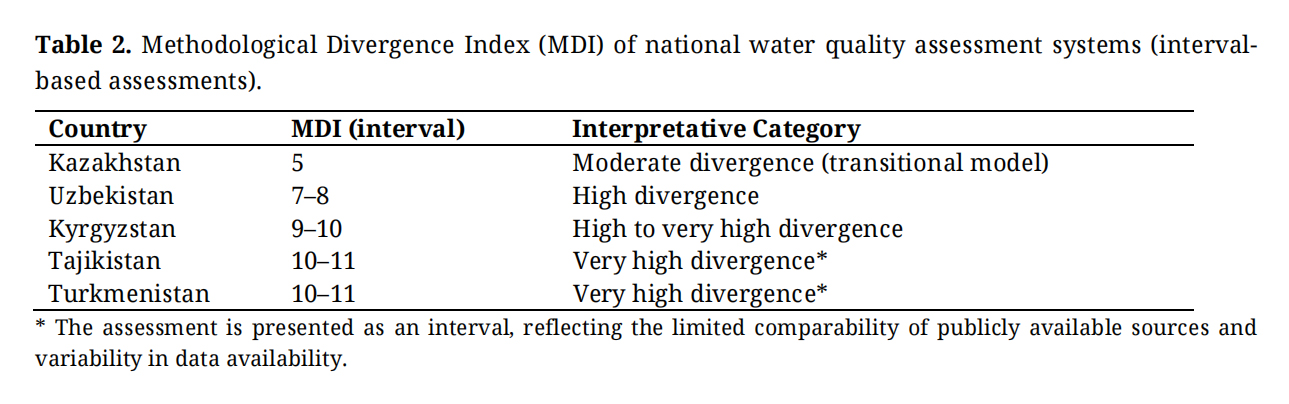 Table 2. Methodological Divergence Index (MDI) of national water quality assessment systems (interval-based assessments).
Based on the MDI results, the countries can be grouped according to their developmental trajectories: Kazakhstan demonstrates moderate divergence associated with transitional modernization; Uzbekistan exhibits high divergence as a hybrid system; Kyrgyzstan, Tajikistan, and Turkmenistan display high to very high divergence, reflecting the persistence of a post-Soviet assessment architecture combined with limited reform dynamics (Figure 2).
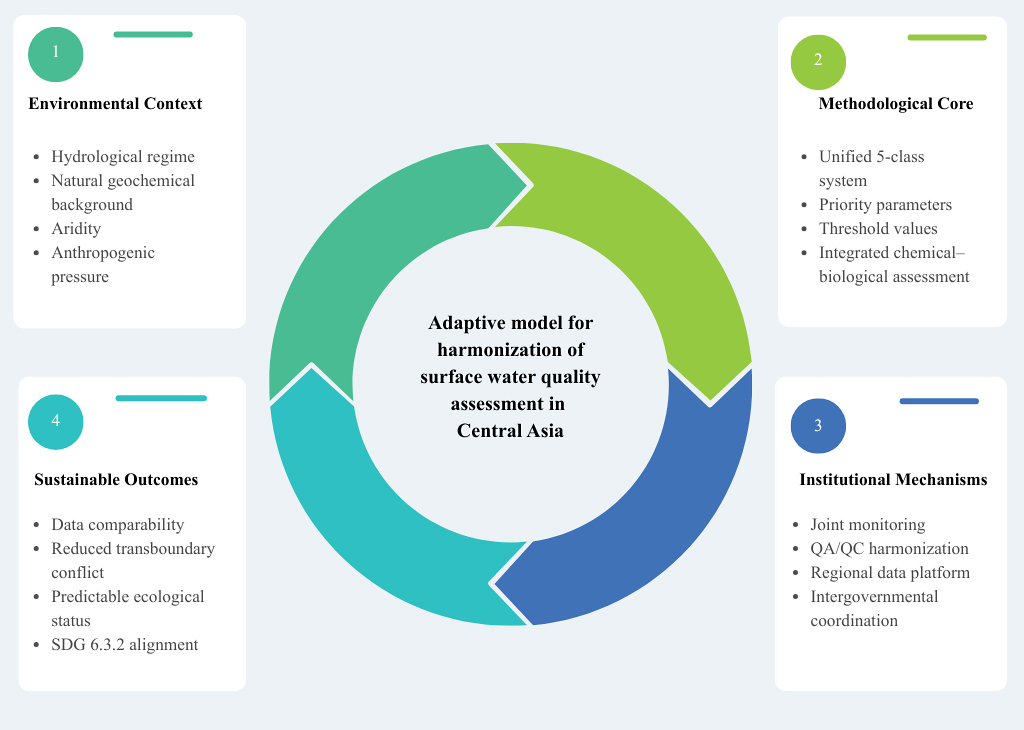 Figure 2. Profile of structural divergence in national water quality assessment systems: priority areas for harmonization.
The divergence profile indicates that the most pronounced regional discrepancies are associated with the assessment logic and classification architecture, as well as with the integration of bioindicators; by contrast, parameter coverage and reform dynamics demonstrate comparatively lower levels of variability. The key findings of MDI analysis can be summarized as follows:
1.
2.
3.
4.
5.
Figure 2 presents the divergence profile across key analytical domains relative to a harmonized monitoring framework, illustrating priority areas where national systems differ and where alignment is required.
Data Comparability Problems and Transboundary Monitoring IssuesFigure 1 illustrates why methodological fragmentation is particularly critical: countries simultaneously act as both water suppliers and recipients, and non-comparable assessment approaches hinder the formulation of shared environmental objectives, early warning mechanisms, and coordinated pollution reduction measures [33–35]. The above-described methodological differences directly impact the harmonization of water quality assessments for shared transboundary watercourses. When monitoring is conducted separately, situations arise where, for example, water at the outlet of one country is formally classified into a different quality category than the same water at the inlet of a neighboring country, simply due to differing assessment criteria. For instance, the stricter fishery standard applied in the upstream countries (Kyrgyzstan, Tajikistan) may record an exceedance for a certain metal, whereas the same pollution level in the lower reaches (Uzbekistan, Kazakhstan) might be assessed differently if a different set of parameters is used or sampling is less frequent. Furthermore, the lack of a unified index hampers communication: Country A may report, for example, “moderately polluted” water with a WPI = 2, while Country B does not use the WPI, instead operating with the number of exceeded MPCs or its own categories (e.g., “conditionally clean” when 90% of the standards are met). Consequently, comparing such information becomes invalid. On many transboundary rivers, monitoring is currently conducted by only one party—typically the upstream state—while the downstream country lacks sufficient data on the water entering its territory from neighbors. For example, on rivers where joint monitoring stations are absent, each side measures water quality near its own border, but the equipment and methodologies employed may differ. The lack of regular data exchange was compounded by the fact that, until recent years, there was no intergovernmental agreement obliging Central Asian countries to share water quality information (unlike the exchange of water quantity data, which is conducted to some extent under the 1992 agreements and IFAS).
The problem is exacerbated in cases of accidental pollution or chronic discharge: without unified criteria, it is difficult to prove that one party is causing harm to another. A historical example is the pollution of the Amu Darya River by an aluminum plant in Tajikistan (TALCO): in the 2000s, the Uzbek side expressed concern about fluoride and heavy metal concentrations downstream, but there were no agreed-upon research data, making it difficult to formalize the claims. Similarly, on the Syr Darya River, the use of agricultural chemicals and the discharge of drainage waters in Kazakhstan raised concerns in Uzbekistan. However, differences in monitoring approaches hindered a joint assessment of the ecosystem damage [36]. In 2009–2012, the UNECE specifically implemented a project aimed at establishing common principles for measurement, data exchange, and joint assessment on the transboundary waters of Central Asia. Within its framework, trial joint sampling campaigns were conducted on several rivers, along with a comparative analysis of laboratory results from the different countries. These pilot measures revealed methodological discrepancies: for instance, different sample preservation methods led to variations in measured dissolved oxygen content. The use of non-certified equipment could introduce systematic error. Furthermore, it became apparent that a significant portion of the requirements set by national standards are not met in practice—due to a lack of funding and weak logistical capacity. For example, although the standards prescribe monitoring a multitude of substances, in reality, all countries track a limited set of parameters at a reduced number of sites, which hinders the forecasting of water quality trends across the entire region.
The lack of harmonization is itself perceived as a problem by the CA countries. In expert surveys and meetings under the auspices of UNECE, representatives of CA states have repeatedly emphasized that the discrepancy in classifications and standards impedes the development of common environmental goals and hinders the conclusion of water quality agreements [6]. This is particularly evident on transboundary rivers, where countries are obliged to exchange data: without a unified assessment scale, each party interprets the data differently, which can lead to mistrust. For instance, if one country’s report classifies a river as “clean”, while a neighboring country’s report labels it “moderately polluted”, the question arises as to whose criteria are “more correct”. The harmonization of methodologies has become a subject of recommendations from international organizations: the UNECE 2012 report explicitly states that it is necessary to agree on a unified classification and priority parameter lists for joint monitoring on transboundary water bodies [12]. Recommendations also include establishing common procedures for data exchange and emergency notification of accidental spill pollution. Such agreements are currently still under discussion. Some positive examples include the Kazakh-Kyrgyz Commission on the Chu and Talas rivers, within which the parties have exchanged water quality information and even conducted joint sampling campaigns. This experience demonstrated that with political will, it is possible to rapidly harmonize approaches for specific water bodies. Nevertheless, a systematic regional solution is yet to be achieved: an interstate water quality database is lacking, and each country publishes its data in a fragmented manner.
The Need for Harmonization and Guidelines for UnificationThe MDI analysis demonstrates substantial methodological divergence among Central Asian countries, particularly in terms of classification systems, monitored solutes, and monitoring practices. These differences limit the comparability of transboundary water quality data and highlight the need for harmonization and the development of a standardized regional water monitoring framework. The key analytical aspects of water quality monitoring systems in CA countries, as identified through the MDI analysis, are summarized in Table 3.
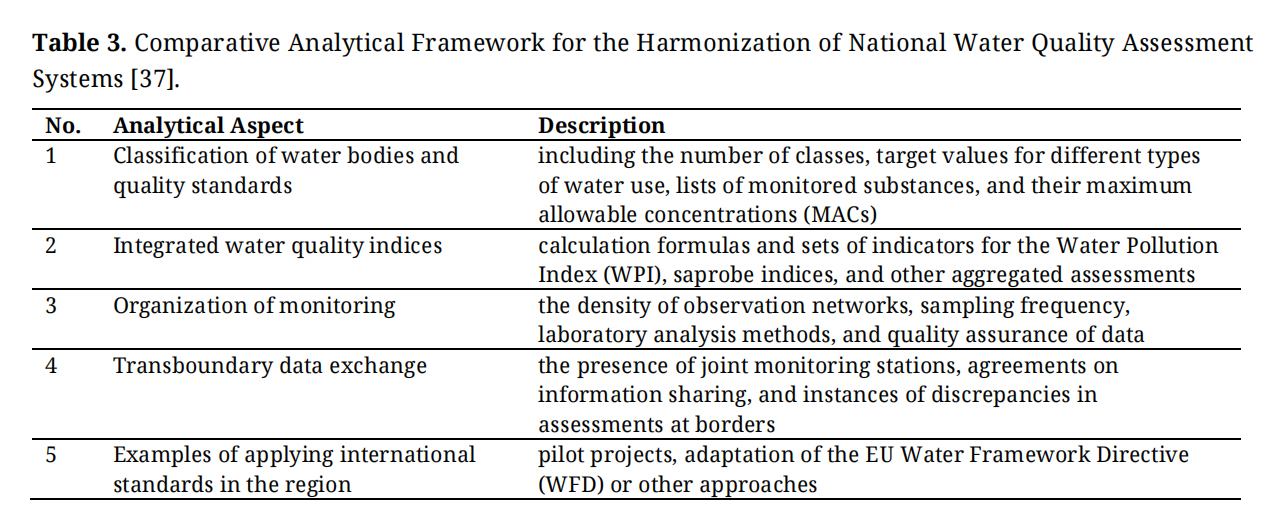 Table 3. Comparative Analytical Framework for the Harmonization of National Water Quality Assessment Systems [37].
These aspects highlight both the shared methodological foundations and the key differences among countries, which limit data comparability and should be taken into account when developing a unified regional framework.
Naturally, challenges remain on the path to implementation—including technical ones (equipment shortages, the need to train personnel in new methods) and organizational ones (the necessity of interstate agreements). However, as demonstrated by the experience of UNECE and World Bank projects, initial steps have already been taken: experts from the CA countries are open to dialogue, diagnostic assessments have been conducted, and legislation is being updated in Kazakhstan and other republics (the Environmental Code (2021) and the forthcoming Water Code (2025)) [38]. A feasible first step could be the conclusion of a regional Memorandum of Understanding on water quality issues, which would formalize the political commitment to unification. Subsequently, the establishment of working groups, the development of technical regulations, and pilot implementation on selected rivers (e.g., in the Amu Darya Basin, which involves all five countries) would follow. Gradually, progressing from simple to complex, Central Asia can establish an effective and unified water quality monitoring system. This would constitute a contribution not only to the region’s environmental sustainability, but also to the strengthening of cooperation among states linked by a common aquatic lifeline.
Policy and institutional leaders have to agree about the following implications: At the initial stage, it is advisable to agree on a unified quality classification scale and a minimum set of priority solutes for transboundary comparison. This should be followed by ensuring interlaboratory comparability (QA/QC procedures, intercalibration exercises, and equipment calibration), and, in the longer term, by institutionalizing a regional data platform and coordination mechanisms. When establishing class thresholds and boundary values, it is essential to consider the natural baseline chemical composition of river waters in the CA arid basins, which is largely controlled by bedrock mineral composition and hydrological regime. Naturally elevated levels of total dissolved solids (TDS) and solutes derived from mineral weathering are well documented in the literature. Therefore, water body typology and baseline-adjustment mechanisms should be incorporated in order to avoid the erroneous classification of naturally mineralized waters as “polluted.”
The need for harmonization is further supported by several key arguments and practical considerations, as outlined below:
-
-
-
-
Despite the evident advantages of unification, the practical feasibility of harmonization is determined by a set of structural constraints.
Firstly, financial costs: the transition to comparable methodologies requires laboratory modernization, procurement of consumables, regular interlaboratory comparisons, and increased monitoring frequency at priority sites, which creates sustained budgetary commitments.
Secondly, technical heterogeneity: Disparities in instrumental capacity (including the ability to detect trace-level concentrations), staffing levels, and the implementation of QA/QC procedures affect data reproducibility and analytical reliability.
Thirdly, issues of sovereignty and data sensitivity constitute significant constraints: the exchange of information on water quality and pollution sources may be perceived as politically sensitive. This requires agreed protocols for data access and trusted verification mechanisms (e.g., through joint sampling campaigns and interlaboratory validation exercises) [37,39].
Finally, political will and institutional coordination are critical factors: even scientifically based solutions require interagency alignment within countries and interstate agreements in transboundary basins. Therefore, a phased implementation scenario appears to be the most realistic pathway.
Water pollution in Central Asia is largely driven by agricultural runoff, mining activities, and wastewater discharge [41]. For scientific accuracy, the harmonized framework should take into account the natural baseline conditions and the typology of regional rivers. In the arid basins of Central Asia, bedrock mineral composition and seasonal runoff dynamics can result in naturally elevated levels of total dissolved solids (TDS) and solutes derived from mineral weathering. These natural conditions influence river water chemistry independently of anthropogenic pollution. Previous studies have demonstrated that the chemical composition of major rivers such as the Amu Darya varies significantly along the river course and reflects both natural background conditions and anthropogenic impacts [42,43].
The key point is that human activities (agricultural runoff, wastewater, or industrial discharge) are superimposed on the natural hydro-chemical background. Thus, determining whether a river is polluted requires comparison with nearby river reaches (upstream or tributaries) characterized by the same lithology, as well as with reaches likely affected by anthropogenic impacts. This also implies that monitoring cannot be restricted only to potentially polluted areas, but should include reference sites representing natural background conditions. Accordingly, when establishing thresholds between quality classes, it is advisable to incorporate the river typology (based on total dissolved solids, lithology, and hydrological regime) and baseline-adjustment mechanisms in order to avoid methodological bias—specifically, the misclassification of naturally mineralized waters as “polluted”.
Proposals for a Unified Water Quality Assessment System in Central AsiaBased on the analysis of national and international practices, a template for a proposed Unified Water Quality Assessment System (UWQAS) can be outlined:
1.
2.
3.
4.
5.
6.
For instance, environmental codes could be amended to incorporate provisions for classifying waters according to the regional standard, for information exchange, etc. Some CA countries are already moving in this direction: Kazakhstan, in its updated Environmental Code (2021) [36], introduced the concept of water body status assessment, and Uzbekistan is developing a national water monitoring system [38]. In the future, these efforts could be synchronized.
The proposed measures are based on the scientific understanding that aquatic ecosystems do not recognize political borders, thus their protection requires unified approaches. International experience—from the EU Water Framework Directive [14], which has successfully harmonized standards for dozens of European countries, to interstate agreements in the United States (e.g., for the Colorado River)—demonstrates that common methodologies create a foundation for the equitable distribution of water protection efforts and for building mutual trust. Admittedly, implementing a new system is a politically and technically challenging task. However, a gradual, phased approach (starting with a small set of parameters and observation points, then expanding) makes it feasible. Even at the initial stage, harmonizing the basic elements (classification, key parameters, data exchange) would yield a tangible positive effect.
Despite a shared methodological heritage, Central Asian countries have developed increasingly divergent water quality monitoring systems, which limit the comparability of transboundary data and complicate the joint assessment of aquatic ecosystems. The MDI analysis highlights substantial differences in classification approaches, monitored solutes, and monitoring practices, underscoring the need for harmonization. At the same time, such harmonization must be adapted to region-specific conditions, including naturally elevated levels of total dissolved solids (TDS) in the lower reaches of major rivers and the influence of bedrock mineral composition on river water chemistry. A unified water quality assessment system, based on modern scientific knowledge and international best practices, would provide a common framework for data interpretation, facilitate cooperation between countries, and support more effective and coordinated water management decisions in the region.
All data generated from the study are available in the manuscript.
Conceptualization, AM, LI, CO, ZZ, JR-I, YU, TC, IN and AnS; methodology, AM, LI, CO, ZZ, M-ER-C, JR-I, YU, TC, IN and AnS; software, BS, AiZ, KN, AsZ and ArS; validation, AM, LI, CO, ZZ, M-ER-C, JR-I, TC, IN and AnS; formal analysis, AM, LI and CO; investigation, AM, LI, CO, ZZ, JR-I, YU, TC, IN and AnS; resources, AM, LI, CO, TC, IN and AnS; data curation, BS, AiZ, KN, AsZ and ArS; writing—original draft preparation, AM, LI and CO; writing—review and editing, AM, LI and CO; visualization, BS and AsZ; supervision, AM and CO; project administration, AM, LI and CO; funding acquisition, AM and LI. All authors have read and agreed to the published version of the manuscript.
The authors declare that they have no conflicts of interest.
This research was funded by the Committee of Science of the Ministry of Science and Higher Education of the Republic of Kazakhstan, program number BR287006/0225 “Water Security of the Republic of Kazakhstan: The Transboundary Chu–Talas Basin under Climate Change Conditions and Economic Activity up to 2050”.
The authors express their sincere gratitude to all individuals and organizations who provided support and assistance during the course of this work. Special appreciation is extended to colleagues and reviewers for their valuable comments, discussions, and recommendations.
1.
2.
3.
4.
5.
6.
7.
8.
9.
10.
11.
12.
13.
14.
15.
16.
17.
18.
19.
20.
21.
22.
23.
24.
25.
26.
27.
28.
29.
30.
31.
32.
33.
34.
35.
36.
37.
38.
39.
40.
41.
42.
43.
Madibekov A, Ismukhanova L, Opp C, Zhao Z, Rodrigo-Clavero M-E, Rodrigo-Ilarri J, et al. Harmonization of Surface Water Quality Assessment Methods in Central Asia: Contemporary Approaches and Emerging Challenges. J Sustain Res. 2026;8(2):e260039. https://doi.org/10.20900/jsr20260039.

Copyright © Hapres Co., Ltd. Privacy Policy | Terms and Conditions


