Location: Home >> Detail
J Sustain Res. 2026;8(2):e260047. https://doi.org/10.20900/jsr20260047
 ,
Sophie van den Berg 2,† ,
Elizabeth Imbo 3 ,
Aleksandra Wybieralska 4 ,
Marnie Pannatier 5 ,
Jimena Monroy 6 ,
Cornelia Speich 7,8 ,
Kesso Gabrielle van Zutphen 9 ,
Tanja Barth-Jaeggi 7,8 ,
Helen Prytherch 7,8 ,
Johan Six 1 ,
Dominique Barjolle 2
,
Sophie van den Berg 2,† ,
Elizabeth Imbo 3 ,
Aleksandra Wybieralska 4 ,
Marnie Pannatier 5 ,
Jimena Monroy 6 ,
Cornelia Speich 7,8 ,
Kesso Gabrielle van Zutphen 9 ,
Tanja Barth-Jaeggi 7,8 ,
Helen Prytherch 7,8 ,
Johan Six 1 ,
Dominique Barjolle 2
1
2
3
4
5
6
7
8
9
*
†
Introduction: Smallholder farming systems in sub-Saharan Africa are increasingly exposed to climatic variability, pest outbreaks, and market fluctuations, with significant implications for household resilience. Understanding how households experience shocks and build resilience is essential for designing effective interventions. This study examined farming systems, shock exposure, adaptation strategies, ecological and socio-economic resilience among smallholder households in Busia County, Kenya, with emphasis on gender, agroecological farming practice (AFP) adoption, and livelihood characteristics. Methodology: A quantitative household-level survey was conducted in March 2022 with 156 households across four sub-counties—Budalangi, Matayos, Nambale, and Teso-South, using an adapted FAO Self-evaluation and Holistic Assessment of climate Resilience of farmers and Pastoralists (SHARP) tool. Five resilience indicators—ecological self-regulation, profitability, exposure to disturbance, reflective and shared learning, and social self-organization—were assessed following the SHARP resilience framework. Data were analyzed using descriptive statistics, non-parametric tests, Chi-square tests, Pearson correlation, and multiple linear regression. Results: Households exhibited predominantly medium resilience across ecological self-regulation, profitability, learning, and disturbance exposure, while social self-organization was comparatively high. No statistically significant differences in resilience or AFP adoption were observed between male- and female-headed households. In contrast, AFP adoption intensity was positively associated with ecological self-regulation, reflective and shared learning, and profitability. Social group membership was strongly linked to social self-organization and learning-related resilience but not to ecological or economic resilience outcomes. Non-farm income significantly enhanced economic resilience, whereas land access alone showed limited effects. All households reported market shocks, alongside widespread abiotic and biotic shocks, and adopted context-specific adaptation strategies aligned with shock type. Discussion: Enhancing resilience of smallholder households requires integrated approaches that promote agroecological practices, strengthen farmer groups, and support income diversification. Policies should prioritize agroecological extension services, inclusive rural finance, and context-specific, shock-responsive interventions to improve smallholder resilience.
Smallholder farming in sub-Saharan Africa serves as a major base for rural livelihoods by supporting food security, creating jobs, and improving rural economies [1]. However, households engaging in smallholder farming face several challenges from climatic variability, pest infestations, and market fluctuations, which interact to threaten farms’ productivity and livelihoods in general [2]. In Western Kenya, like every region in developing countries characterized by rain-fed agriculture and limited access to urban markets, these shocks exacerbate vulnerabilities, leading to reduced yields, income instability, and environmental degradation [3]. Therefore, understanding the nature of the shocks faced by smallholder farming households in Busia and the strategies they employ to cope with them is crucial for designing effective interventions and policies to enhance agricultural sustainability and resilience. This study investigated the farming systems, shock exposure, adaptation strategies, and resilience of farming households in Busia, Kenya, to provide an understanding of the local agricultural dynamics.
Climatic shocks, such as droughts, erratic rainfall, hailstorms, and flooding, have become increasingly frequent and severe due to climate change, posing significant risks to agricultural productivity [4]. Also, pest and disease outbreaks, such as the Fall armyworm on maize or maize lethal necrosis, further complicate the problems faced by smallholder farmers in Busia [5,6]. Furthermore, market-related shocks, including price volatility and limited market access, add another layer of difficulty, repeatedly forcing households to sell produce at low prices or rely on ‘middlemen’ (individuals or organizations in a stronger economic position that act as intermediaries in the supply chain) to make sales, often at undesired prices [7]. To mitigate these challenges, farmers employ various adaptation strategies, including crop diversification, off-farm income generation, mixed farming, and the adoption of improved low-tech agricultural practices, such as integrated pest or soil management practices [8]. However, the effectiveness of these strategies in enhancing the socioeconomic and environmental resilience of farming households combined remains underexplored in the context of Kenya’s smallholder systems.
Resilience, defined as the capacity of households to absorb, adapt to, and recover from shocks, is a critical factor in ensuring sustainable agricultural systems [9]. Socioeconomic resilience encompasses aspects such as income stability, access to resources, and social networks, including level of education, whereas environmental resilience relates to the ability of farming systems to maintain ecosystem services, including soil fertility and biodiversity, under stress [10]. Also, gender is known to intersect with resilience. Research suggests that female-headed farming households tend to show lower resilience compared to male-headed households, partly because women control fewer resources, e.g., land, than men [11]. The land women control is often of poorer quality, and their tenure is insecure [11].
Although increasing evidence links agroecological practices with enhanced resilience [12], there remains a lack of understanding of how smallholder households in Busia, Kenya, experience and respond to agricultural shocks, and how these processes influence their socioeconomic and environmental resilience. In particular, the gendered dimensions of resilience and the extent to which agroecological practices are adopted within this context are insufficiently documented. This study aimed to examine the relationships between household characteristics, adoption intensity of agroecological farming practices (AFPs), and resilience indicators, with particular emphasis on gender, resource access, and adaptive responses to shocks. The specific objectives were to: (i) assess differences in household resilience indicators by household head gender; (ii) analyze the influence of household head gender on the adoption of agroecological farming practices (AFPs); (iii) determine the relationship between AFP adoption intensity and household resilience indicators; (iv) evaluate the association between group membership and household resilience indicators; (v) examine the effects of land access and non-farm income on household resilience; and (vi) analyze the types of shocks experienced by households and their corresponding adaptation strategies.
We hypothesized that: (i) resilience indicator scores differ significantly between male- and female-headed households; (ii) household head gender significantly influences the adoption of agroecological farming practices; (iii) AFP adoption intensity is positively associated with multiple dimensions of household resilience; (iv) group membership is more strongly associated with social and learning-related resilience than with economic or ecological resilience; (v) land access and non-farm income are positively associated with household resilience, particularly economic resilience; and (vi) households adopt context-specific adaptation strategies aligned with the type of shocks experienced.
Busia is a border town in western Kenya. It is located approximately 450 km northwest of Nairobi in the Lake Victoria Basin and lies on the Kenya–Uganda border, opposite a town called Busia in Uganda. Both towns are separated by a busy international border crossing, which is one of the major gateways for trade and travel between the two countries. The population is estimated at 142,400 inhabitants [13]. The climate is tropical and humid, with a yearly temperature range from 17 °C to 30 °C. Rainfall in Busia is well-distributed, with an average annual precipitation of between 900 mm and 1500 mm, occurring over two main rainy seasons: the long rains from March to June and the short rains from September to December. The economy of Busia relies primarily on agriculture, fishing, and trade [14]. The main crops grown in Busia include maize, finger millet, beans, sorghum, rice, white- and orange-fleshed sweet potatoes, bananas, sugarcane, peppers, kale, black nightshade, tomatoes, mangoes, and onions. The major livestock include cattle, sheep, local chicken (free-range), pigs, and zebu (humped cattle). Food production in Busia is mainly at a subsistence level, and rarely for commercial purposes [14].
Data Collection Tool, Resilience Framework, and Tool AdaptationThis study employed the FAO’s Self-evaluation and Holistic Assessment of Climate Resilience of Farmers and Pastoralists (SHARP) tool to collect quantitative data on households’ farming and socio-economic activities in Busia County (Figure 1). The SHARP scoring framework was then used to assess the resilience of the smallholder households. SHARP’s resilience assessment is based on two components: an objective (technical) component and a subjective (adequacy) component, which together span economic, social, environmental, and governance dimensions [15].
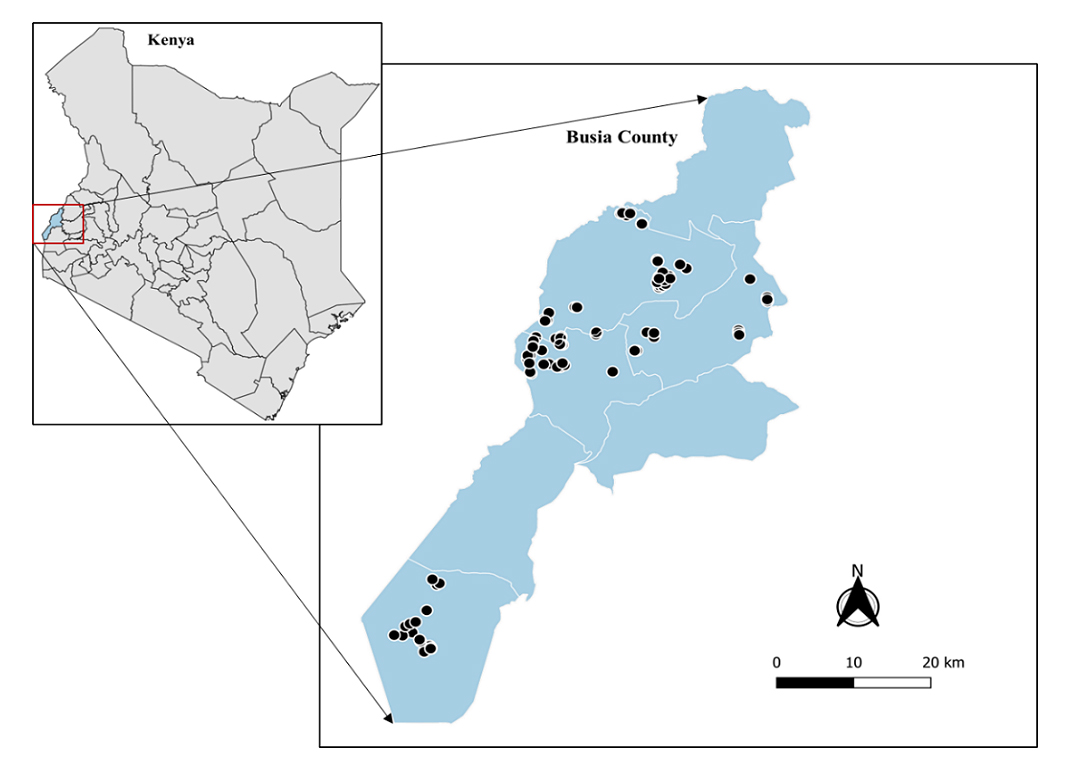 Figure 1.
Map showing Busia County in Kenya. The dots on the map indicate the distribution of the sampled farming households across the Busia sub-counties. In many instances, the dots overlap due to the proximity of some households.
Figure 1.
Map showing Busia County in Kenya. The dots on the map indicate the distribution of the sampled farming households across the Busia sub-counties. In many instances, the dots overlap due to the proximity of some households.
Only the objective scoring framework was used for resilience assessments in this study because it relies on academic and expert knowledge rather than subjective perceptions. Conceptually, SHARP is grounded in the 13 behavior-based agroecosystem resilience indicators [16], which identify attributes that determine whether a system can meet its economic, ecological, and social needs or is vulnerable and requires intervention. Since it is possible to choose indicators that measure and account for the resilience outcome aimed at, this study focused on five out of the 13 resilience indicators of SHARP, which nevertheless cut across economic, ecological, and social dimensions of resilience: (i) Exposed to disturbance; (ii) Reasonably profitable; (iii) Ecologically self-regulated; (iv) Reflective and shared learning; and (v) Socially self-organized (Table 1).
The SHARP scoring framework and questions for these indicators are detailed in Table A1. All questions relating to each indicator are scored, and their averages are computed. SHARP resilience score ranges from 0 (low resilience) to 10 (high resilience)—low score (0 to 3.5/10.0): Farming households have limited capacity (knowledge, skills, and resources) to deal with issues related to the respective low resilience indicator; Medium score (3.51 to 6.0/10.0): Farming households have some capacity (knowledge, skills, and resources) to adapt and change their activities to tackle issues related to the medium resilience indicator; High score (6.01 to 10.0/10.0): Farming households recognize and address issues related to the high resilience indicator quickly and with sufficient capacity (knowledge, skills, and resources) [17].
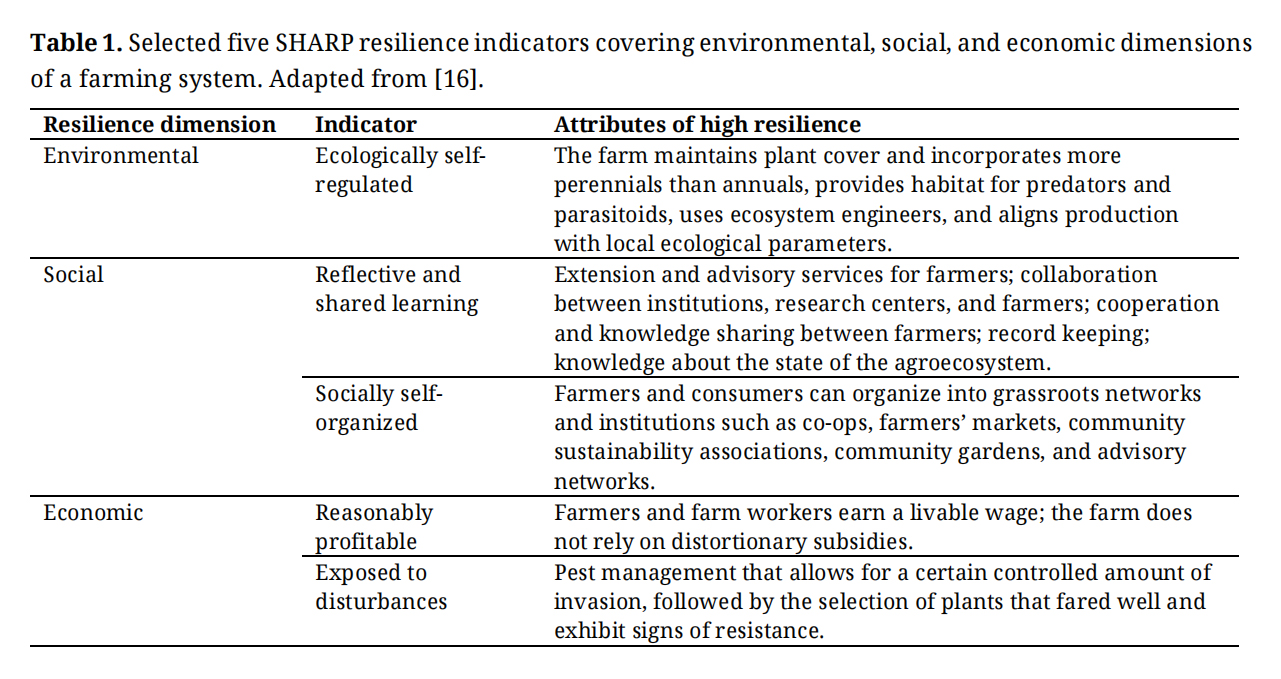 Table 1. Selected five SHARP resilience indicators covering environmental, social, and economic dimensions of a farming system. Adapted from [16].
To contextualize the tool and capture locally relevant data, several adaptations were made following five steps: step 1—questions were incorporated to track adoption levels of 16 agroecological farming practices (Table A2); step 2—locally important indigenous crop varieties, livestock breeds, and water conservation practices were added; step 3—land measurement units were converted from hectares to acres, in line with locally preferred units; step 4—the tool was computerized for data collection via the Open Data Kit (ODK) Collect App; step 5—a pilot test was conducted with a few households, and after which minor revisions were made based on feedback.
Sampling MethodFollowing resource considerations, a multi-stage sampling strategy, combining purposive and random sampling techniques, was employed to pursue a sample size of 156 in this study. In the first stage, four food-producing sub-counties—Budalangi, Matayos, Nambale, and Teso-South—were purposively selected from the seven sub-counties in Busia County. This selection was based on their distinct agricultural characteristics and high intensity of food production, making them critical geographies for understanding local food systems in Busia County. In the second stage, farmer groups within the selected sub-counties were identified and categorized based on their primary production objectives. Groups involved in production for export or industrial markets were excluded, with preference given to those producing for local consumption. The focus was placed on farmer groups cultivating orange-fleshed sweet potatoes, African leafy vegetables (ALV), and those involved in indigenous poultry or fish farming. This decision was made following a participatory multi-stakeholder workshop on nutritious foods and a health-focused analysis in October 2021, which aimed to identify relevant nutrition-sensitive food value chains that can address nutritional challenges in Busia. In the third stage, the members of the selected groups were disaggregated by gender to create separate sampling frames for male and female participants, recognizing the importance of gender dynamics in agricultural livelihoods and resilience. Finally, the sample size of 156 was divided into eight, i.e., two gender groups per sub-county, and random selections were performed to achieve 156 farmers, each representing a distinct farming household.
Eligibility and Ethical ConsiderationsInformed consent for this study was obtained from all participants. Written informed consent was sought from eligible respondents, who were adults aged 20 years and above, who had resided in the Budalangi, Matayos, Nambale, and Teso-South sub-counties of Busia County for at least 6 months and were farmers of smallholder households. The written consent presented participants with detailed information about the study’s purpose, processes, and their rights, including the voluntary nature of their participation and the option to withdraw at any time without consequence. The respondents’ rights to confidentiality were stated. As smallholder surveys do not touch upon sensitive information, according to the City classification, all necessary government approval letters for conducting the study in the sub-counties were obtained from local authorities.
Data Management Data collection, handling, and analysisData were collected at the household level in March 2022 using an adapted SHARP questionnaire administered digitally via ODK Collect. Completed surveys were uploaded within 12 h to a centralized ODK server for aggregation. The dataset was subsequently cleaned, anonymized, and coded for analysis. Binary responses (e.g., yes/no) were recoded as 1 and 0. Descriptive statistics, including frequencies and means, were used to summarize data on production systems, shocks, adaptation strategies, and the adoption of agroecological farming practices (AFPs). Household resilience was evaluated using the SHARP technical scoring framework. All descriptive and inferential statistical analyses, resilience scoring, and data visualization were conducted in RStudio (R version 4.4.1). Inferential statistical analyses were performed to examine relationships among shock types, adaptation strategies, agroecological practices, and multiple dimensions of household resilience.
Data preparation and association between shocks and adaptation strategiesCategorical variables, including household characteristics (e.g., household head gender, land access, non-farm income, and savings), were recoded as factors. Adaptation strategies were grouped into broader categories: capacity building, farm management, livelihood change, market adaptation, pest management, and no/other, to ensure analytical clarity and adequate cell counts. A composite indicator of agroecological practices (hereafter agroecological intensity) was constructed by summing the number of AFPs adopted by each household. Household resilience was assessed across five indicators: socially self-organized, ecologically self-regulated, exposure to disturbance, reflective and shared learning, and profitability. A Chi-square test of independence was used to assess whether adaptation strategies differed by shock type (abiotic, biotic, and market). Standardized residuals were examined to identify specific combinations of shock types and adaptation strategies contributing to deviations from independence.
Group comparisons across household characteristicsDifferences in resilience indicators across household characteristics (household head gender, land access, and non-farm income) were assessed using non-parametric methods due to violations of normality assumptions. Wilcoxon rank-sum tests were applied for binary grouping variables, while Kruskal–Wallis tests were used where appropriate. To account for multiple hypothesis testing across resilience indicators, Bonferroni corrections were applied to adjust p-values.
Adoption of agroecological practices, correlation, multivariate analysis, and data visualizationAssociations between household characteristics and the adoption of individual agroecological practices were evaluated using Chi-square tests of independence. Where relevant, standardized residuals were used to interpret cell-level contributions. Relationships between agroecological intensity and resilience indicators were examined using Pearson’s product–moment correlation coefficients (r), with corresponding confidence intervals and p-values reported. To further investigate these relationships, multiple linear regression models were estimated. Agroecological intensity was included as the primary explanatory variable, while resilience indicators were specified as outcome variables. Model assumptions were assessed using residual diagnostics. Statistical significance was evaluated at the 5% level. Where multiple comparisons were conducted, adjusted p-values are reported alongside unadjusted values to ensure robustness of inference. Data visualization was performed using the ggplot2 package. Boxplots were used to compare distributions across groups, while bar charts and heatmaps illustrated associations and correlation patterns. Faceted plots were employed to present multiple indicators simultaneously and facilitate comparative interpretation.
The socio-demographic characteristics and livelihood activities of the surveyed households are presented in Table 2. Respondents were predominantly female (68%), while 20% of households were female-headed. Most households practiced mixed farming systems (97%), with few engaged exclusively in crop (1%) or livestock (2%) production. Most households (96%) reported membership in at least one social group. The mean household size was 6.7. Among household members aged 10 years and above, 96% were literate. More than half of households (56%) reported having no savings after major expenditures, and 40% had no non-farm income. Access to land varied by gender, with male household members reporting higher access across all land categories (Table 2). Most households cultivated privately owned land, with farm sizes predominantly below 2.5 acres. Agricultural production activities are shown in Figure 2. Maize was the most cultivated crop, followed by beans and African leafy vegetables. Livestock ownership was widespread, particularly poultry and cattle.
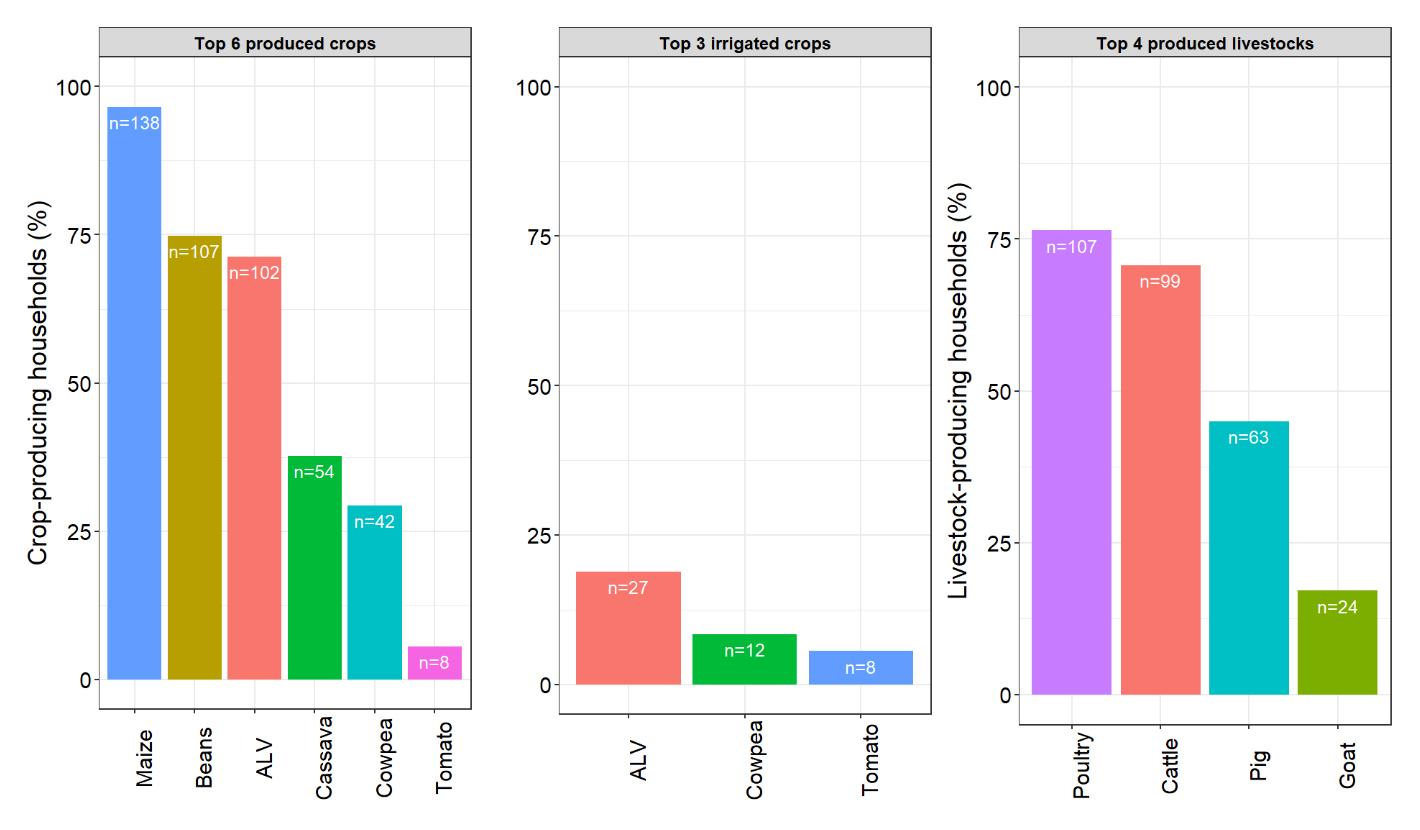 Figure 2.
Top 6 produced crops, irrigated crops, and major livestock held by the farming households in Busia. Values inside bars = number (frequency) of households producing crops, irrigating crops, or producing livestock. Households that produced crops = 143. Households that produced livestock = 140.
Figure 2.
Top 6 produced crops, irrigated crops, and major livestock held by the farming households in Busia. Values inside bars = number (frequency) of households producing crops, irrigating crops, or producing livestock. Households that produced crops = 143. Households that produced livestock = 140.
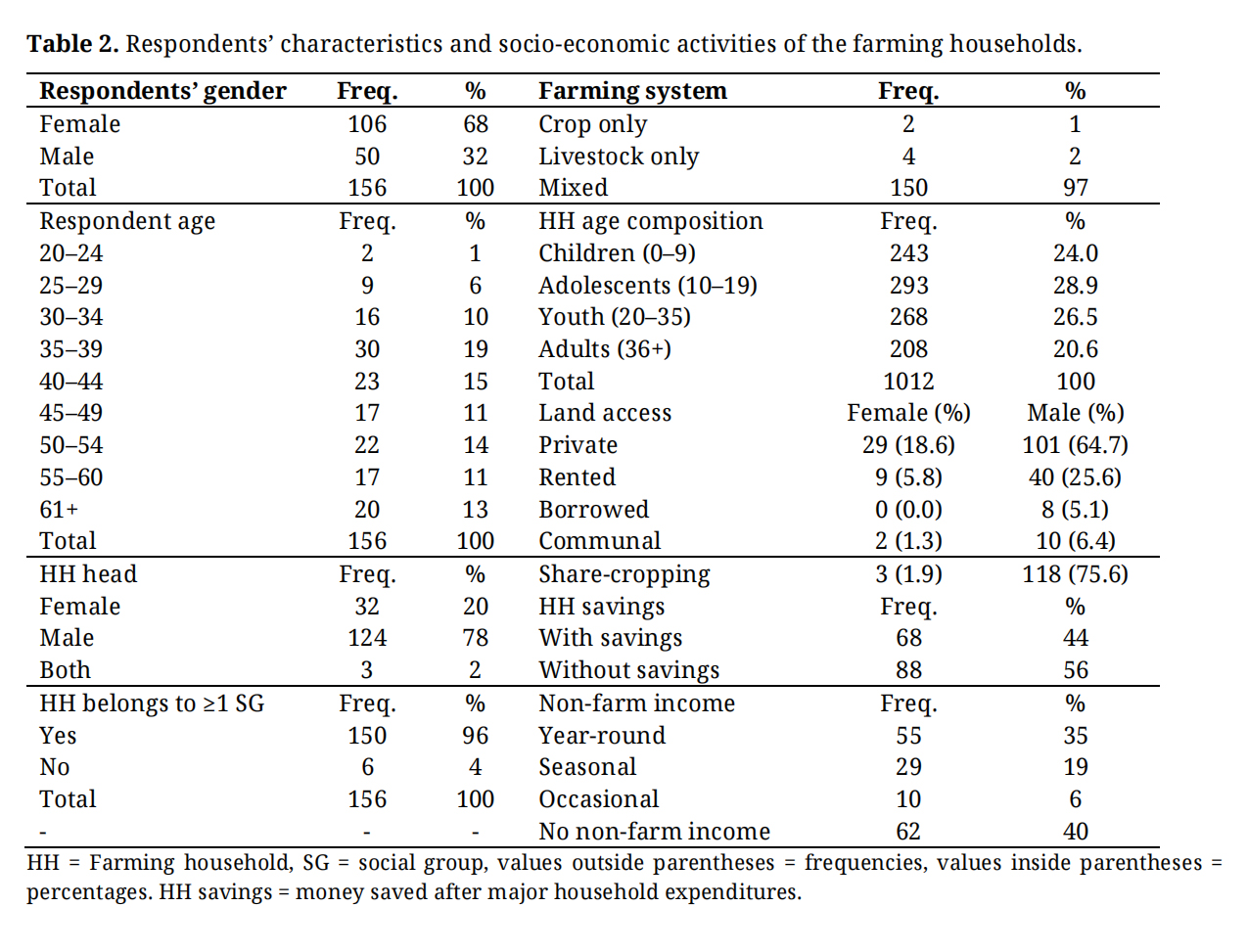 Table 2. Respondents’ characteristics and socio-economic activities of the farming households.
Generally, the households exhibited medium levels of resilience across most indicators, including reasonably profitable (4.08), exposed to disturbance (4.18), reflective and shared learning (4.95), and ecologically self-regulated (5.33), while socially self-organized showed a high resilience score (7.65) (Figure 3a). Wilcoxon rank-sum tests revealed no statistically significant differences in resilience indicator scores between male- and female-headed households for socially self-organized (W = 2210.5, p = 0.294), exposed to disturbance (W = 2021, p = 0.873), reflective and shared learning (W = 1860.5, p = 0.587), or profitability (W = 1874.5, p = 0.632) (Figure 3b). Although ecologically self-regulated showed a marginal difference (W = 1568, p = 0.068), this was not statistically significant after adjustment for multiple comparisons, and no significant differences were observed across any resilience indicators.
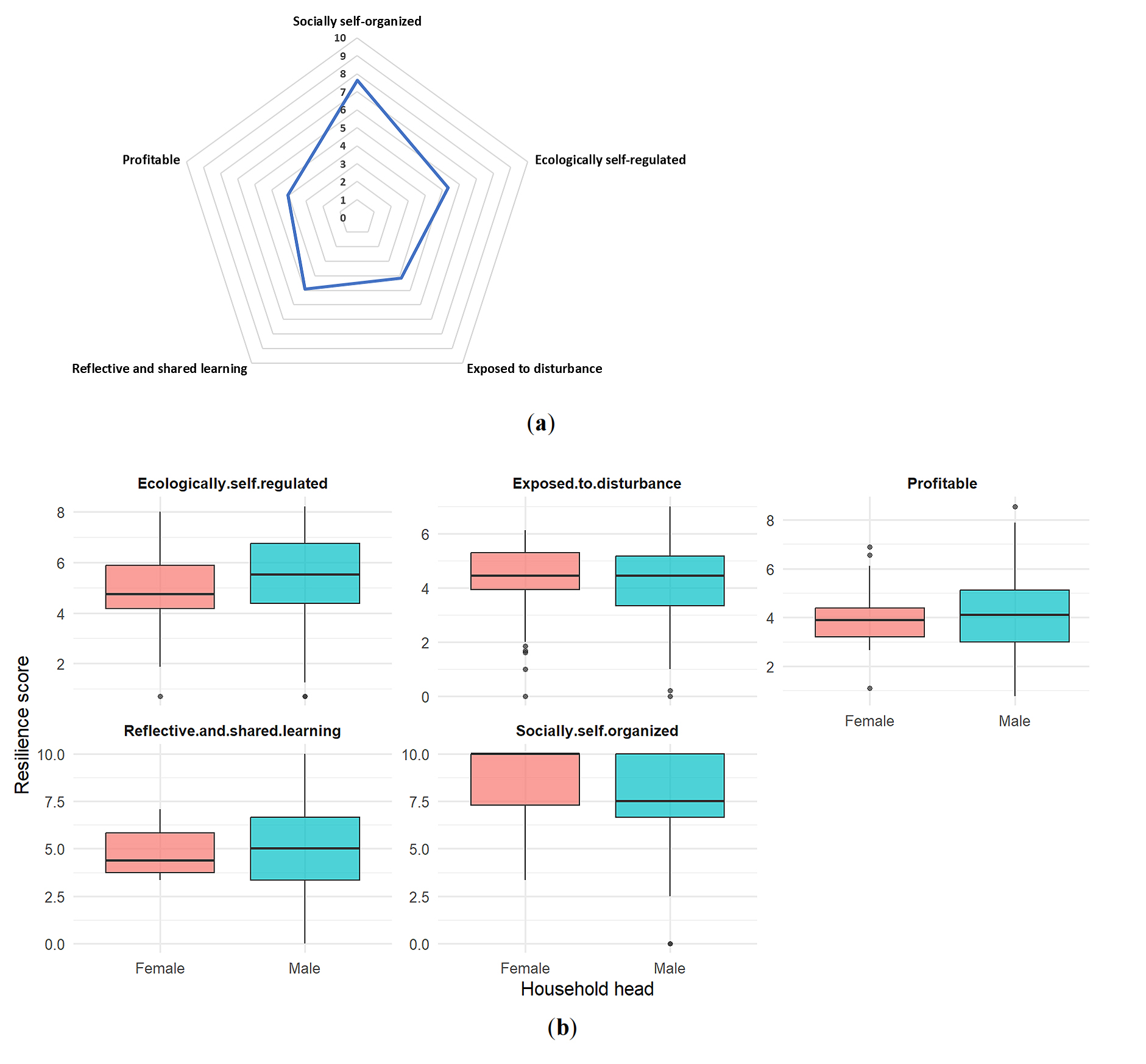 Figure 3.
(a) Household resilience scores across five SHARP resilience indicators. Scores are categorized into low, medium, and high resilience following Hernández Lagana et al. (2022) [17]. Low resilience (≤3.5) indicates limited capacity (knowledge, skills, and resources) to respond to challenges; medium resilience (3.51–6.0) indicates moderate capacity to adapt; and high resilience (6.01–10.0) reflects strong capacity to anticipate and effectively respond to challenges. (b) Distribution of resilience indicator scores by household head gender. Black dots represent outlier observations.
Figure 3.
(a) Household resilience scores across five SHARP resilience indicators. Scores are categorized into low, medium, and high resilience following Hernández Lagana et al. (2022) [17]. Low resilience (≤3.5) indicates limited capacity (knowledge, skills, and resources) to respond to challenges; medium resilience (3.51–6.0) indicates moderate capacity to adapt; and high resilience (6.01–10.0) reflects strong capacity to anticipate and effectively respond to challenges. (b) Distribution of resilience indicator scores by household head gender. Black dots represent outlier observations.
Chi-square tests were used to examine the association between household head gender and the adoption of AFPs. Weak associations were observed for intercropping (χ² = 3.89, p = 0.049) and mulching (χ² = 5.25, p = 0.022) (Figure 4). However, these associations were not statistically significant after adjustment for multiple comparisons. Pearson correlation analysis showed significant positive associations between AFP adoption intensity (sum_AE) and several resilience indicators (Figure 5). Significant correlations were observed with ecological self-regulation (r = 0.221, p = 0.006), reflective and shared learning (r = 0.266, p < 0.001), and profitability (r = 0.456, p < 0.001), all of which remained significant after Bonferroni adjustment. No significant association was found with social self-organization (r = 0.085, p = 0.291), and the association with exposure to disturbance was not significant after correction. Multiple linear regression analysis yielded consistent results, with AFP adoption intensity significantly associated with profitability and reflective and shared learning. Pearson correlation analysis further showed that household group membership was positively associated with social self-organization (r = 0.302, p < 0.001) and reflective and shared learning (r = 0.382, p < 0.001) (Figure 6). These associations remained significant after Bonferroni correction. No significant associations were observed between group membership and ecological self-regulation or profitability, and the relationship with exposure to disturbance was not statistically significant.
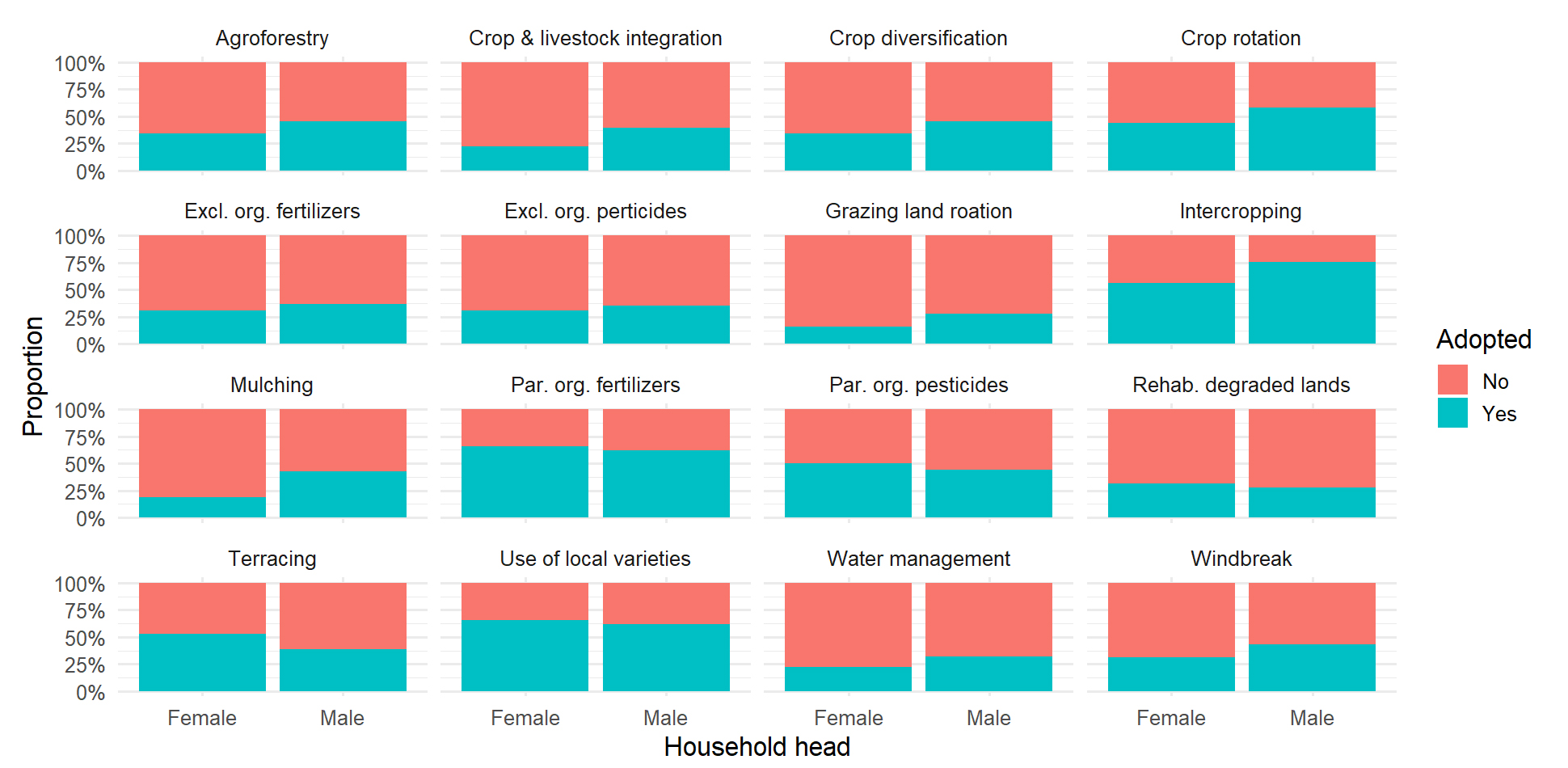 Figure 4. Adoption of agroecological farming practices by household head gender.
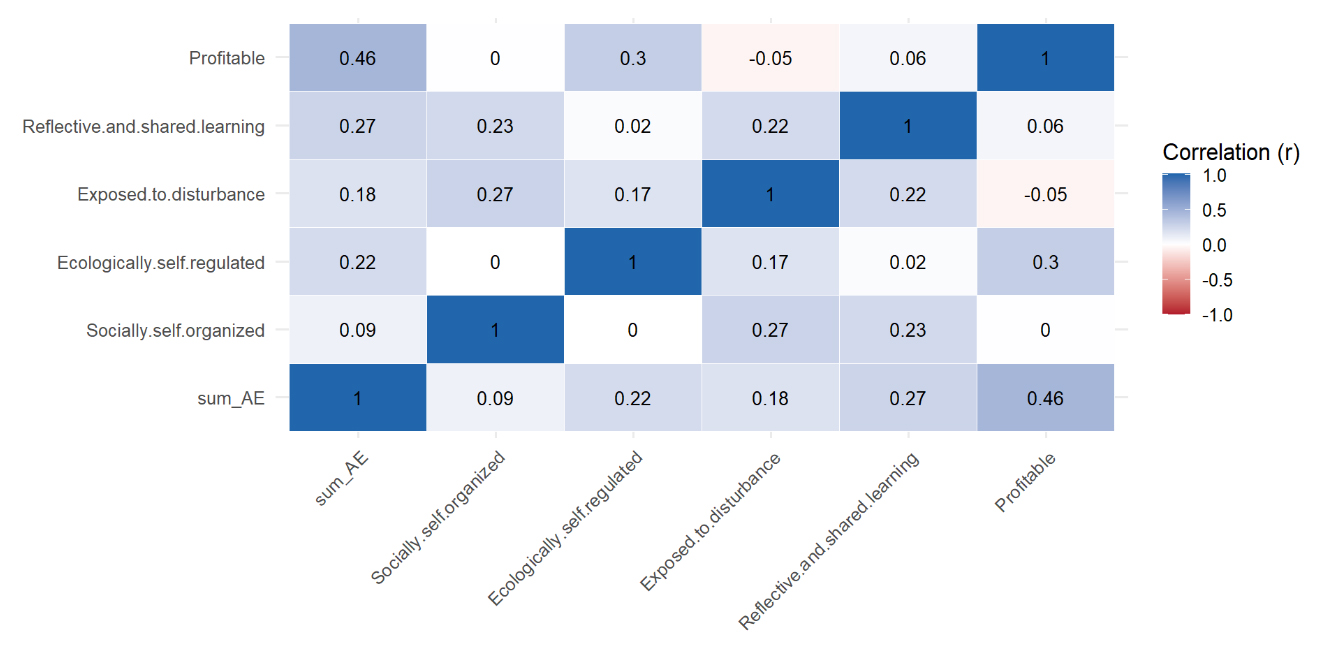 Figure 5.
Correlation matrix between agroecological practice adoption intensity and resilience indicators. Sum_AE: Total number of agroecological practices adopted per household.
Figure 5.
Correlation matrix between agroecological practice adoption intensity and resilience indicators. Sum_AE: Total number of agroecological practices adopted per household.
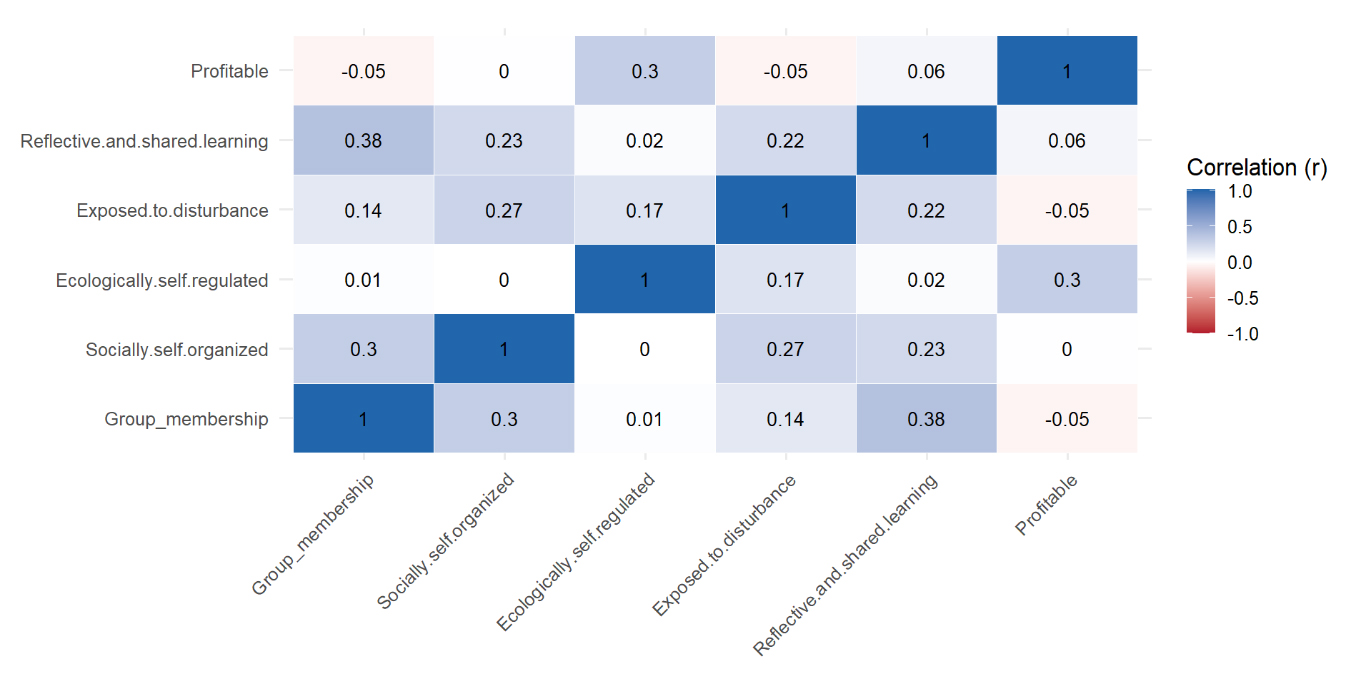 Figure 6. Correlation matrix between households’ group membership and resilience indicators.
Kruskal–Wallis tests were conducted to examine differences in household resilience indicators by land access, and with and without non-farm income. No significant differences were observed for social self-organization (p = 0.975), ecological self-regulation (p = 0.750), exposure to disturbance (p = 0.382), or reflective and shared learning (p = 0.658) (Figure 7). A significant difference in profitability was observed (χ2 = 5.51, df = 1, p = 0.019), with higher median values among households with land access (median = 4.30) than among those without (median = 3.89). However, this difference was not statistically significant after adjustment for multiple comparisons.
Wilcoxon rank-sum tests were used to compare households with and without non-farm income. No significant differences were observed for social self-organization (p = 0.496), ecological self-regulation (p = 0.866), exposure to disturbance (p = 0.613), or reflective and shared learning (p = 0.290) (Figure 7). In contrast, profitability differed significantly between groups (p < 0.001), with higher median values among households with non-farm income (median = 4.54) compared to those without (median = 3.17).
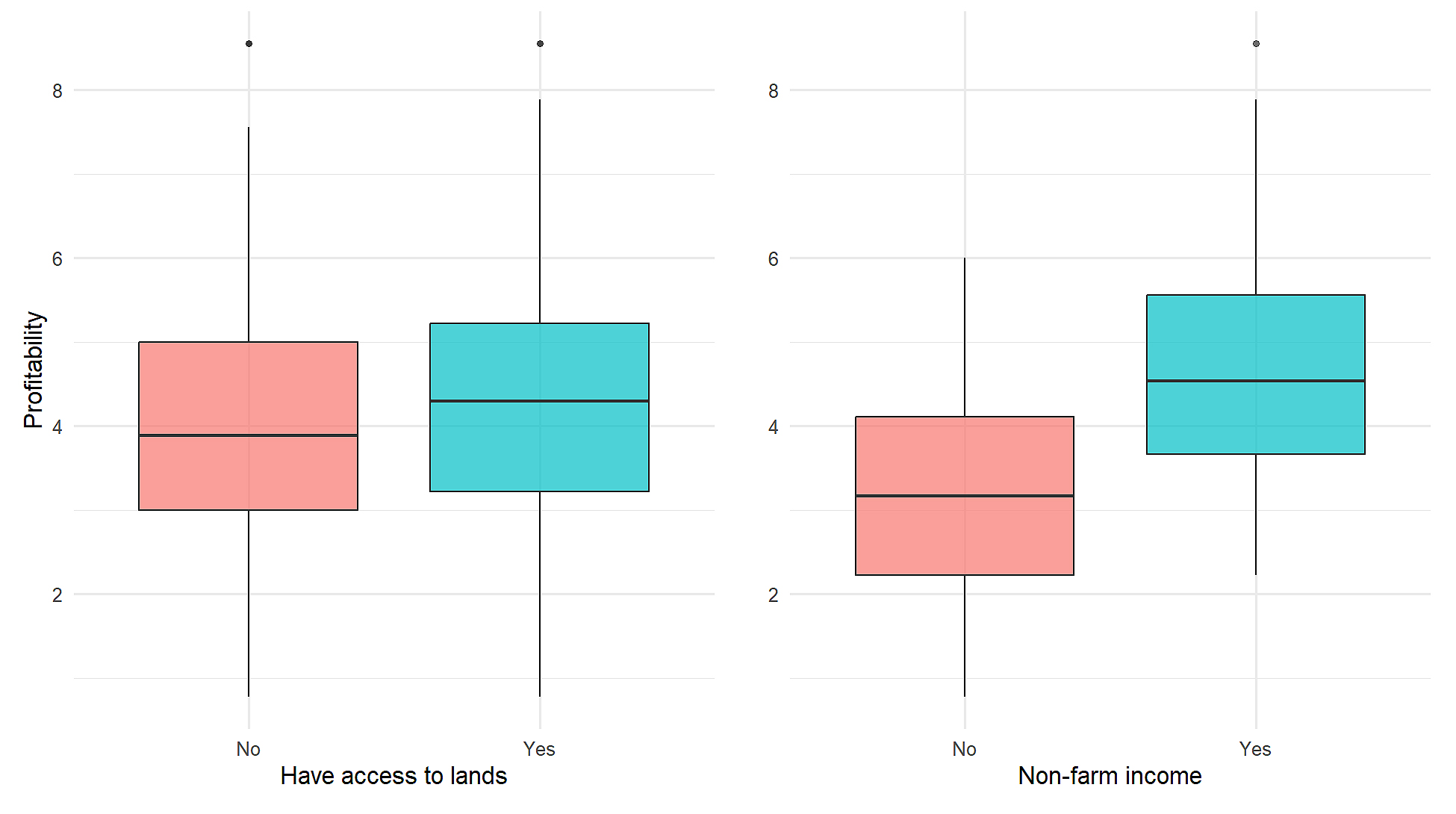 Figure 7. Household economic resilience by land access and non-farm income. Black dots represent outlier observations.
Most crop-producing households experienced multiple types of shocks. Abiotic shocks were reported by 85% of households (122/143), while 71% (101/143) experienced biotic shocks. All surveyed households (156/156) reported exposure to market price shocks (Figure 8a). Among abiotic shocks, drought was the most frequently reported (42/122), followed by flood (21/122) and hailstorm (13/122). For biotic shocks, the Fall armyworm was the most reported (68/101), while maize stalk borer and cutworms were each reported by 12 households. Among market shocks, 60% of households reported fluctuating prices, and 21% (32/156) reported low commodity prices.
A Chi-square test of independence indicated a statistically significant association between shock type and adaptation strategy (p < 0.001) (Figure 8b). Standardized residuals showed that abiotic shocks were positively associated with capacity building (z = 8.26), farm management (z = 7.84), and livelihood change strategies (z = 8.55), and negatively associated with market-based and pest management strategies. Biotic shocks were strongly associated with pest management strategies (z = 14.11) and, to a lesser extent, with no/other strategies (z = 5.83). Market shocks were associated with market adaptation strategies (z = 18.84) and negatively associated with other adaptation types.
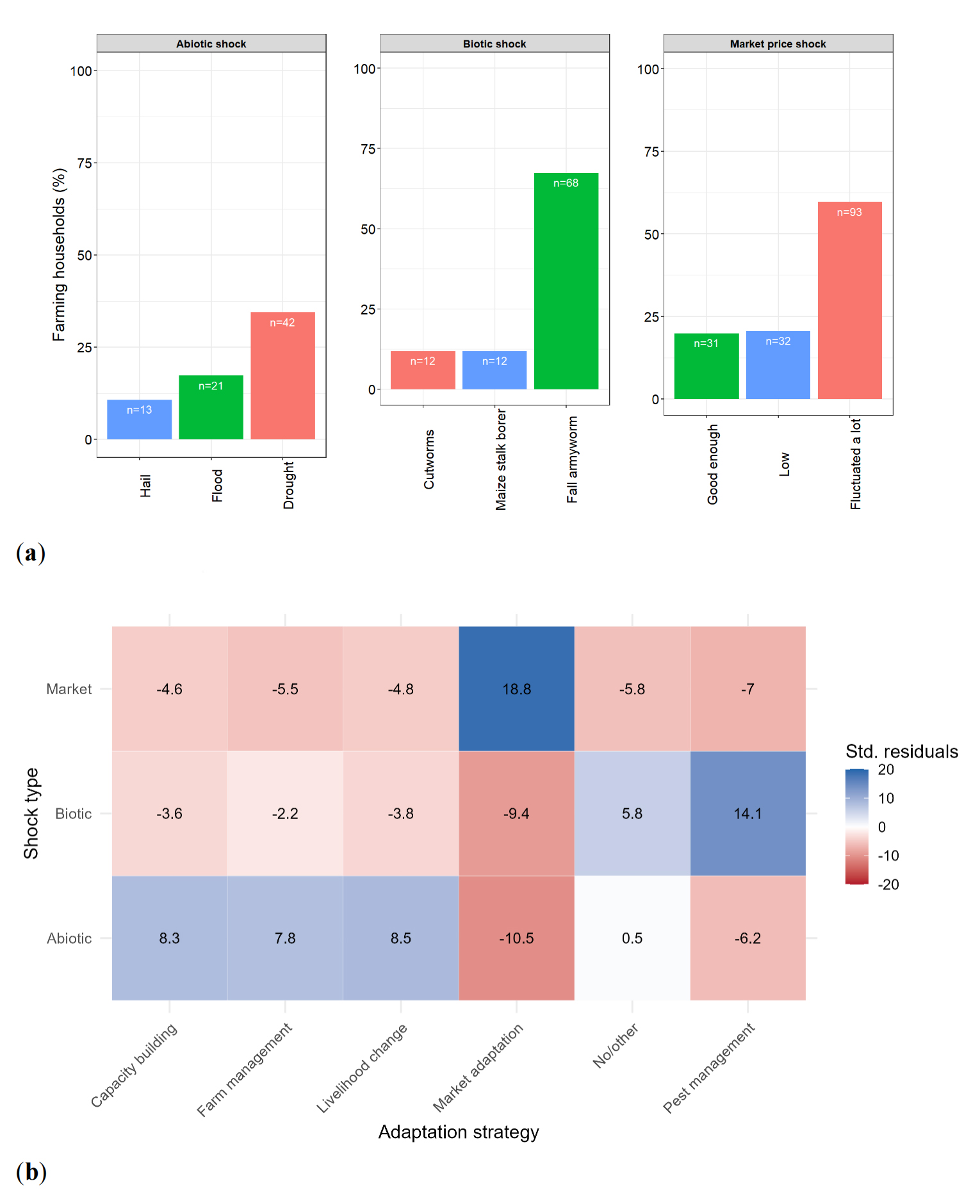 Figure 8.
(a) Frequency of major abiotic, biotic, and market shocks experienced by farming households. Values inside bars (n) indicate frequencies. The number of households affected was 143 for abiotic shocks, 101 for biotic shocks, and 156 for market shocks. (b) Association between shock type and adaptation strategy. Standardized residuals from the Chi-square test are used to indicate the strength and direction of associations between shock types and adaptation strategies.
Figure 8.
(a) Frequency of major abiotic, biotic, and market shocks experienced by farming households. Values inside bars (n) indicate frequencies. The number of households affected was 143 for abiotic shocks, 101 for biotic shocks, and 156 for market shocks. (b) Association between shock type and adaptation strategy. Standardized residuals from the Chi-square test are used to indicate the strength and direction of associations between shock types and adaptation strategies.
The results from this study show that farming households exhibited predominantly medium levels of resilience across ecological, economic, and learning dimensions; however, they emerged strongest in social self-organization. This finding suggests that while the households possess relatively strong social networks and collective organization, other dimensions, particularly economic (profitability) and ecological self-regulation, remained only moderately developed. Such imbalances across resilience domains are consistent with findings from smallholder systems where social capital often develops more rapidly than economic and ecological capacities, especially under resource constraints [18,19]. The absence of significant differences in resilience indicators between male- and female-headed households further suggests that resilience capacities are not strongly differentiated by household head gender in this study’s context. Although a marginal difference was observed across household head gender lines for ecological self-regulation, this effect did not persist after correcting for multiple comparisons, reinforcing the conclusion that gender alone may not be a primary determinant of resilience outcomes for the households surveyed for this study. This finding contrasts with studies that reported significant gender-based disparities in resource access and adaptive capacity [20] and may reflect context-specific dynamics, e.g., shared labour systems, community-level knowledge exchange, or similar exposure to environmental and economic constraints across household types [21].
Gender, Agroecological Farming Practice Adoption, and ResilienceThe lack of significant associations between household head gender and adoption of agroecological farming practices (AFPs), after adjustment for multiple testing, suggests that adoption decisions are not systematically gender-driven in this study population. While weak associations were initially observed for intercropping and mulching, these did not remain robust, indicating that access to and uptake of AFPs may be shaped more by factors other than the gender of household heads, such as knowledge, equity, labour availability, or institutional support [22,23]. On the contrary, agroecological adoption intensity showed consistent and positive associations with multiple resilience indicators, particularly ecological self-regulation, reflective and shared learning, and profitability. The strongest relationship was observed with profitability, suggesting that increased diversification and integration of agroecological practices may enhance economic performance [24–26]. The positive association with learning further indicates that agroecological systems may foster knowledge exchange and adaptive learning processes, which have widely been reported as critical components of resilience [27,28]. The regression analysis supports these relationships, affirming that AFP adoption intensity is a significant predictor of key resilience dimensions, especially economic and learning-related outcomes [26,29]. However, the lack of association with social self-organization suggests that social resilience may operate through different mechanisms, potentially independent of farm-level AFP adoptions.
Role of Group Membership in Shaping ResilienceIn contrast to AFP adoption intensity, household membership in social groups was positively associated with social self-organization and reflective and shared learning, highlighting the importance of collective action and knowledge-sharing platforms in strengthening resilience. These findings align with broader evidence that farmer groups and community organizations play a critical role in facilitating information exchange, coordination, and mutual support, all of which are essential for adaptive capacity [30,31]. The absence of significant associations between group membership and ecological self-regulation or profitability suggests that the benefits of social networks may be more strongly expressed in social and cognitive domains of resilience, rather than directly translating into ecological or economic outcomes. This may indicate that group membership enhances an enabling environment for resilience, rather than directly influencing production or income-related resilience outcomes [30].
Land Access, Non-Farm Income, and Economic ResilienceThe findings of this study showed limited evidence of differences in resilience indicators by land access, except for profitability, which was initially higher among households with land access but not significant after correction. This finding, although consistent with the role of land as a key productive asset in smallholder systems [32], suggests that land access alone may not be sufficient to drive broader resilience outcomes, particularly when land holdings are small or of variable quality [33]. Furthermore, land access alone is not a dominant driver of resilience outcomes. Instead, it interacts with other factors such as management practices, knowledge, and market access to drive resilience [34]. The strong association between non-farm income and profitability suggests that income diversification plays an important role in enhancing economic resilience [35]. However, the absence of relationships with socio-ecological resilience indicators indicates that non-farm income alone does not contribute to broader system resilience, such as ecological regulation or learning capacities. This highlights a distinction between strategies that improve financial outcomes and those that strengthen long-term adaptive capacity and supports the view that income diversification plays a critical role in buffering households against agricultural risks and income variability [35]. The lack of association with other resilience indicators implies that non-farm income primarily strengthens economic resilience, without necessarily influencing ecological practices or social organization.
Shock Exposure and Adaptation StrategiesThe high prevalence of abiotic, biotic, and especially market shocks faced by smallholder farming households highlights the increasing multi-dimensional risk environment in which they operate [36,37]. The observed universal exposure to market shocks highlights the importance of price volatility as a key constraint in smallholder systems, alongside environmental stressors such as drought and pests. The observed strong association between shock type and adaptation strategy indicates that households adopted targeted and differentiated responses based on the nature of the shocks they experienced. Abiotic shocks were linked to capacity-building, farm management, and livelihood adjustments, underscoring the need for longer-term, structural responses to climatic variability. On the contrary, biotic shocks were observed to be closely associated with pest management strategies, indicating more immediate and specific responses by affected households. Market shocks, on the other hand, were primarily addressed by the households through market-oriented adaptations, suggesting a focus on price negotiation, market access, or diversification of income sources, i.e., non-farm income. These patterns highlight the context-specific and adaptive nature of household decision-making, where responses to shocks are appropriately aligned with the characteristics and perceived impacts of different shock types. Such differentiation is a key feature of potentially resilient systems, reflecting the ability to deploy appropriate strategies across multiple risk domains.
Implications for Resilience-Building InterventionsThe findings of this study show that strengthening the adoption of agroecological practices and supporting social learning processes may be effective pathways for enhancing household resilience. Whereas the strong role of AFP intensity in shaping economic and learning resilience outcomes emphasizes the importance of integrated sustainable farming systems, the influence of group membership underscores the vital role of collective institutions and knowledge exchange networks. Nevertheless, the limited role of gender and land access in explaining the variations in resilience outcomes in this study suggests that interventions should move beyond single-factor approaches and instead address the broader system of constraints and opportunities influencing household decision-making. Non-farm income enhanced economic resilience, but does not contribute to broader resilience capacities, specifically ecological functioning, learning, or social organization. Nonetheless, the importance of non-farm income and shock-specific adaptation strategies points to the need for more diversified livelihood options and context-sensitive support mechanisms to enhance resilience in smallholder farming systems.
Study limitations and Future ResearchThis study is subject to several limitations that should be considered when interpreting its findings. First, the analysis is based on a small sample of 156 farming households, with an unbalanced gender distribution of household heads. Second, the findings are context-specific, reflecting the demographic and agricultural contexts of smallholder households in selected Busia sub-counties, which may not be representative of the wider Busia or even the Kenyan agricultural landscape. Nevertheless, data from localized contexts such as this are often scarce and remain essential for informing locally targeted interventions and policy development. Third, the study assessed only five out of the 13 resilience indicators defined in the SHARP framework. While they covered SHARP environmental, social, and economic resilience domains, a focused approach that allowed for in-depth analysis within the selected domains, a more comprehensive study involving all 13 resilience indicators of SHARP would be necessary for a holistic assessment of farm-level resilience, because of the contextual and behavioral dynamics that influence resilience scores. Fourth, the SHARP tool has undergone updates since this study was conducted in March 2022, which may affect the comparability of the results with future studies using the updated tool. Fifth, all household-level response frequencies to SHARP questions used for scoring the resilience indicators could not be presented in the Results section due to space limitations. However, all questions and scoring frameworks are provided in Table A2 for reference.
This study demonstrates the applicability of the SHARP tool for assessing household-level resilience and for evaluating the adoption of agroecological farming practices. The findings show that while the farming households exhibited moderate resilience across ecological, economic, and learning dimensions, social self-organization was comparatively strong. However, this did not automatically translate into improved ecological or economic resilience outcomes, indicating that social capital alone is insufficient to ensure overall resilience. Whereas the results further revealed that household head gender and land access were not significant determinants of resilience, AFP adoption intensity and group membership were positively associated with profitability and learning resilience outcomes. Furthermore, non-farm income contributed significantly to economic resilience, and the households demonstrated context-specific adaptation strategies aligned with different types of shocks. These findings highlight the importance of integrated, multi-dimensional approaches to resilience-building that combine ecological practices, economic diversification, and social learning.
Translating the insights from this study into action, policy, and development interventions is designed across multiple levels. At the national level, policies should prioritize integration of agroecology into agricultural and climate resilience strategies. This includes mainstreaming agroecological approaches within national agricultural policies and climate adaptation plans and actions, strengthening market systems and value chains to improve farm profitability and reduce exposure to price volatility, expanding rural financial services and inclusive credit schemes to support investment in agroecological practices, and promoting income diversification policies, e.g., support for non-farm rural employment opportunities. Such measures would address structural constraints that limit the scaling of resilience-enhancing practices.
At the institutional level, including extension services, NGOs, and local governments, efforts should focus on capacity building and knowledge systems by enhancing extension services to promote agroecological knowledge, ecological literacy, and adaptive farm management, supporting farmer groups and cooperatives as platforms for social learning, innovation, and collective action, facilitating access to inputs, training, and localized advisory services tailored to different agroecological contexts, strengthening shock-responsive support systems, including early warning services and targeted advisory for climate, pest, and market risks. These interventions can help translate national policies into locally relevant and actionable support mechanisms.
At the household level, resilience can be enhanced through increased adoption and integration of agroecological practices to improve ecological functioning and productivity, active participation in farmer groups and community networks to strengthen knowledge exchange and adaptive capacity, diversification of income sources, e.g., engagement in non-farm activities where feasible, and adoption of context-specific adaptation strategies aligned with the types of shocks experienced. These actions can improve households’ capacity to manage risks while enhancing both economic and ecological outcomes. Finally, this study highlights the value of longitudinal monitoring using SHARP resilience indicators. Tracking changes in resilience scores over time can provide critical insights into the effectiveness of interventions and whether households are progressing toward more resilient farming systems.
The datasets generated and analysed during the current study are available from the authors upon reasonable request.
Conceptualization, CCN and SvdB; methodology, CCN and SvdB; software, CCN; validation, CS, MP, EI, DB, HP, and JS; formal analysis, CCN and SvdB; investigation, CCN, SvdB, EI, MP, and DB; resources, MP, DB, HP, and JS; data curation, CCN and SvdB; writing—original draft preparation, CCN and SvdB; writing—review and editing, AW, MP, JM, CS, KGvZ, TB-J, HP, JS, and DB; visualization, CCN; supervision, HP, JS, and DB; project administration, MP, EI, HP, DB, and JS; funding acquisition, HP, DB, MP, and JS. All authors have read and agreed to the published version of the manuscript.
The authors declare that they have no conflict of interest.
This study was conducted within the framework of the Nutrition in City Ecosystems (NICE) project, which is supported by the Swiss Agency for Development and Cooperation (SDC). However, SDC did not directly fund the data collection or analysis presented in this study.
This pilot study informed a more extensive baseline farmers’ survey and was conducted in the frame of the Swiss Agency for Development and Cooperation (SDC)-supported Nutrition in City Ecosystems (NICE) project. The authors are grateful to all the farming households interviewed for this study for their valuable contributions, as well as the Kenyan consultancy firm PENGUIN for assistance and field support during data collection. Special thanks to Paul Donadieu de Lavit and Ulysse LeGoff for sharing their expertise on the SHARP tool. We also appreciate the information shared by Swissaid in the context of the SDC-supported Consumption of Resilient Orphan Crops & Products for Healthier Diets (CROPS4HD) project.
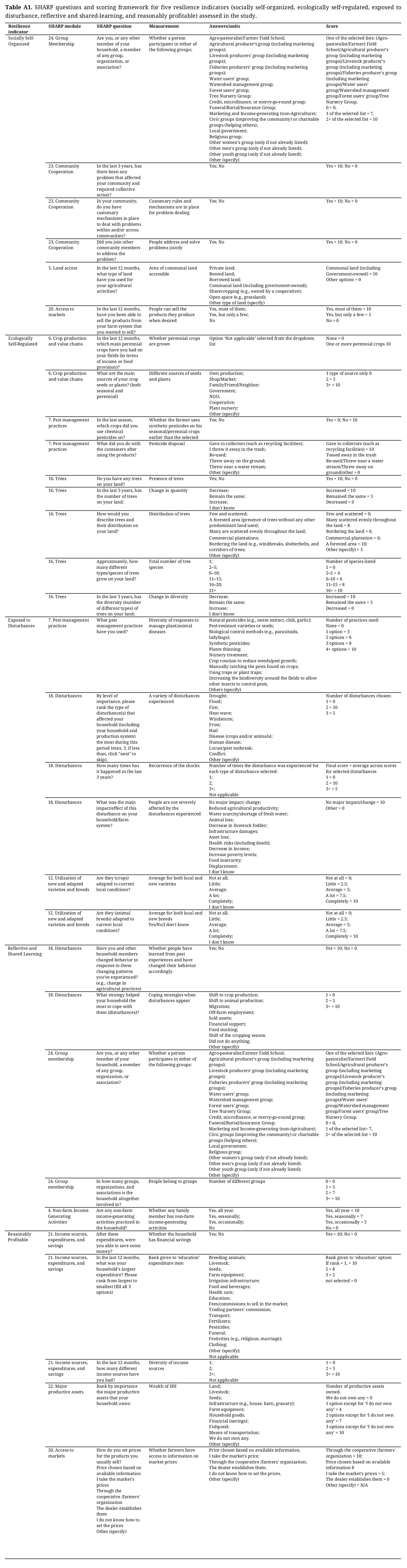 Table A1.
SHARP questions and scoring framework for five resilience indicators (socially self-organized, ecologically self-regulated, exposed to disturbance, reflective and shared-learning, and reasonably profitable) assessed in the study.
Table A1.
SHARP questions and scoring framework for five resilience indicators (socially self-organized, ecologically self-regulated, exposed to disturbance, reflective and shared-learning, and reasonably profitable) assessed in the study.
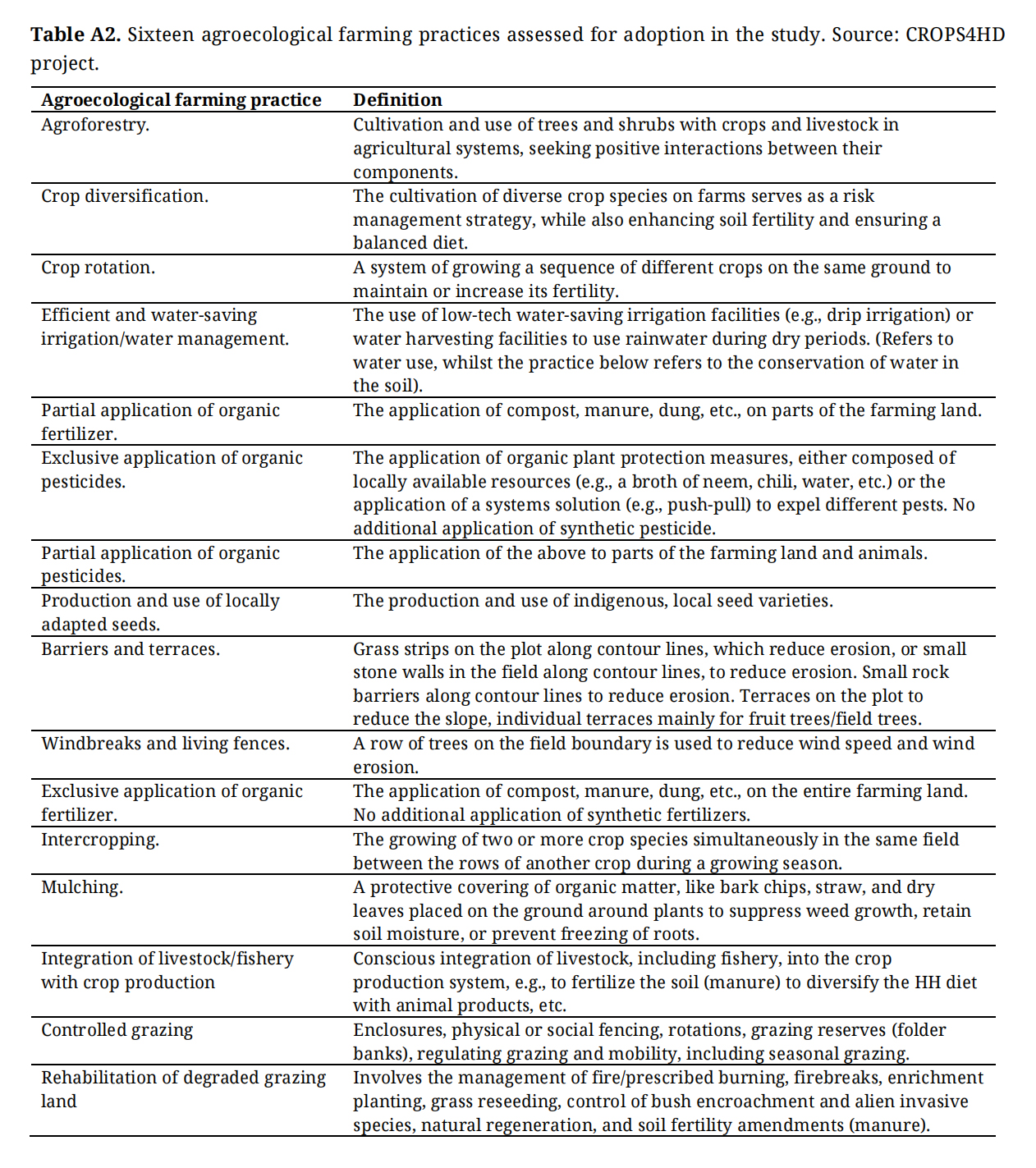 Table A2. Sixteen agroecological farming practices assessed for adoption in the study. Source: CROPS4HD project.
1.
2.
3.
4.
5.
6.
7.
8.
9.
10.
11.
12.
13.
14.
15.
16.
17.
18.
19.
20.
21.
22.
23.
24.
25.
26.
27.
28.
29.
30.
31.
32.
33.
34.
35.
36.
37.
Nwokoro CC, van den Berg S, Imbo E, Wybieralska A, Pannatier M, Monroy J, et al. Shocks, Adaptation Strategies, and Climate Resilience of Smallholder Households in Busia, Kenya. J Sustain Res. 2026;8(2):e260047. https://doi.org/10.20900/jsr20260047.

Copyright © Hapres Co., Ltd. Privacy Policy | Terms and Conditions


