Location: Home >> Detail
J Sustain Res. 2026;8(3):e260063. https://doi.org/10.20900/jsr20260063
 ,
Javier Cabañero-Fernández 2,3 ,
Manuel Martin-Utrillas 1 ,
Jorge Curiel-Esparza 1,*
,
Javier Cabañero-Fernández 2,3 ,
Manuel Martin-Utrillas 1 ,
Jorge Curiel-Esparza 1,*
1
2
3
*
The Mediterranean region, with its extreme weather and water stress, requires innovative water management strategies to handle water variability and scarcity in order to achieve SDG 13. A novel A’SWOT hybrid method, which combines SWOT analysis and the Analytic Hierarchy Process, is used for sustainable agricultural irrigation ponds planning. SWOT assesses internal and external factors, while AHP quantifies their importance. Large waterproof earth reservoirs for agricultural irrigation have strengths like cost-effectiveness and opportunities for modernizing irrigation. However, they face challenges like compatibility with existing infrastructure and regulatory hurdles. The SO strategy (>100,000 m3) is highly valued for its substantial water supply but has significant environmental impacts. The WO strategy (50,000–100,000 m3) offers a balance between capacity and flexibility. The ST strategy (20,000–50,000 m3) is ideal for localized needs, and the WT strategy (<20,000 m3) suits niche applications. Each strategy has its benefits and challenges, with the choice depending on specific regional needs. Large reservoirs provide substantial benefits but have environmental and economic considerations. Medium-sized reservoirs offer a balance, while smaller reservoirs are suitable for localized applications. Understanding these implications is crucial for making informed decisions on agricultural irrigation ponds water storage and management.
IPCC, intergovernmental panel on climate change; AIPs, agricultural irrigation ponds; SWOT, strengths weaknesses opportunities and threats; AHP, analytic hierarchy process; A’SWOT, AHP and SWOT; CI, consistency index; CR, consistency ratio; RCI, random consistency index; EAFRD, European agricultural fund for rural development; PRTR, pollutant release and transfer register
The United Nations Sustainable Development Goals 13.1 advocate for the strengthen resilience and adaptive capacity to climate change, recognizing their critical role in sustainable development [1]. Considering the pressing challenges posed by climate change, the Intergovernmental Panel on Climate Change (IPCC) has underscored the importance of investing in physical infrastructure to enhance societal resilience, particularly in regions projected to experience a 1.5-degree Celsius increase in temperature. This investment is essential for achieving food and water security, which are fundamental to the wellbeing of communities [2–4]. Within this context, the Mediterranean climate presents unique challenges, characterized by extreme weather events and significant stress on hydraulic resources [5]. These conditions necessitate innovative strategies for water management that can adapt to the increasing variability and scarcity of water, ensuring that both agricultural and urban needs are met sustainably [6]. In this context, climate change poses a severe threat to water security in the Mediterranean region. This threat necessitates strategic planning of hydraulic infrastructures in terms of both quantity and capacity [7]. The IPCC has stated that improper planning or execution of infrastructure jeopardizes water-use efficiency. Agriculture is the largest consumer of water [8]. Therefore, the efficient use of agricultural irrigation ponds (AIPs) is crucial for mitigating water shortages. AIPs enhance water-use efficiency and are essential in countries facing water scarcity and increasing demand [9,10]. AIPs can be numerous but modest in size [11], or they can be large dams that are fewer in number [12]. Thus, sustainable planning of AIPs is a complex problem that requires balancing various intangible indicators across economic, social, environmental, and safety dimensions [13–15]. Although the global distribution of ponds are focused on the Mediterranean region, this research may have a much broader appeal due to the ubiquitous nature of impoundments globally [16–18].
A’SWOT is a hybrid methodology that integrates the Analytic Hierarchy Process (AHP) with SWOT analysis to quantitatively prioritize strategic factors. The A’SWOT hybrid method has been successfully applied as a reliable technique in water and environmental governance to incorporate stakeholder priorities in elicitation procedures. For instance, Gallego-Ayala and Juízo (2011) [19] developed strategies for water resource management in Mozambique. Yavuz and Baycan (2013) [20] studied watershed management of Lake Beysehir (Turkey) to select the optimal strategy that combines social, cultural, and ecological factors. In Pohorje forest (Slovenia), relevant forest management scenarios were ranked and classified using sustainability indicators [21]. Curiel-Esparza et al. (2012) [22] achieved consensus among public and private stakeholders to plan appropriate policies for managing utility tunnels in Spain. The impact of fire on Brazilian forest plantations was evaluated by Santopuoli et al. (2016) [23] to ensure growth and production. Tahseen and Karney (2017) [24] analysed the relationships between power generation, navigation, and tourism in Niagara Falls (USA-Canada). Efficient water distribution in Kazakhstan was studied to identify critical factors for investing in innovative irrigation technologies to enhance sustainability in water governance [25]. Ozdemir and Demirel [26] analyse the internal and external factors of the tourism in Turkey and explore strategies according to these factors. In Georgia (USA), Tumpach et al. (2018) [27] assessed the perceptions of three stakeholder groups (loggers, landowners, agency foresters) to ensure the most sustainable forest management practices. The viability of the renewable energy sector in Pakistan was analysed by Kamran et al. (2020) [28] through factors such as capital investment and technology in relation to the environment. Lee et al. (2020) [29] studied strategies to enhance the development of the satellite industry.
This research focuses on the sustainable planning of AIPs through a decision-making process utilizing the A’SWOT method. The A’SWOT hybrid method combines SWOT analysis and the Analytic Hierarchy Process (AHP). The SWOT method analyses internal and external factors, while AHP quantifies the importance of these intangible factors [30–32]. The SWOT analysis evaluates future strategies based on current characteristics. To this end, the SWOT procedure involves a survey completed by a panel of experts. However, the SWOT method does not quantitatively calculate priorities. To address this limitation, AHP is applied to rank AIPs’ governance strategies through hierarchical analysis and to quantify priorities based on internal and external factors. The present study is explicitly framed within economic, social, environmental and safety criteria, which were the dimensions prioritised by the expert panel for the strategic planning of AIP storage capacity. Nevertheless, the A’SWOT framework is sufficiently flexible to accommodate additional, more site-specific criteria—such as topography, soil type, water supply reliability and filling capacity—should the decision problem shift from strategic capacity planning to reservoir site selection or to the engineering design of the reservoir. The IPCC Sixth Assessment Report (AR6), Cross-Chapter Paper 4 on the Mediterranean Region [33], explicitly calls for strategic planning of hydraulic infrastructure, including irrigation reservoirs and agricultural ponds, to ensure water security and territorial water governance under RCP4.5 and RCP8.5 climate scenarios in semi-arid Mediterranean regions. The A’SWOT framework presented here constitutes a novel methodological response to this mandate: it integrates in a structured and auditable manner the economic, social, environmental, and safety criteria that IPCC expert panels identify as critical for adaptive water governance under climate change. To date, no study had applied this framework to the strategic prioritization of storage capacity thresholds for agricultural irrigation ponds, demonstrating both the need and the opportunity to advance in this field in order to provide an operational response to the commitments of SDG 13. The specific contributions of this paper are threefold: the first census-based quantified inventory of AIPs for this territory (1674 ponds, 433 km2), with the unprecedented finding that 88% fall below 20,000 m3; the first application of the A’SWOT framework specifically to the prioritisation of storage capacity strategies for agricultural irrigation ponds, distinct from prior applications to watershed governance or large dams; and a replicable, fully documented protocol that hydraulic authorities in other semi-arid regions can adopt with bounded methodological effort.
The panel of experts assembles a SWOT matrix to analyze the key internal and external factors of the AIPs. The expert panel comprised twelve specialists selected through purposive sampling according to three criteria: (i) at least five years of accredited professional experience in agricultural hydraulic infrastructure management, hydraulic engineering, water policy, or agricultural economics; (ii) balanced representation of the main stakeholder groups—civil/hydraulic engineers (n = 3), irrigation community technicians (n = 3), regional water authority officials from the Generalitat Valenciana and the Confederación Hidrográfica del Júcar (n = 3), and farmers’ association representatives (n = 3); and (iii) geographical coverage spanning the two case-study municipalities (Albatera and Orihuela) and the broader province of Alicante. Pairwise comparisons were elicited individually via a structured questionnaire based on Saaty’s 1–9 scale. Group comparison matrices were constructed using the geometric mean aggregation method [34] the standard procedure for group AHP as it preserves matrix reciprocity. Where an individual expert’s CR exceeded the admissible threshold, the corresponding questionnaire was reviewed jointly with that expert to correct inconsistencies prior to aggregation. AHP is a decision-making methodology that systematically breaks down complex problems into a hierarchical structure [35]. At its core, AHP utilizes pairwise comparisons to evaluate criteria and alternatives, employing a standardized scale typically ranging from 1 (equal importance) to 9 (extreme importance). This approach allows decision-makers to express preferences in an intuitive manner, comparing elements two at a time. The method applies eigenvector calculations to these matrices, converting qualitative judgments into quantitative priorities. This process enables the synthesis of diverse factors, both tangible and intangible, into a single, coherent framework [36–40]. AHP also incorporates consistency checks to identify and potentially rectify inconsistencies in judgments, enhancing the reliability of the decision-making process. This comprehensive approach provides a robust framework for addressing complex decision problems, offering transparency and traceability throughout the decision-making process. The proposed methodology is shown in Figure 1. The overall A’SWOT decision-making flowchart (Figure 2) is structured in four sequential steps: (I) construction of the SWOT matrix for AIPs based on the identification of internal (strengths and weaknesses) and external (opportunities and threats) factors by the expert panel; (II) AHP pairwise comparisons using the Saaty 1–9 scale, structuring the hierarchy from the overall goal down to the SWOT groups, factors and governance strategies, followed by the construction of pairwise comparison matrices and the computation of priority vectors through the eigenvector method; (III) consistency check and validation, in which the consistency index (CI) and consistency ratio (CR) are calculated for each matrix and compared against the admissible thresholds (5%, 9% and 10% for 3 × 3, 4 × 4 and larger matrices, respectively); if the CR is not acceptable, the pairwise comparisons are revised and the questionnaires are re-examined, feeding back into Step II; and (IV) strategy prioritisation and results, where local and global priorities are combined to build the SWOT strategy matrix, rank the four AIP governance strategies (SO, WO, ST, WT) and identify the dominant strategy together with its policy implications for SDG 13. The strengths and weakness correspond to the internal analysis, and the opportunities and weaknesses to external factors. Internal and external factors of the SWOT are compared in pairwise using the 9-point scale. The SWOT factors were identified through a two-stage process. First, a systematic review of more than 30 peer-reviewed references on irrigation pond management, hydraulic infrastructure, and water governance in Mediterranean regions produced an initial list of candidate factors. Second, this list was submitted to the expert panel, which refined it through structured discussion, merging redundant factors and validating the final set by consensus, following the standard A’SWOT protocol documented in prior studies. The SWOT pairwise comparison matrix EAIPs of the AIP problem is shown in Table 1. The relative priority of each factor is determined by applying the eigenvector method to EAIPs, solving the equation det (EAIPs − λI) = 0. The resulting priority vector for EAIPs is shown in Table 1.
The AHP method also measures the consistency of expert surveys to avoid random or bias responses. For this purpose, the consistency index (CI) must first be calculated using the principal eigenvalue λmax and the order n of the matrix as follows:
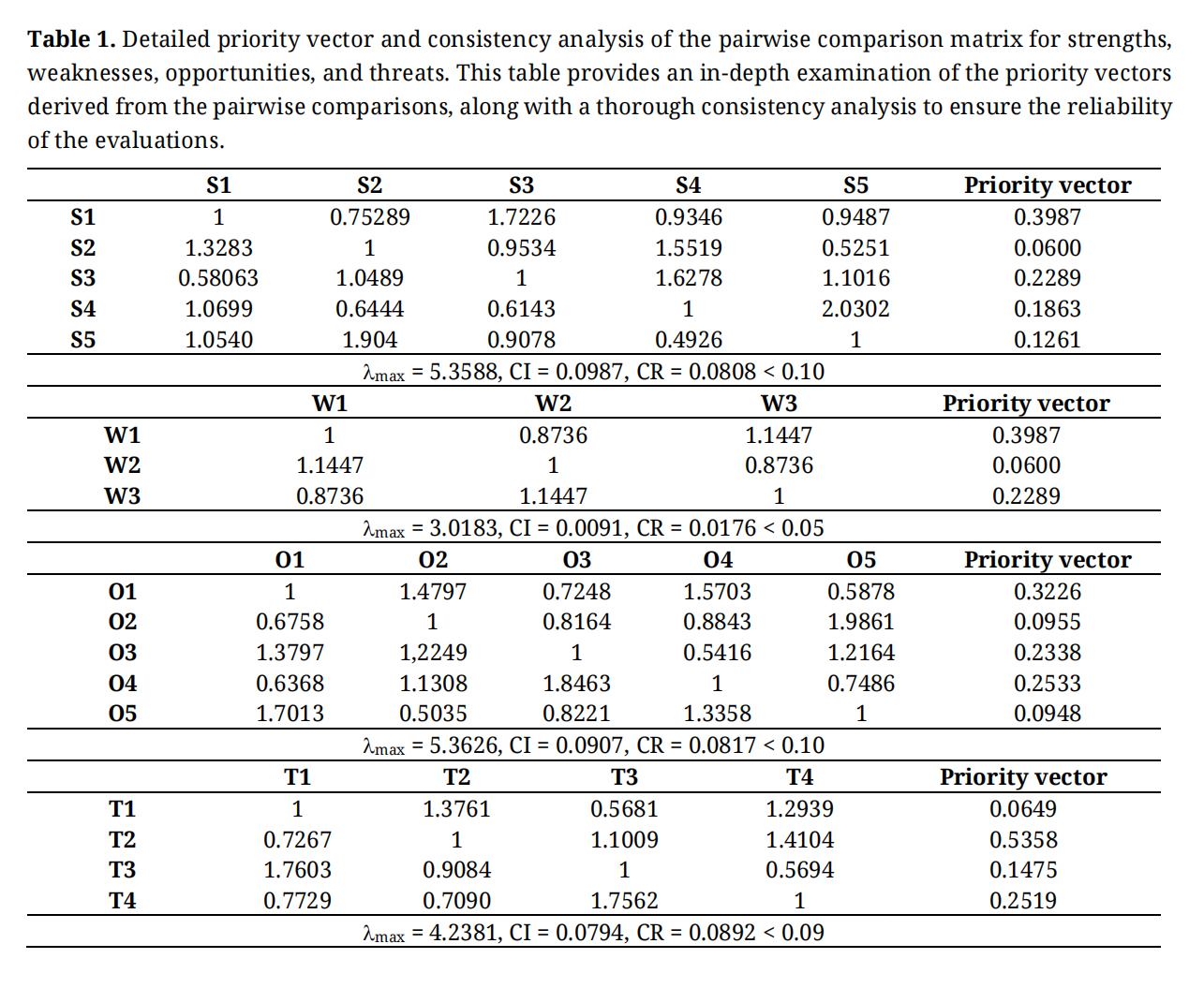 Table 1.
Detailed priority vector and consistency analysis of the pairwise comparison matrix for strengths, weaknesses, opportunities, and threats. This table provides an in-depth examination of the priority vectors derived from the pairwise comparisons, along with a thorough consistency analysis to ensure the reliability of the evaluations.
Table 1.
Detailed priority vector and consistency analysis of the pairwise comparison matrix for strengths, weaknesses, opportunities, and threats. This table provides an in-depth examination of the priority vectors derived from the pairwise comparisons, along with a thorough consistency analysis to ensure the reliability of the evaluations.
CI values near zero signifies a high degree of consistency, whereas a higher CI indicates potential inconsistencies. Finally, calculate the consistency ratio (CR) using the formula: CR = CI/RCI. CR in AHP is a measure used to assess the consistency of the judgments made in pairwise comparisons. It helps ensure that the comparisons are not random or biased. The maximum allowed values for the CR are 5% for a 3 × 3 matrix, 9% for a 4 × 4 matrix, and 10% for larger matrices. The random consistency index (RCI) is a benchmark used to assess the consistency of the pairwise comparison matrix. It represents the average CI of a large number of randomly generated matrices of the same size. The CR analysis has been conducted for each of the AHP matrices under study. For higher values of CR, panelists’ questionnaires have been re-examined. To illustrate, Table 1 shows the CR analysis results for pairwise comparison of SWOT factors. Furthermore, the A’SWOT method provides full traceability throughout the decision-making process, a requirement explicitly demanded by the IPCC AR6 Working Group II for adaptive water governance under RCP climate scenarios, while ensuring a collaborative, stakeholder-driven approach in which farmers, irrigation community technicians, water authority officials, and engineers jointly build and validate the priority structure, thereby aligning the governance process with the participatory principles of SDG 13.
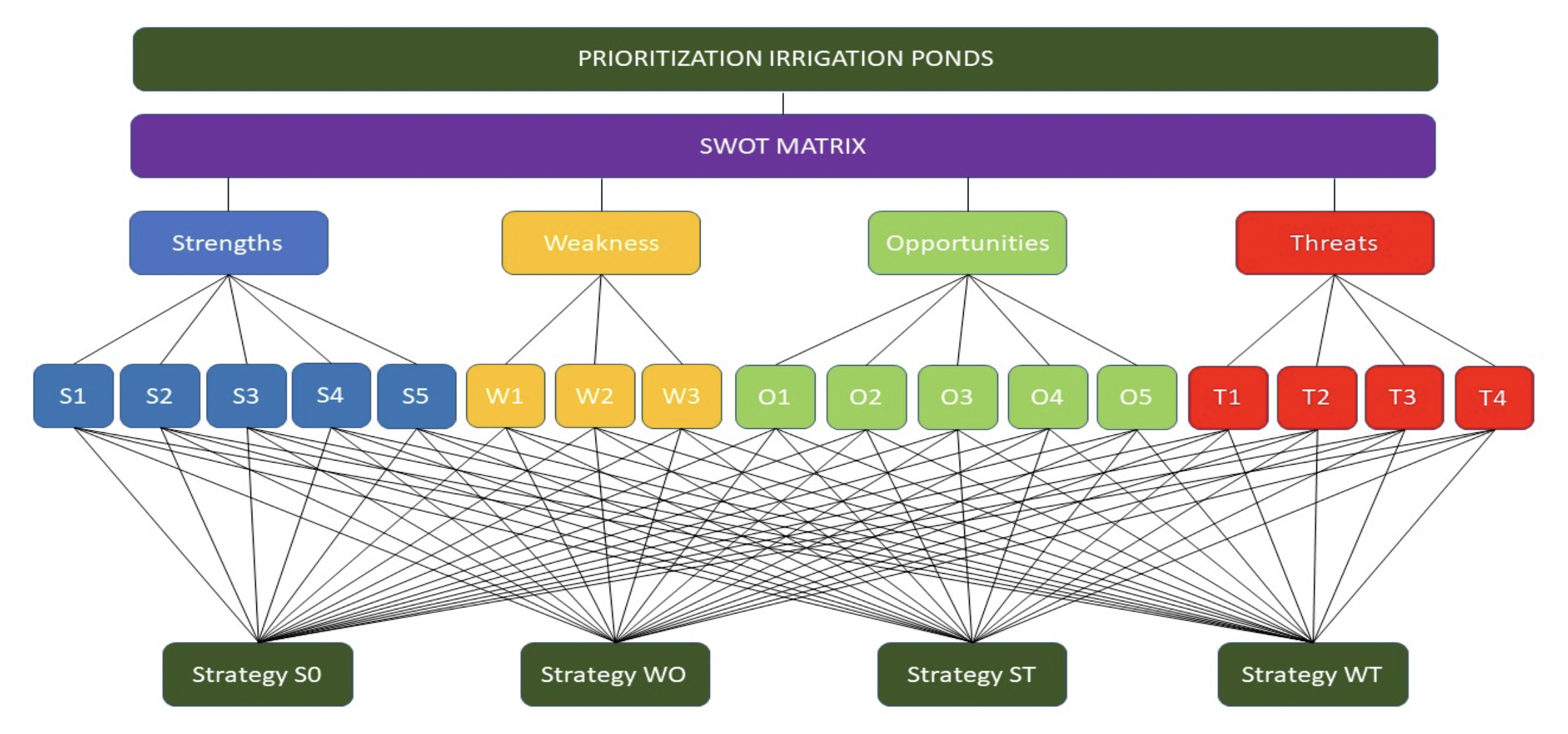 Figure 1.
Comprehensive strategic assessment via the SWOT matrix framework: An exhaustive analytical study of organizational strengths, weaknesses, opportunities, and threats for the prioritization of irrigation ponds.
Figure 1.
Comprehensive strategic assessment via the SWOT matrix framework: An exhaustive analytical study of organizational strengths, weaknesses, opportunities, and threats for the prioritization of irrigation ponds.
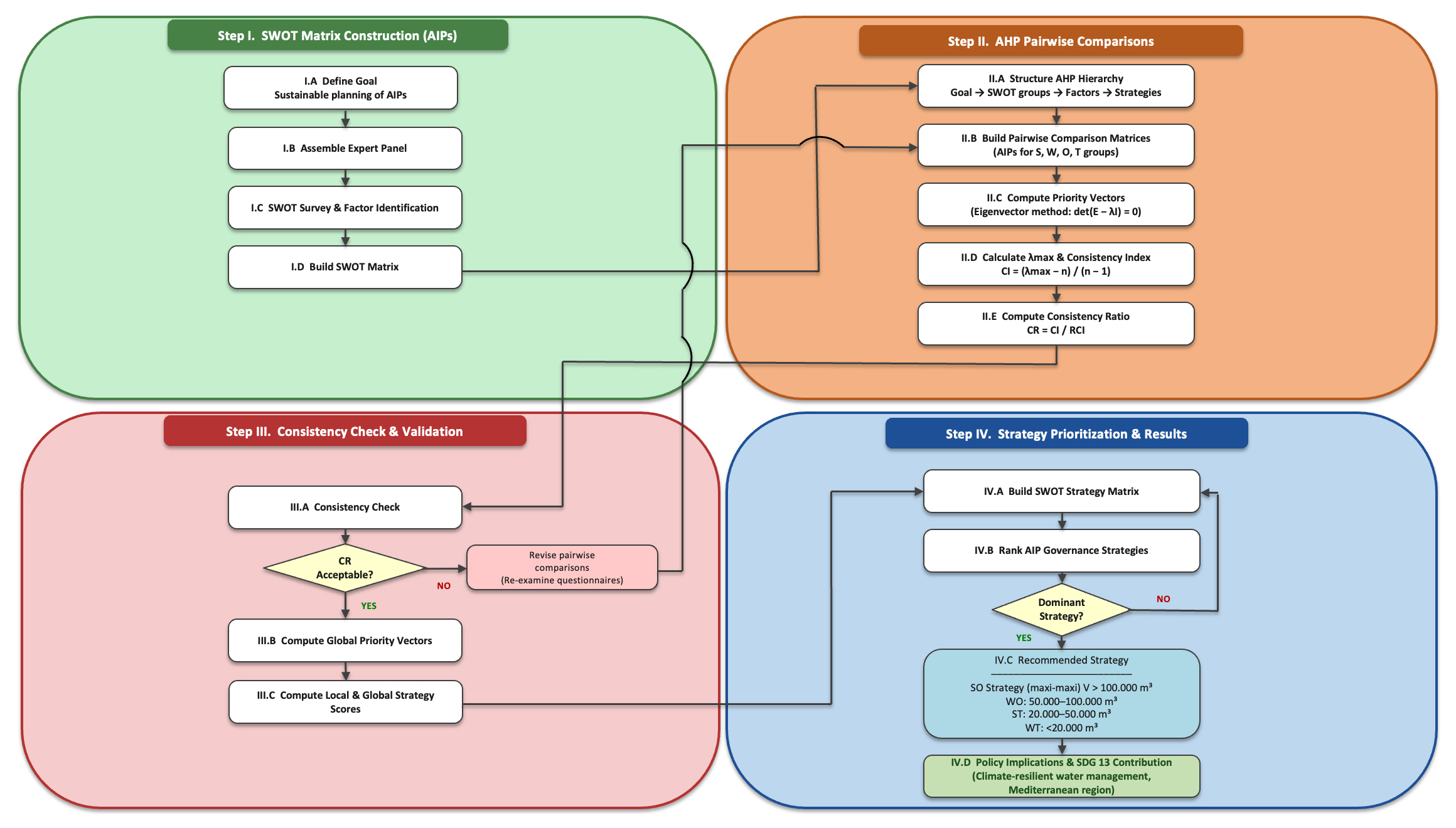 Figure 2. Decision-making flowchart.
In southeastern Spain, the province of Alicante, which is part of the Mediterranean region, faces significant challenges related to irrigation water scarcity. This shortage is primarily due to the extraction of water from overexploited aquifers, which is then stored in AIPs [41]. The spatial distribution of these AIPs exhibits a decreasing density as the distance from the coastline increases, a phenomenon noted by Martinez-Alvarez et al. (2008) [42] as shown in Figure 3. This distribution varies in size based on ownership structures, single ownership AIPs typically cover smaller areas (0.05 to 0.50 hectares) and are designed to meet water demands for less than two weeks. In contrast, larger AIPs, defined as those exceeding 0.50 hectares, are generally managed by water agencies or multiple owners and can sustain water demands for over a month.
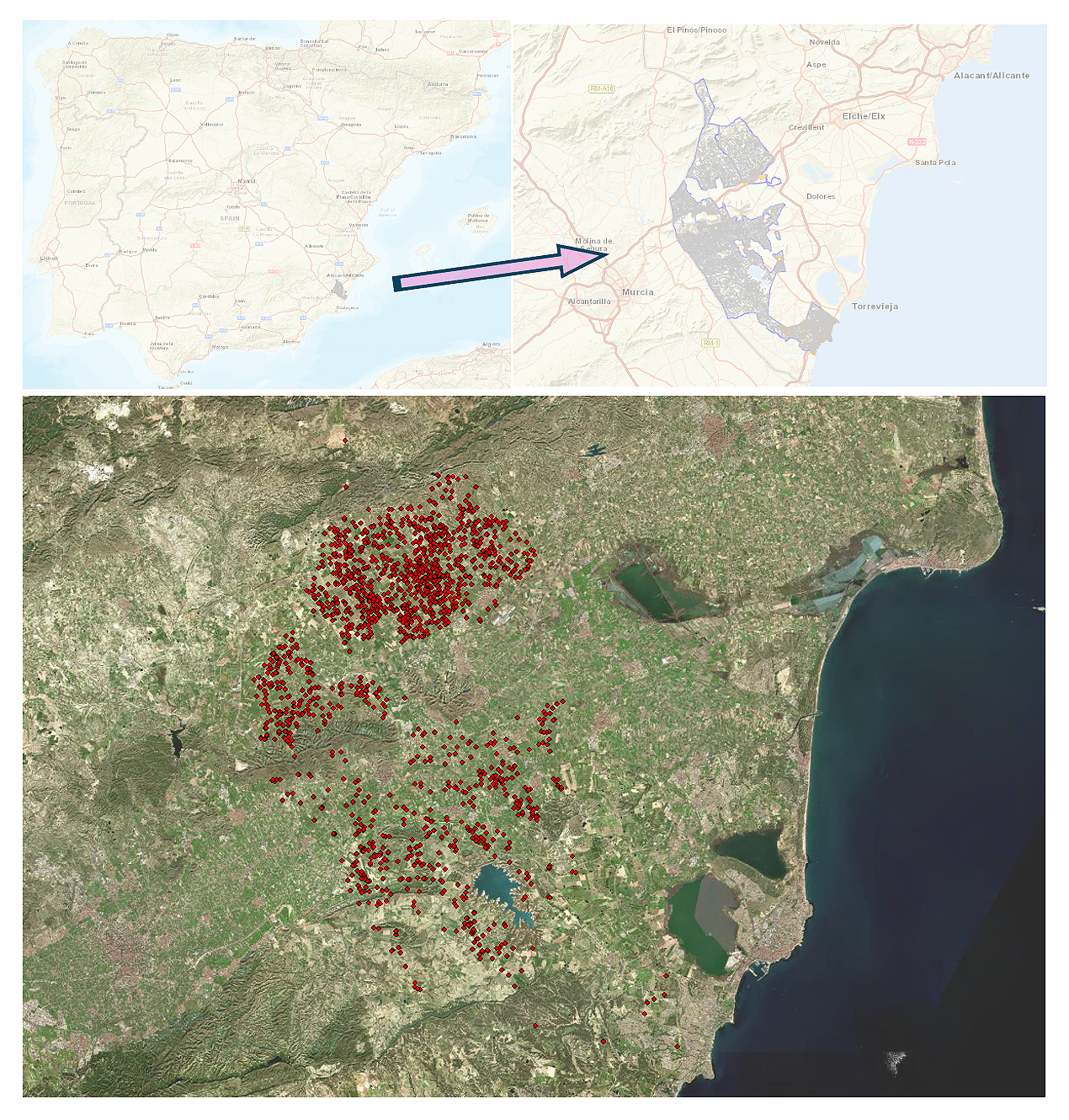 Figure 3.
AIPs localization map in the province of Alicante, which is part of the southeastern Spain and the Mediterranean region.
Figure 3.
AIPs localization map in the province of Alicante, which is part of the southeastern Spain and the Mediterranean region.
These designated irrigation areas in southeastern Spain typically reflect a property structure that, while not universally characterized by smallholdings, predominantly consists of small plots. These plots require guaranteed flow and adequate pressure for effective irrigation. A comprehensive study conducted using data from the Cadastre of the Spanish Ministry of Finance assessed the number and storage capacity of reservoirs in two municipalities of Alicante: Albatera and Orihuela. The area of Albatera is approximately 67 km2, while Orihuela covers 366 km2, resulting in a combined total of 433 km2. The density of irrigation reservoirs in this region is calculated to be 3.86 reservoirs per km2. This density indicates a reliance on numerous small reservoirs to meet irrigation needs, which may pose challenges in terms of management efficiency and resource allocation. Pond surface areas were derived from high-resolution aerial imagery [42], and the corresponding storage volumes were subsequently estimated by means of an empirical area–capacity regression function relating water surface area to storage volume:
Satellite image analysis indicated 1674 irrigation reservoirs in these municipalities. Notably, only 37 of these reservoirs have a capacity over 100,000 m3, representing a mere 2% of the total count, however, they collectively store 5,703,897 m3, which constitutes 31% of the total storage capacity. Furthermore, the number of ponds with a capacity smaller than 20,000 m3 is 1493, accounting for 36% of the total storage capacity. Therefore, a striking 88% of the waterproof earth reservoirs for irrigation have a storage volume of less than 20,000 m3. This trend can be attributed to environmental regulations in the Valencian Community, which mandate an Environmental Impact Assessment for large AIPs. These regulations are crucial for ensuring that the ecological integrity of the region is maintained, particularly considering the increasing pressures from climate change and urbanization. The Mediterranean climate, characterized by its seasonal variability and periodic droughts, further complicates the management of these water resources. The interplay between climate conditions and water availability necessitates innovative strategies for irrigation management that can adapt to changing environmental circumstances. Effective governance of AIPs is essential not only for agricultural productivity but also for the sustainability of local ecosystems. In summary, the management of irrigation ponds in Alicante exemplifies the broader challenges faced in water-scarce regions. As agricultural demands continue to rise, it is imperative to develop integrated management strategies that consider both the hydrological and socio-economic dimensions of water use. This phenomenon is not confined to the province of Alicante but is broadly representative of the Mediterranean arc. The A’SWOT methodology presented here is transferable to other semi-arid regions in the sense that neither the SWOT factors nor the AHP judgements depend on Alicante specific parameters both are reelicited with a local expert panel in each new application. However, the quantitative results reported here (strategy priorities, factor weights, capacity thresholds) should not be extrapolated directly to territories with different governance systems, water rights frameworks, or institutional contexts without conducting a new elicitation process.
The implementation of large waterproof earth reservoirs for agricultural irrigation represents a significant technological advancement in water management, particularly in regions facing water scarcity challenges. This comprehensive SWOT analysis examines the internal strengths and weaknesses, as well as the external opportunities and threats associated with these infrastructures. By thoroughly evaluating these factors, stakeholders can develop informed strategies to maximize the benefits of these reservoirs while addressing potential challenges.
AIPs StrengthsLarge waterproof earth reservoirs offer several compelling advantages that enhance their viability and effectiveness in agricultural settings.
Improvement of Water Resources (S1). One of the primary strengths of these reservoirs is their capacity to integrate desalination technology for irrigation purposes. As agriculture continuously seeks new water resources to meet growing demands, the ability to blend desalinated water with fresh water in reservoirs has emerged as a crucial solution. This integration addresses several key issues:
•
•
•
Gravity Irrigation Without Additional Energy Costs (S2). The strategic geographical positioning of these reservoirs enables gravity-fed irrigation across the entire irrigable area, which offers several benefits:
•
•
•
Professional Management (S3). The scale and complexity of large waterproof earth reservoirs necessitate professional management, which brings several advantages:
•
•
•
Reduced Water Costs (S4). Large reservoirs benefit from economies of scale, leading to reduced costs per unit volume of water:
•
•
•
Safety (S5). Modern construction practices and professional management significantly enhance the safety of these reservoirs:
•
•
•
Despite their numerous advantages, large waterproof earth reservoirs also present several challenges that need to be addressed.
Compatibility with Old Irrigation Networks (W1). The integration of large reservoirs with existing irrigation infrastructure can be problematic:
•
•
•
Resilience (W2). The centralized nature of large reservoirs introduces vulnerabilities:
•
•
•
Increased Demand for Safety Features (W3). Larger reservoirs require more sophisticated safety measures:
•
•
•
Large waterproof earth reservoirs present significant strategic opportunities for agricultural development and efficient water management.
Essential for Community Irrigation Planning (O1). These reservoirs play a crucial role in modernizing extensive irrigation areas:
•
•
•
Optimizing Basin Water Management (O2). Large reservoirs contribute to more efficient water management at the basin level:
•
•
Economic Development Zone (O3). The implementation of large reservoirs and associated community irrigation networks can stimulate economic growth:
•
•
•
Greater surface for cultivation in private plots (O4). By removing small waterproof earth reservoirs for irrigation from private properties due to the existence of a large community raft, this space can be used for planting. The farmer gets more yield per m2 from his farm.
Public Subsidies (O5). Access to public funding, particularly from European sources like EAFRD or PRTR, presents significant opportunities:
•
•
•
The implementation of large waterproof earth reservoirs faces several external challenges that must be carefully considered and addressed.
Regulatory Challenges (T1). Navigating the complex landscape of environmental and safety regulations can be daunting:
•
•
•
Potential Damage (T2). The large volume of water stored in these reservoirs presents inherent risks:
•
•
•
Social Rejection (T3). Public perception and acceptance play a crucial role in the success of large reservoir projects:
•
•
•
Economic Pressures on Agriculture (T4). Broader economic challenges in the agricultural sector can impact the viability of large reservoir projects:
•
•
•
SWOT analysis is a strategic planning framework that enables policymakers to identify and evaluate water management internal strengths and weaknesses alongside external opportunities and threats. This comprehensive approach facilitates informed decision-making and strategic formulation by categorizing critical factors that influence AIPs’ governance. The analysis yields four primary strategy types: SO (Strengths-Opportunities), WO (Weaknesses-Opportunities), ST (Strengths-Threats), and WT (Weaknesses-Threats) as shown in Figure 4. The SO strategy focuses on leveraging internal strengths to capitalize on external opportunities, thereby maximizing potential benefits. The correspondence between SWOT strategies and capacity ranges was established by the expert panel based on two complementary criteria: (i) the internal logic of the SWOT quadrants—the SO strategy (maxi-maxi) maximises system advantages and therefore corresponds to the largest infrastructure, while the WT strategy (mini-mini) minimises risk exposure through the smallest scale; and (ii) regulatory thresholds defined in Royal Decree 9/2008 (Spain), which sets 100,000 m3 as the mandatory Environmental Impact Declaration threshold for large agricultural reservoirs, and in the technical criteria of the Spanish Directorate-General for Water. Conversely, the WO strategy aims to minimize internal weaknesses while seizing external opportunities. This approach encourages policymakers to address deficiencies, such as skill gaps or resource limitations. The ST strategy seeks to utilize strengths to mitigate or counteract external threats. Lastly, the WT strategy focuses on minimizing both weaknesses and threats, often resulting in defensive measures aimed at preserving viability. This may involve restructuring infrastructures or reallocating resources to enhance operational efficiency and resilience. Each of these strategies plays a crucial role in guiding policymakers through complex decision environments, allowing them to navigate challenges and capitalize on opportunities effectively. By systematically analyzing the interplay between internal and external factors, policymakers can develop tailored strategies that align with their unique contexts and objectives. Ultimately, the effective application of SWOT analysis fosters strategic agility, enabling policymakers to adapt proactively to changing circumstances while maintaining a competitive edge in water resources management. Through continuous evaluation and refinement of these strategies, policymakers can enhance their long-term sustainability and societal resilience in the pressing challenges posed by climate change. Within the scope of this research, the panelists have established the following AIPs’ governance strategies:
•
•
•
•
After conducting the collaborative elicitation based on A’SWOT, the following outcomes were obtained for the proposed AIPs’ governance strategies to be implemented (see Table 2). In the context of constructing large reservoirs, the SO strategy (construction of large reservoirs greater than 100,000 m3) is the most valued, accounting for 46.5%. The WO alternative (construction of large waterproof reservoirs with volumes between 50,000 m3 and 100,000 m3) is the second most relevant strategy, with 25.2%. The ST and WT strategies (construction of large waterproof reservoirs with volumes between 20,000 m3 and 50,000 m3, and construction of large waterproof reservoirs with volumes less than 20,000 m3, respectively) are similar in percentage, with 13.9% and 14.4%.
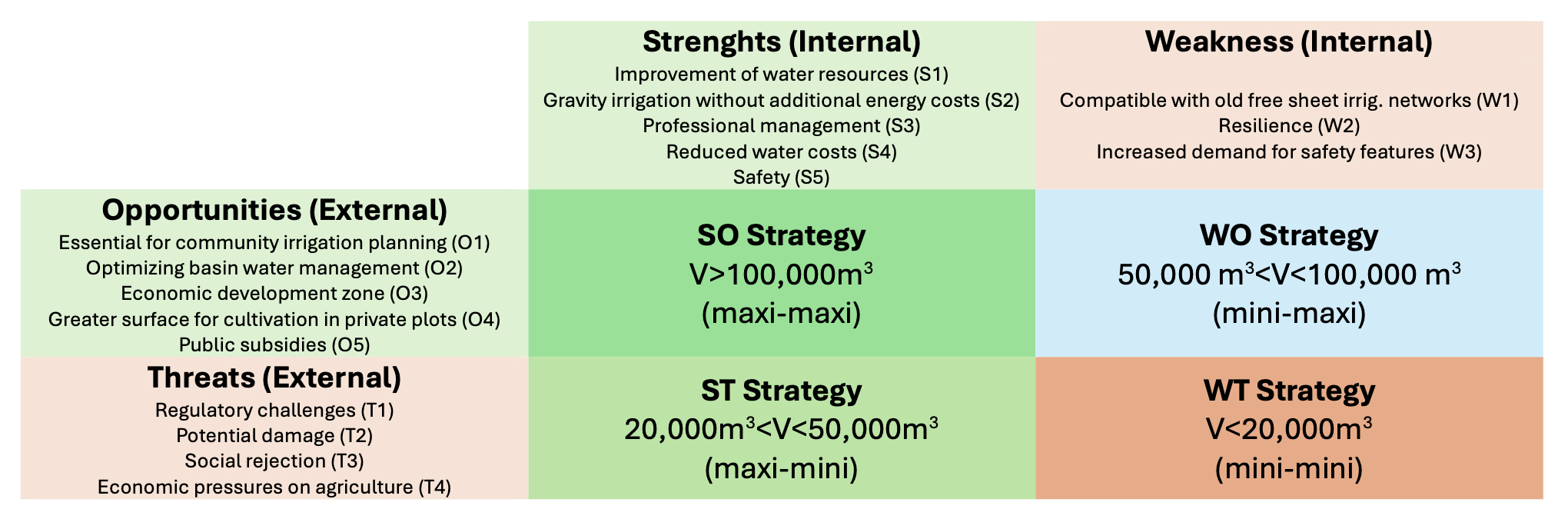 Figure 4. SWOT matrix for strategic decision support system for APIs planning.
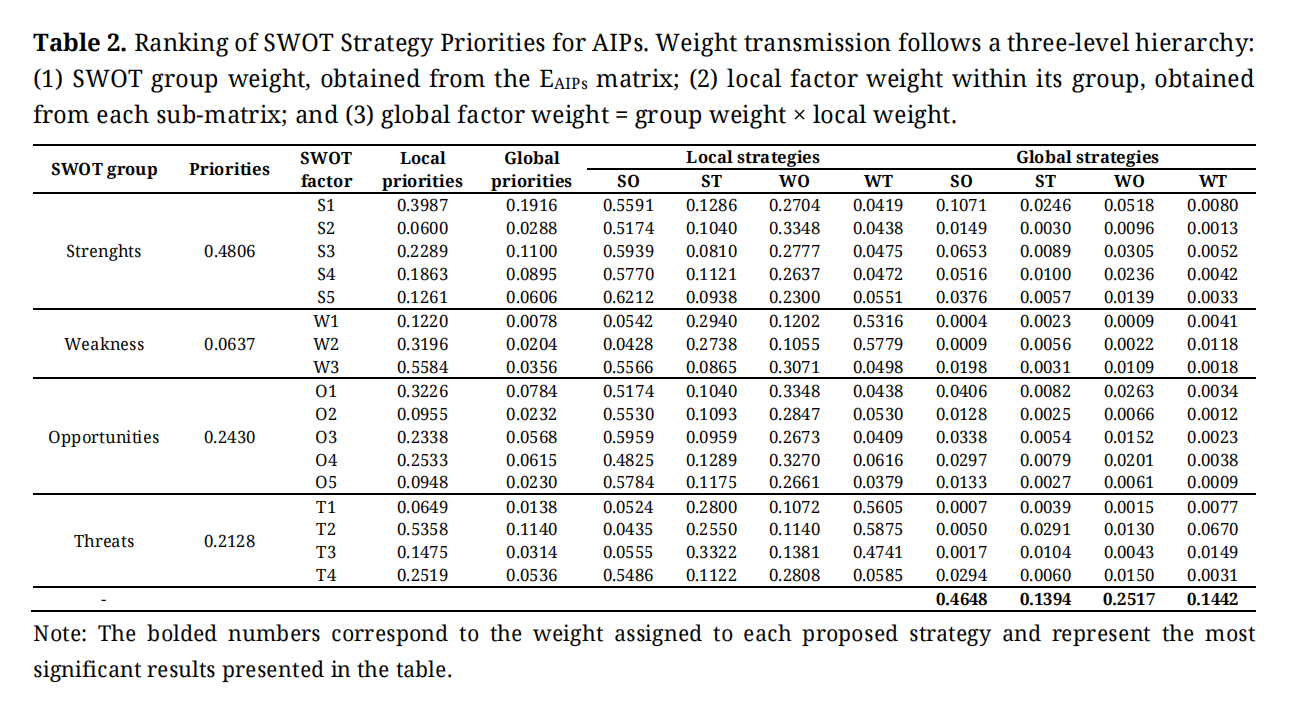 Table 2.
Ranking of SWOT Strategy Priorities for AIPs. Weight transmission follows a three-level hierarchy: (1) SWOT group weight, obtained from the EAIPs matrix; (2) local factor weight within its group, obtained from each sub-matrix; and (3) global factor weight = group weight × local weight.
Table 2.
Ranking of SWOT Strategy Priorities for AIPs. Weight transmission follows a three-level hierarchy: (1) SWOT group weight, obtained from the EAIPs matrix; (2) local factor weight within its group, obtained from each sub-matrix; and (3) global factor weight = group weight × local weight.
It is important to clarify what the model contributes beyond intuitive judgement. If the outcome were simply ‘larger is always better’, one would expect the SO strategy to obtain an overwhelming preference (≈80–90%); instead, the model produces SO = 46.5% and WO = 25.2%, concentrating nearly a third of total expert weight in the intermediate segment (50,000–100,000 m3)—a result that would not emerge from common-sense reasoning alone. The model further reveals that the most valued strength is S1 (water resource improvement, weight 0.3987), not S2 (gravity irrigation, 0.0600), contradicting the intuition that energy savings are the dominant argument; and that the dominant threat is T2 (potential damage, weight 0.5358), far above T1 (regulatory challenges, 0.0649), identifying safety as the primary risk driver. Furthermore, the A’SWOT method provides full traceability throughout the decision-making process—a requirement explicitly demanded by IPCC AR6 for adaptive water governance under RCP scenarios—while ensuring a collaborative, stakeholder-driven approach in which farmers, irrigation community technicians, water authority officials, and engineers jointly build and validate the priority structure. Without the model, a decision-maker may reach the same top-level conclusion intuitively, but cannot defend it transparently to European funding bodies or public participation processes. The consistency indicators (CR < 10% for all matrices) guarantee that the declared preferences are neither random nor contradictory.
The SWOT analysis of large waterproof earth reservoirs for agricultural irrigation reveals a complex interplay of factors that influence their implementation and success. These reservoirs offer significant strengths in terms of water resource management, cost-effectiveness, and professional oversight. They present opportunities for modernizing irrigation practices, optimizing water use at a basin level, and stimulating economic development in agricultural regions. However, the weaknesses identified, such as compatibility issues with existing infrastructure and the need for advanced safety measures, highlight the challenges that must be addressed in their design and implementation. Moreover, the threats posed by regulatory hurdles, potential environmental impacts, and broader economic pressures in the agricultural sector underscore the need for careful planning and stakeholder engagement. To maximize the benefits of these reservoirs while mitigating risks, a A’SWOT multifaceted approach has been applied.
In the context of constructing large reservoirs, the SO strategy (construction of large reservoirs greater than 100,000 m3) is the most valued, accounting for 46.5%. This strategy is particularly significant due to its ability to provide a substantial and reliable water supply for various uses, including urban, agricultural, and industrial applications. Large reservoirs of this magnitude are essential for regions with high water demand, as they can store vast quantities of water, ensuring availability during dry periods or droughts. However, the construction and operation of such large reservoirs come with significant environmental impacts, including habitat disruption, changes in local ecosystems, and potential displacement of communities. Despite these challenges, the economic benefits of large reservoirs are considerable, as they can boost local economies through job creation, recreational opportunities, and increased agricultural productivity.
The WO alternative (construction of large waterproof reservoirs with volumes between 50,000 m3 and 100,000 m3) is the second most relevant strategy, with 25.2%. This strategy offers a balance between capacity and flexibility, making it suitable for regions with moderate water demand. These reservoirs are large enough to provide a reliable water supply, but they are generally less expensive to construct and maintain compared to the largest reservoirs. The environmental footprint of WO reservoirs is smaller, but they still require careful planning and management to minimize negative impacts on local ecosystems. Sediment management is a critical aspect of maintaining the functionality of these reservoirs, as sediment accumulation can reduce their storage capacity over time. The cost-effectiveness of WO reservoirs make them an attractive option for many regions, providing a practical solution for water storage and management.
The ST strategy (construction of large waterproof reservoirs with volumes between 20,000 m3 and 50,000 m3) accounts for 13.9%. These reservoirs are ideal for localized water supply needs, such as small communities or agricultural areas. Their smaller size makes them easier to manage and maintain, with less complex infrastructure requirements. The environmental impact of ST reservoirs is reduced compared to larger reservoirs, but they still need to be carefully planned to avoid negative effects on local habitats and ecosystems. The affordability of ST reservoirs makes them accessible for smaller projects, providing a viable solution for regions with limited financial resources. These reservoirs can also serve as supplementary water sources, enhancing the resilience of larger water supply systems.
The WT strategy (construction of large waterproof reservoirs with volumes less than 20,000 m3) is similar in percentage to the ST strategy, accounting for 14.4%. These small reservoirs are suitable for niche applications, such as irrigation for small farms, emergency water storage, or providing water for specific industrial processes. Their small size results in minimal environmental disruption, making them an environmentally friendly option for water storage. The quick implementation of WT reservoirs is another advantage, as they can be constructed and brought online relatively quickly compared to larger reservoirs. However, their limited capacity restricts their usefulness for large-scale water supply. Despite this limitation, WT reservoirs play a crucial role in meeting specific water needs and enhancing the overall resilience of water supply systems.
In summary, each strategy has its own set of benefits and challenges. The choice of strategy depends on the specific needs and conditions of the area where the reservoir is being constructed. Large reservoirs (SO strategy) provide substantial water supply benefits but come with significant environmental and economic considerations. Medium-sized reservoirs (WO strategy) offer a balance between capacity and flexibility, with moderate environmental impacts and cost-effectiveness. Smaller reservoirs (ST and WT strategies) are ideal for localized or niche applications, with reduced environmental impacts and easier management but limited capacity. Within our research area, a Spanish mediterranean region, the SO strategy (maxi-maxi), involving the construction of large reservoirs exceeding 100,000 m3, is the most highly valued, representing 46.5% of the total. The WO alternative (mini-maxi), which entails the construction of large waterproof reservoirs with capacities ranging from 50,000 m3 to 100,000 m3, is the second most significant strategy, accounting for 25.2%. Understanding these implications is crucial for making informed decisions about AIPs water storage and management in different regions. The results of this study contribute substantively to SDG 13 through two specific targets. With respect to target 13.1 (strengthen resilience and adaptive capacity to climate-related hazards), the SO strategy—prioritized at 46.5%—maximises water storage capacity during wet periods to guarantee agricultural supply during drought episodes, a direct adaptation measure in a region projected to experience significant rainfall reductions under RCP4.5 and RCP8.5 IPCC scenarios for the western Mediterranean. With respect to target 13.2 (integrate climate change measures into national policies), the A’SWOT framework provides a structured, auditable governance tool that enables hydraulic authorities to justify investment decisions for climate-resilient infrastructure to public stakeholders and European funding bodies.
The dataset of the study is available from the authors upon reasonable request.
Conceptualization, JC-P, JC-F, MM-U and JC-E; methodology, JC-P, JC-F, MM-U and JC-E; validation, JC-P, JC-F and JC-E; formal analysis, JC-P, JC-F, MM-U and JC-E; investigation, JC-P, JC-F, MM-U and JC-E; resources, JC-F and MM-U; data curation, JC-F and MM-U; writing—original draft preparation, JC-P, JC-F, MM-U and JC-E; writing—review and editing, JC-P and JC-E; visualization, JC-P, JC-F and JC-E; supervision, JC-P, JC-F, MM-U and JC-E. All authors have read and agreed to the published version of the manuscript.
The authors declare that they have no conflicts of interest.
Funding for open access charge: Universitat Politècnica de València (Grant PAID-12-26, 2026 April 23).
1.
2.
3.
4.
5.
6.
7.
8.
9.
10.
11.
12.
13.
14.
15.
16.
17.
18.
19.
20.
21.
22.
23.
24.
25.
26.
27.
28.
29.
30.
31.
32.
33.
34.
35.
36.
37.
38.
39.
40.
41.
42.
Canto-Perello J, Cabañero-Fernández J, Martin-Utrillas M, Curiel-Esparza J. Prioritizing irrigation ponds strategies for SDG 13: A’SWOT hybrid elicitation for climate change resilient water management in the Mediterranean region. J Sustain Res. 2026;8(3):e260063. https://doi.org/10.20900/jsr20260063.

Copyright © Hapres Co., Ltd. Privacy Policy | Terms and Conditions


