Location: Home >> Detail
J Sustain Res. 2026;8(3):e260070. https://doi.org/10.20900/jsr20260070
 ,
Heather R. Jordan
,
Heather R. Jordan
Department of Biological Sciences, Mississippi State University, Mississippi State, MS 39762, USA
* Correspondence: Jordan A. Smink.
The black soldier fly (Hermetia illucens, BSF) has emerged as a promising biological platform for converting organic waste into recoverable resources, including insect protein, lipids, frass fertilizer, biodiesel precursors, and biomaterials. Although previous reviews have described BSF larvae as efficient agents of waste reduction or alternative feed production, fewer have integrated larval–microbial bioconversion mechanisms with product quality, contaminant fate, environmental performance, economic feasibility, and regulatory readiness. This review addresses that gap by evaluating BSF-mediated waste management as a decision-oriented circular bioeconomy system. We synthesize evidence on how feedstock composition, larval physiology, gut-associated microbiota, environmental conditions, and substrate pretreatments influence bioconversion efficiency and downstream product value. We further examine how these biological and operational variables interact with greenhouse gas mitigation, frass fertilizer performance, biodiesel and chitosan production, techno-economic constraints, and safety concerns related to pathogens, heavy metals, microplastics, and per- and polyfluoroalkyl substances. By distinguishing well-supported applications, such as clean organic waste and manure valorization, from emerging or uncertain pathways, this review clarifies the current readiness of BSF technologies and identifies areas where claims remain insufficiently validated. The resulting synthesis provides a framework for linking ecological principles with applied engineering, risk assessment, and policy considerations, thereby advancing BSF systems from descriptive promise toward safe, scalable, and evidence-based implementation.
Food and organic waste represent a major global environmental challenge because they contribute to resource loss, landfill demand, and greenhouse gas emissions during decomposition. Approximately one third of food produced for human consumption is lost or wasted globally, with substantial consequences for climate mitigation, nutrient cycling, and sustainable waste management [1,2]. As a result, biological approaches that recover value from organic waste streams are increasingly important within circular bioeconomy and sustainable resource-management frameworks.
Black soldier fly larvae (Hermetia illucens, BSF) have received growing attention as biological agents for organic waste bioconversion. BSF larvae can consume diverse organic substrates, including food waste, some agricultural residues, and some industrial organic by-products, while converting a fraction of these materials into larval biomass and residual frass [3,4]. Larval biomass can be processed into protein meal, lipids, and other products, while frass may serve as an organic soil amendment. These outputs link BSF systems to multiple sustainability goals, including waste diversion, nutrient recovery, alternative feed production, and reduced reliance on conventional fertilizers.
Despite this promise, BSF-based waste management should not be evaluated only by waste-reduction capacity or product generation. Its performance depends on how biological and operational conditions interact across the full system, from feedstock selection and larval development to substrate pretreatment and downstream processing. These conditions shape bioconversion efficiency, product quality, emissions, contaminant transfer, pathogen reduction, economic feasibility, and regulatory acceptance. Clean food and agricultural residues may support relatively straightforward resource recovery, whereas contaminated substrates can introduce biological and chemical risks that limit safe reuse of larvae or frass.
Much of the current literature treats BSF systems in separate parts, with one body of work focused on larval biology, another on waste reduction or feed production, and others on frass, environmental impacts, economics, or regulation. This separation makes it difficult to evaluate BSF as an integrated environmental technology. Existing reviews have often emphasized biological efficiency, alternative feed potential, or individual product streams, but fewer have considered how system performance, contaminant fate, emissions, product safety, market feasibility, and regulatory constraints interact. As a result, it remains difficult to distinguish applications that are ready for implementation from those that still require validation.
This review addresses that gap by positioning BSF-mediated organic waste valorization as a decision-oriented circular bioeconomy system rather than a general waste-reduction tool. This review contributes the integration of substrate suitability, larval-microbial mechanisms, product recovery, contaminant risk, environmental performance, economic feasibility, regulatory acceptance, and emerging technological readiness within a single evaluative framework. By asking which BSF applications are currently actionable, which remain conditional, and which require further validation, this review provides a targeted synthesis for assessing safe and scalable deployment rather than another broad overview of BSF biology or product potential.
This review was designed as a critical, decision-oriented synthesis rather than a systematic meta-analysis. The literature was selected to represent factors that determine whether BSF-mediated organic waste valorization is likely to be safe, scalable, and environmentally defensible. These factors include substrate suitability, larval-microbial bioconversion mechanisms, process efficiency, product recovery, contaminant fate, environmental performance, economic feasibility, regulatory constraints, and emerging technological applications.
Literature was identified through keyword-based searches focused on BSF-mediated organic waste valorization. Search terms included “black soldier fly,” “organic waste,” “waste management,” “food waste,” “frass,” “bioconversion,” “BSF microbiome,” “heavy metals,” “and microplastics.” Approximately ten recently published or newly identified papers were screened each month to capture emerging work relevant to BSF-mediated waste valorization. Earlier foundational studies were also retained when they provided essential background, benchmark data, or widely cited methodological context. Priority was given to peer-reviewed studies and recent reviews that provided experimental data, comparative performance metrics, life cycle or techno-economic analysis, contaminant assessment, or regulatory and implementation context.
Because studies differ widely in substrate type, rearing conditions, larval density, treatment duration, and performance metrics, quantitative values were interpreted as reported benchmarks rather than directly pooled estimates. This approach allows comparison across studies while avoiding overgeneralization from systems that are not methodologically equivalent.
The conceptual framework used in this review evaluated BSF systems across three linked questions: whether substrates can be converted consistently under reported rearing conditions, whether recovered products meet safety expectations for their intended end use, and whether applications have enough supporting evidence to justify responsible deployment beyond laboratory-scale proof of concept. In this context, “reliable” refers to repeated evidence or larval survival, growth, waste reduction, and biomass or frass production across relevant substrates and operating conditions; “safe” refers to evidence that pathogens, heavy metals, microplastics, PFAS, or other contaminants are absent, reduced or controlled at levels compatible with intended feed, fertilizer, fuel or biomaterial uses; and “sufficiently developed” refers to applications supported by experimental performance data together with some consideration of scalability, product quality, economic feasibility, or regulatory acceptance. This framing distinguishes applications with comparatively high implementation readiness from applications that remain conditional or exploratory. Applications were considered to have higher readiness when multiple studies reported consistent conversion performance, recoverable product value, manageable safety risks, and at least some evidence of scalability, economic feasibility, or regulatory acceptance. Applications were treated as conditional or exploratory when evidence was limited to laboratory-scale studies, depending on narrow substrate or processing conditions, involved unresolved contaminant or safety concerns, or lacked clear end-use pathways. In this review, “actionable” refers to BSF applications that have enough evidence to support cautious pilot-scale or operational deployment whereas “additional validation” refers to the need for further testing or performance, contaminant fate, product quality, economic feasibility, or regulatory acceptability before broader implementation. Using this approach, selected food waste and manure valorization were treated as comparatively mature applications, while contaminated substances, high-value biomaterials, prevision rearing technologies, and bioregenerative life-support systems were evaluated as more conditional or emerging pathways. By organizing the review around evidence strength and implementation readiness, this framework clarifies where BSF technologies are currently actionable and where additional validation is still needed. The readiness categories and evaluative criteria used to organize this synthesis are summarized in Table 1.
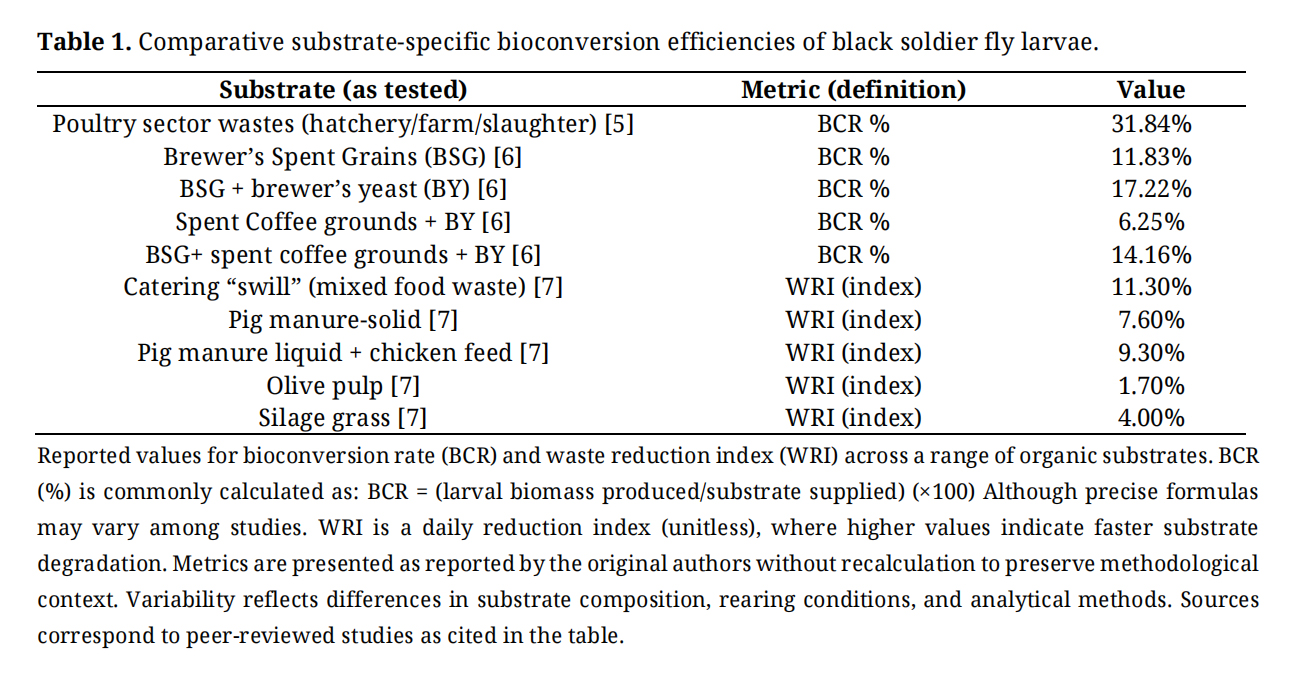 Table 1. Comparative substrate-specific bioconversion efficiencies of black soldier fly larvae.
Black soldier fly larvae (Hermetia illucens, BSF) are useful for organic waste bioconversion because their larval stage combines rapid feeding, high substrate consumption, and the accumulation of protein- and lipid-rich biomass [3,8]. These traits allow BSF larvae to convert suitable organic substrates into recoverable biomass and residual frass, but performance is strongly conditional on substrate composition and rearing conditions. The basic BSF life cycle is summarized in Figure 1, while the main text focuses on substrate suitability and process performance. BSF development and feeding activity are influenced by temperature, moisture, larval density, and nutrient availability, which together determine survival, growth rate, waste reduction, and biomass yield [3,9–12].
Although BSF larvae are often described as capable of processing diverse organic wastes, substrate suitability is not universal. The strongest evidence supports nutrient-rich substrates such as food waste, selected livestock manures, and some agro-industrial byproducts [4,9,13–15]. In contrast, low-nutrient or highly lignocellulosic residues, including untreated crop straw, generally do not support efficient larval growth unless they are pretreated, blended with more digestible materials, or otherwise conditioned before use [10,13,16]. This distinction is important because overgeneralizing BSF substrate range can lead to unrealistic claims about waste-management readiness [4,10].
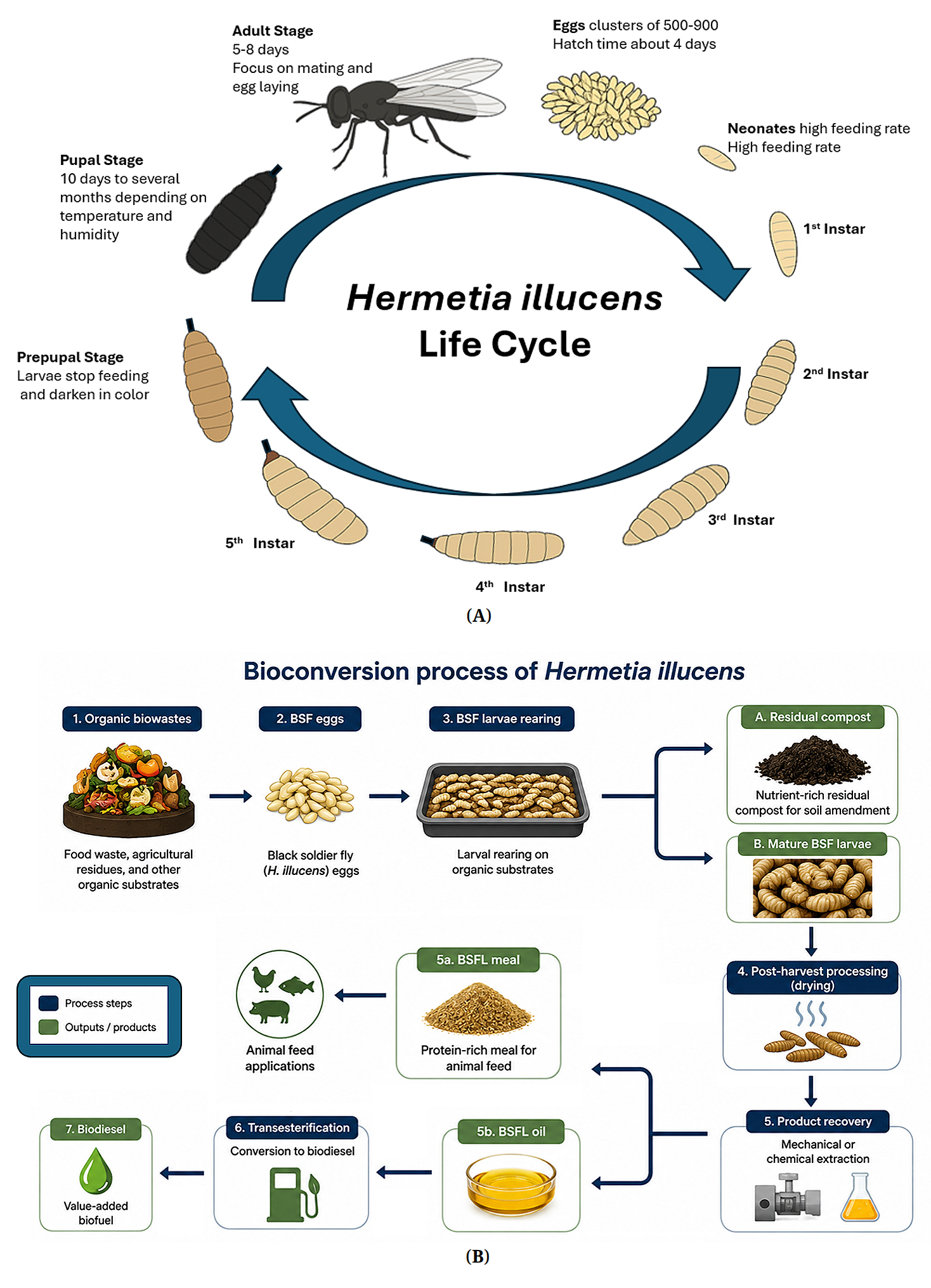 Figure 1. Life cycle of the black soldier fly (Hermetia illucens, BSF) and schematic representation of the bioconversion process. (A) The complete developmental cycle of BSF comprising the egg stage (clusters of 500–900 eggs; hatching in approximately 4 days), the neonate stage (characterized by high feeding activity), five successive larval instars (1st–5th instar; total duration 13–18 days under optimal conditions), the prepupal stage (larvae cease feeding and darken in color; ~7 days), the pupal stage (10 days to several months, dependent on temperature and humidity), and the adult stage (5–8 days, dedicated to mating and oviposition). (B) Overview of the BSF bioconversion process, in which organic biowaste substrates are used for larval rearing, yielding mature larvae and residual compost. Post harvest, larvae can be dried and processed into BSF larvae meal for use as animal feed or subject to mechanical or chemical extraction to obtain BSF larvae oil. Extracted oil can subsequently be converted into biodiesel via transesterification, providing an additional value-added product.
BSF-mediated bioconversion is driven by both larval feeding and microbial activity within the substrate and larval gut. Gut-associated microbes contribute to the breakdown of complex organic compounds and can influence nutrient availability, larval growth, and product composition. Because the gut microbiome responds strongly to substrate composition, differences among feedstocks help explain why bioconversion efficiency varies across studies and production systems [13,17–21].
Substrate composition is therefore one of the main controls on BSF performance. Moisture content, digestible carbohydrate availability, protein content, fiber level, and nutrient balance all affect larval survival, growth rate, waste reduction, and biomass yield. These factors also influence the residual frass, including its nutrient profile and suitability as a soil amendment. As a result, reported outcomes are not always directly comparable across studies because experiments often differ in substrate preparation, larval density, rearing duration, temperature, and the metrics used to define conversion efficiency [22–24]. Recent food-waste studies further show that specific substrate properties can alter BSF larval performance and microbial dynamics. For example, fermented food-waste can also change larval yield and intestinal microbial composition, with fermented substrates dominated by Lactobacillus and larval gut communities commonly dominated by Enterococcus and Klebsiella [25]. More broadly, substrate properties influence gut microbiota and bioconversion efficiency, reinforcing that BSF performance is closely tied to feedstock properties, pretreatment history, and nutrient balance rather than larval activity alone [26].
Pretreatment can improve performance when substrates are physically or chemically difficult for larvae and microbes to use. Data have shown that fermentation, ammonia treatment, size reduction, heat treatment, and nutrient blending may improve substrate accessibility or digestibility under some conditions [16,27,28]. However, these interventions add cost and complexity, and their benefits are substrate specific. Pretreatment should therefore be evaluated not only by whether it increases larval growth, but also by whether it improves whole-system performance, including waste reduction, product quality, safety, and economic feasibility.
Overall, BSF bioconversion should be evaluated as a substrate-dependent process rather than a universally efficient waste-treatment method. High larval growth alone is not sufficient evidence of successful waste valorization. A suitable BSF system must achieve meaningful waste reduction, produce safe and useful outputs, and operate under conditions that are technically and economically realistic [10,13,29].
BSF systems are most defensible when the selected substrate, target product, and risk profile are considered together. Food waste, selected livestock manures such as pig, poultry, and cattle manure, and nutrient-rich agro-industrial byproducts such as fruit and vegetable residues, brewery byproducts, and oilseed or cereal-processing residues provide the strongest basis for current applications because they are relatively digestible, nutrient-rich substrates that can support larval growth while producing recoverable biomass and frass [3,13–15,30,31]. However, product recovery cannot be separated from contaminant risk. Substrates that contain pathogens, heavy metals, microplastics, per- and polyfluoroalkyl substances (PFAS), pesticide residues, or other persistent contaminants may compromise the safety of larvae, frass, or downstream products. Therefore, BSF applications should be evaluated according to both conversion performance and the suitability of recovered outputs for feed, fertilizer, fuel, or biomaterial uses. In fact, data have shown that substrate-associated risks can carry through the BSF process: heavy metals such as cadmium, lead, and zinc may be accumulated, excreted, or redistributed by larvae depending on exposure conditions, while microplastics and PFAS may persist or partition among larvae, frass, and residual substrate rather than being degraded [32–38].
Food Waste and Manure ValorizationFood waste and selected livestock manures are among the most developed substrates for BSF-mediated bioconversion because they are nutrient-rich, relatively digestible organic streams that have been repeatedly evaluated for larval growth, waste reduction, biomass production, and frass recovery [13–15,30,31]. These materials contain relatively high organic and nutrient loads, and under controlled conditions, larvae can reduce substrate mass while converting part of the material into larval biomass and residual frass. Manure valorization is especially relevant because untreated manure presents management challenges related to odor, pathogens, nitrogen loss, and greenhouse gas emissions [14,15]. Recent comparative work of Cheng et al. further emphasizes that manure type should be matched to the most suitable bioconversion strategy because nutrient-upcycling potential differs among livestock manure streams and treatment pathways [30]. For example, Cheng et al. found that monogastric manure was better suited to feed-first bioconversion, increasing nitrogen upcycling potential by 20%–40% and net income by 1.8–4-fold compared with fertilizer-first bioconversion, whereas ruminant manure was better suited to fertilizer-first bioconversion, increasing nitrogen upcycling potential by 5%–14% and reducing economic costs by more than 80% relative to feed-first bioconversion [30].
Evidence also suggests that BSF treatment can reduce odor-associated compounds and microbial hazards in some manure systems. Studies using chicken, pig, and cow manure have reported reductions in volatile fatty acids and pathogen indicators following larval treatment [14,31]. However, manure-derived larvae and frass require careful safety assessment before use in feed or soil applications. Regulatory frameworks often restrict manure-based substrates because of concerns about pathogens, chemical contaminants, and traceability. As a result, manure valorization should be viewed as promising but conditional rather than universally ready for all production systems.
Product Recovery and Byproduct ReadinessBSF larvae generate multiple recoverable product streams, including protein- and lipid-rich biomass for feed applications, residual frass for potential soil amendment use, and smaller quantities of chitin-containing biomass that may be processed into chitosan [3,8,39–42]. These outputs support the circular bioeconomy value of BSF systems, but their readiness varies substantially by product type. Protein meal and frass are the most developed applications because they are directly tied to waste diversion, nutrient recovery, and existing feed or fertilizer markets. In contrast, biodiesel, chitosan, and bioactive compounds remain more specialized or emerging. The estimated market value and primary applications of major BSF-derived products are summarized in Table 2.
Larval biomass is the primary commercial output of BSF bioconversion and is most evaluated for animal feed and aquaculture applications because BSF larvae contain substantial protein and lipid fractions that support their use as alternative feed ingredients [8]. Recent mixed-food-waste research further links insect protein production to shifts in gut microbiota, suggesting that protein yield and biomass quality should be evaluated alongside microbial responses to substrate composition [43]. Its value depends on larval protein and lipid content, both of which are shaped by feedstock composition, rearing conditions, harvest timing, and processing method [44,45]. However, biomass quality must be evaluated alongside safety concerns, particularly when larvae are reared on heterogeneous or higher-risk substrates.
Frass is the main residual byproduct of BSF treatment and has potential value as an organic soil amendment. Its nutrient profile varies with larval diet, substrate chemistry, and post-treatment conditions. Nitrogen, phosphorus, and potassium values reported across different frass sources are summarized in Figure 2. Frass may improve soil fertility, crop growth, and microbial activity, but its agronomic value should not be assumed to be uniform across production systems [39,40]. Substrates rich in nitrogen or organic carbon can generate frass with different fertilizer properties, while contaminated or poorly managed substrates may introduce pathogens, heavy metals, or other residues. Therefore, frass use requires substrate screening, stabilization, and quality assessment before agricultural application.
The lipid fraction of BSF larvae can be converted into biodiesel through transesterification, and experimental studies suggest that BSF-derived biodiesel can meet relevant fuel-property benchmarks under some conditions [46,47]. However, the economic feasibility of BSF-derived biodiesel remains uncertain. Experimental studies show that lipids extracted from BSF larvae can be converted into biodiesel with measurable fuel properties, [46,47], but available evidence does not yet demonstrate that biodiesel should be the primary end use for larval lipids. Its feasibility depends on substrate cost, oil yield, lipid extraction efficiency, transesterification requirements, processing infrastructure, and competition with higher-value uses of larval lipids.
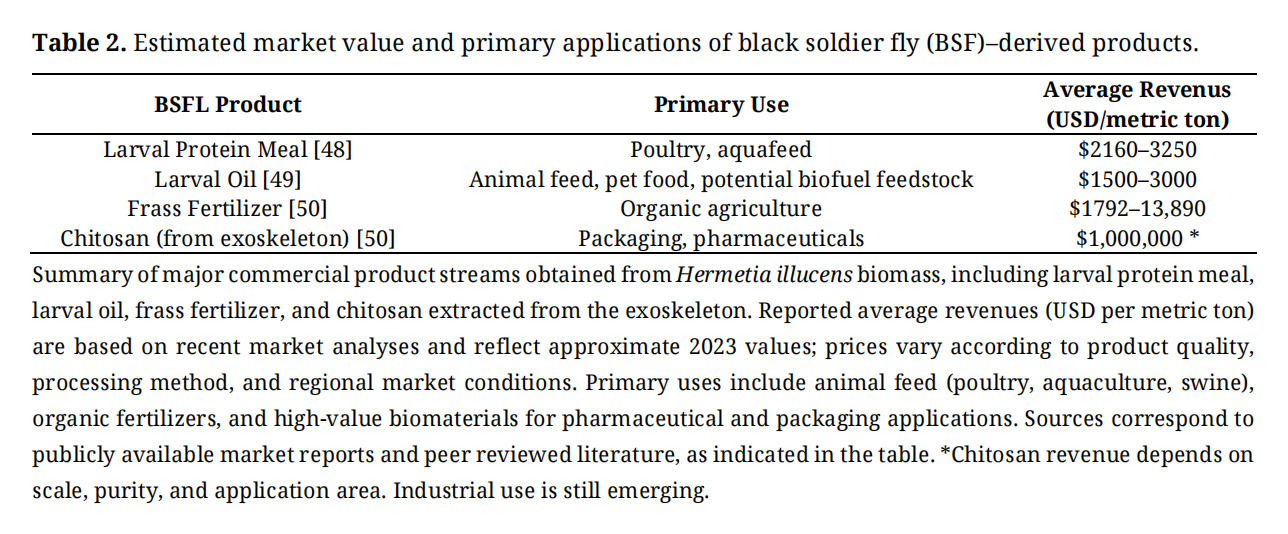 Table 2. Estimated market value and primary applications of black soldier fly (BSF)–derived products.
BSF-derived chitin and chitosan represent another emerging product stream. Chitin is a structural polysaccharide found in the insect exoskeleton, and chitosan is the deacetylated derivative, which is more soluble and easier to functionalize for applied uses. Chitosan has potential applications in agriculture, packaging, and biomaterials because of its biodegradability and antimicrobial properties [41,42]. Early studies suggest that insect-derived chitosan provides a non-crustacean alternative source, but commercial readiness remains limited and depends on extraction efficiency, product purity, scale, and market demand [41,42]. At present, chitosan should be considered a promising secondary product rather than a mature driver of BSF waste-management economics.
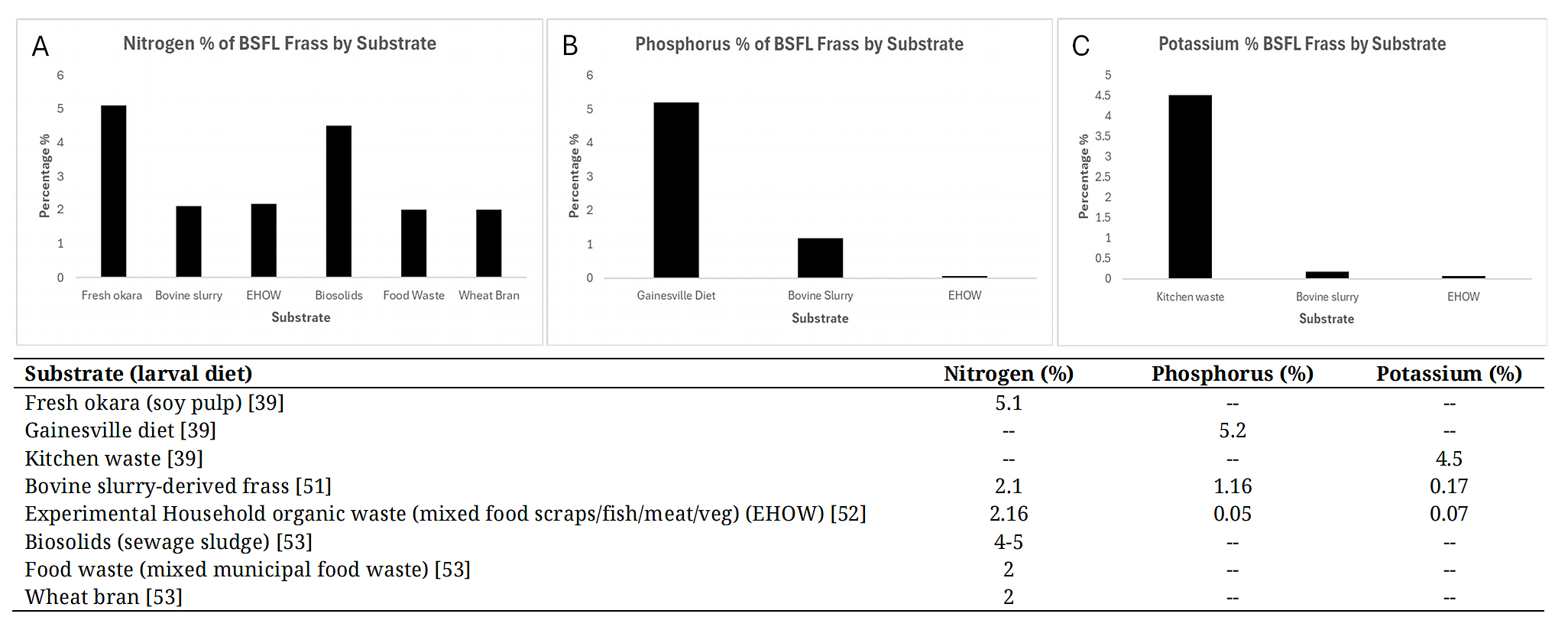 Figure 2. Selected reported nutrient values for nitrogen, phosphorus, and potassium in black soldier fly (Hermetia illucens) frass derived from different larval substrates. Bar charts illustrate study-specific reported values for nitrogen, phosphorus, and potassium in frass dry matter, while the accompanying table lists the corresponding substrate, nutrient value, and source. These values should be interpreted as selected literature observations rather than fixed nutrient concentrations for BSF frass. Where only single values were reported in the original studies, the values are shown as study-specific observations and should not be generalized across substrates or production systems. Differences among studies reflect variation in feedstock composition, larval density, rearing duration, post-treatment handling, stabilization, and analytical methods. The symbol “--” indicates that the nutrient was not reported for that substrate in the cited source.
BSF larvae also produce antimicrobial peptides and other bioactive compounds with potential pharmaceutical or veterinary relevance. These compounds have shown activity against selected microorganisms in experimental settings, but clinical or commercial applications remain preliminary [54,55]. Because this pathway is less directly connected to organic waste management and environmental performance, it should be treated as an emerging co-product area rather than a central justification for BSF deployment.
Contaminant Constraints and Substrate ScreeningThe presence of plastics, microplastics, PFAS, heavy metals, and other persistent contaminants can limit the safe deployment of BSF systems. Plastics are especially relevant for mixed food waste because packaging residues and plastic fragments can enter organic waste streams and may persist through bioconversion. This creates concern not only for larval biomass, but also for frass, because organic fertilizers can act as a pathway for microplastic entry into agricultural soils [32]. Experimental BSF studies suggest that larvae may ingest or interact with plastic particles, but the available evidence does not support BSF treatment as a stand-alone plastic remediation strategy. For example, exposure to PVC microplastics has been shown to affect both larvae and plastic particles without demonstrating complete degradation, while more recent work indicates that microplastic size and shape influence ingestion and egestion dynamics [34,35]. Other studies suggest that plastics can alter the BSF gut microbiome and select for microbial functions associated with plastic transformation, but microbiome shifts should not be interpreted as evidence of reliable detoxification or mineralization [33]. Together, these findings indicate that plastic-contaminated substrates require source separation, physical screening, and post-treatment monitoring rather than reliance on larvae to remove or degrade plastic residues.
Similar caution is needed for PFAS-contaminated substrates. Unlike some biodegradable organic compounds, PFAS are persistent and may partition into biological or residual material rather than being degraded during larval treatment. Screening work on resource-recovery insects indicates that trace organic contaminants with bioaccumulative potential can raise feed and food safety concerns, and related experimental work suggests that PFAS compounds such as PFOA and PFOS may accumulate or partition in ways that could affect larval biomass or frass safety [36,37]. This distinction is important because sequestration or redistribution is not equivalent to detoxification. If PFAS-contaminated substrates are used, BSF systems could concentrate contaminants in larval biomass, frass, or residual substrate and create downstream exposure risks. Therefore, PFAS-contaminated feedstocks should be treated as high-risk inputs unless contaminant fate, product safety, and regulatory acceptability are clearly established [36,37].
Other contaminants also require compound-specific evaluation. BSF treatment has been associated with measurable reductions in selected pharmaceutical residues, including tetracyclines and sulfonamides, suggesting that larval–microbial activity may help transform some organic contaminants [56]. However, evidence for one contaminant class should not be generalized to others. Heavy metals require particular caution because they cannot be biologically degraded. Elements such as cadmium, lead, and zinc may be tolerated, excreted, or accumulated depending on concentration, exposure duration, substrate chemistry, and larval development stage [38,57].
Overall, BSF applications are strongest for relatively clean organic residues and selected manure streams. Their use with contaminated substrates remains more uncertain and should be guided by input screening, contaminant monitoring, post-treatment validation, and regulatory constraints [36,38,58,59].
BSF systems are often promoted for their ability to reduce organic waste volumes while generating recoverable products such as larval biomass and frass. These benefits are most relevant when BSF treatment diverts relatively clean organic residues from disposal pathways with higher environmental burdens, such as landfilling, unmanaged manure storage, or conventional composting. However, environmental and economic benefits are not automatic. They depend on feedstock quality, rearing efficiency, energy inputs, product substitution effects, contaminant control, and the availability of reliable end markets.
Greenhouse Gas ReductionBSF bioconversion can reduce greenhouse gas emissions relative to some conventional organic waste management pathways, particularly when it limits methane generation from anaerobic decomposition or reduces emissions associated with manure storage and composting. Reported comparisons suggest that BSF treatment may lower carbon losses and reduce emissions of CO2, CH4, and N2O under controlled conditions [60–62]. A side-by-side comparison of global warming potential across selected treatment pathways is shown in Figure 3.
These reductions are important for evaluating BSF systems as climate-relevant waste-management technologies, but they should be interpreted cautiously. Emission outcomes vary with substrate type, larval density, aeration, moisture, temperature, residue handling, and system boundaries used in life-cycle assessment. In addition, downstream processing of larvae and frass may introduce energy demands that offset some benefits. Therefore, BSF systems are most defensible when greenhouse gas reductions are evaluated across the full treatment chain rather than inferred from waste reduction alone.
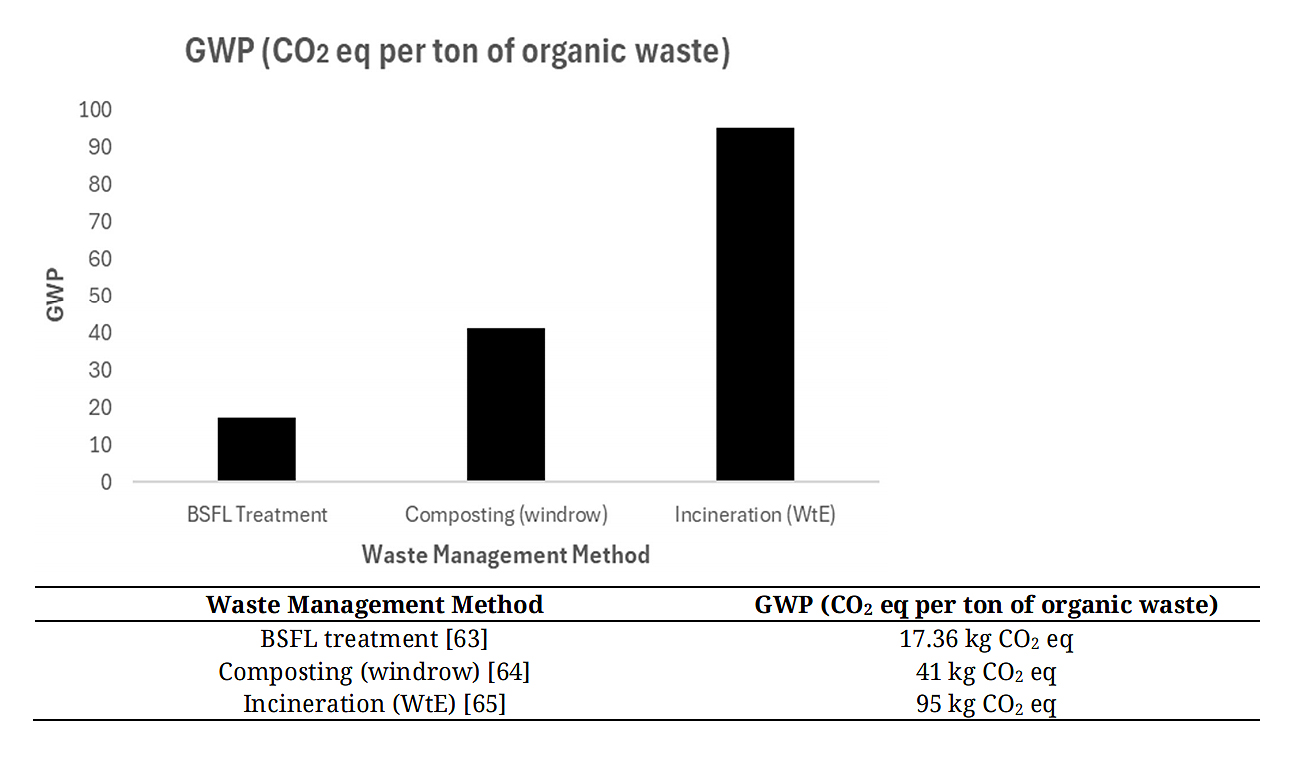 Figure 3. Comparing environmental impacts of BSF larvae treatment versus conventional waste management methods. The bar chart (top) compares the GWP, expressed as kilograms of CO2 equivalent per ton of organic waste processed, for BSF larvae treatment, windrow composting, and waste-to-energy incineration (WtE). The accompanying table (bottom) lists the reported GWP values and corresponding literature sources. BSF larvae treatment shows the lowest GWP (17.36 kg CO2 eq), followed by windrow composting (41 kg CO2 eq) and WtE incineration (95 kg CO2 eq), based on peer-reviewed life cycle assessment studies. Variation in reported BSF values reflects differences in feedstock composition, system design, and geographical context.
BSF bioconversion aligns with circular economy principles by converting organic residues into products that may substitute for conventional feed, fertilizer, or other bio-based materials. Larval biomass can contribute protein and lipids for feed applications, while frass may return nutrients and organic matter to soils when it meets safety and quality standards [66,67]. Comparative nutrient-recovery studies show that BSF larval treatment can retain meaningful fractions of carbon, nitrogen, and phosphorus in larval biomass, while anaerobic digestion may recover carbon primarily as methane, underscoring that the preferred treatment pathway depends on whether the management goal is energy recovery, nutrient recovery, or feed production [68]. BSF systems may also contribute to nutrient cycling through frass production and residue stabilization, but these benefits depend on substrate quality post-treatment handling, and validated end use. These substitution effects are central to the environmental value of BSF systems because the benefits depend not only on waste treatment, but also on whether BSF-derived products replace more resource-intensive alternatives.
However, circularity should not be assumed simply because waste is converted into products. A circular BSF system requires safe input streams, traceable production, validated product quality, and appropriate end uses. Contaminated substrates, unstable product markets, or poorly characterized frass can weaken the circular economy value of the system. Thus, BSF technologies should be evaluated according to both material recovery and the safety of product reintegration into feed, soil, or industrial supply chains.
Economic Feasibility and Market DevelopmentThe economic potential of BSF systems is linked to their ability to generate multiple revenue streams from waste treatment, larval biomass, frass, and co-products. Economic assessments suggest that small- and medium-scale BSF systems can be viable under favorable conditions, particularly where low-cost organic residues are available, and local markets exist for larvae or frass [69,70]. These systems may also create employment opportunities in waste collection, insect rearing, processing, and product distribution.
Nevertheless, profitability is highly context dependent. Key constraints include feedstock logistics, labor, facility design, biosecurity, drying and processing costs, regulatory compliance, and competition with established feed and fertilizer products. Market projections for insect protein indicate growing commercial interest, but such projections should be treated as market context rather than evidence of project-level feasibility. In addition, the scaling of insect-based production should be evaluated not only through technical efficiency and market demand, but also through governance, ownership, labor, and equity considerations that shape who controls and benefits from emerging insect value chains [71]. For BSF systems to scale, economic benefits must be demonstrated under realistic operating conditions and linked to verified environmental performance.
Emerging Technologies and Future Production SystemsEmerging technologies are likely to shape the next stage of BSF production by improving monitoring, process control, and product consistency. Current BSF systems often rely on periodic manual measurement of larval growth, substrate reduction, temperature, moisture, and harvest timing. As production scales, these approaches may become insufficient because larval performance can change rapidly in response to substrate heterogeneity, microbial activity, heat accumulation, density, and moisture conditions. Sensory networks, automated weighing systems, machine vision, and environmental monitoring platforms could improve real time decision making by allowing producers to detect deviations in larval development, substrate condition, and rearing environment before they reduce system performance. Recent work on automated BSF rearing systems and image-based larval monitoring supports the potential value of these approaches, although most applications still require validation under commercial production conditions [72,73].
Artificial intelligence and machine-learning approaches are also emerging as tools for precision insect farming, although BSF-specific applications remain early-stage. Manduca et al. used a convolutional neural network combined with optical-flow analysis to detect BSF developmental stages, including larvae, prepupae, and pupae, demonstrating that image-based deep learning can support automated stage identification for feeding, harvest timing, and production monitoring [73]. Other automated-rearing work has used sensor-equipped “smart bin” systems with aeration control, thermal imaging, and computer vision to monitor larvae in real time; in experimental testing, the automated system produced larvae comparable to manual rearing while reducing labor-intensive monitoring [72]. Together, these studies suggest that AI, machine vision, and sensor-based monitoring could improve process control and product consistency, but the tools still require validation across commercial-scale facilities, heterogeneous substrates, variable lighting conditions, and different larval densities.
BSF systems are also being explored in more specialized future applications, including controlled-environment agriculture and bioregenerative life-support systems. In space or closed-loop habitats, insects could potentially contribute to organic waste recycling, nutrient recovery, and production of edible for feed-grade biomass [8,74]. Early work on BSF survival and pupation in lunar regolith simulant further suggests that insect-based bioconversion may have relevance for sustainable controlled habitats beyond conventional terrestrial waste management [75]. These applications remain preliminary, but they highlight the importance of containment, automation, safety, resource efficiency, and system reliability in future BSF technology development.
Regulatory and Implementation ReadinessRegulatory oversight is central to BSF deployment because larvae can convert organic waste into products that may re-enter feed, fertilizer, or biomaterial supply chains. Safety therefore depends on clear rules for allowable substrates, contaminant monitoring, facility hygiene, traceability, post-processing, and labeling. These safeguards are especially important when larval biomass is used as animal feed or when frass is applied to agricultural soils.
Regulatory frameworks vary substantially by region, which affects how quickly BSF systems can move from experimental or pilot-scale use to commercial deployment. In the European Union, insect-derived proteins, including BSF, have been progressively authorized for selected animal feed applications, but substrate use remains tightly controlled [58,59]. Manure, catering waste, and post-consumer waste are generally excluded because of concerns about pathogens, chemical contaminants, and traceability. In the United States, BSF feed approvals have developed incrementally through AAFCO ingredient definitions and federal-state feed regulatory processes; current definitions include dried black soldier fly larvae for use in finfish, poultry, and swine feed, as well as adult dog food, with use generally limited to larvae raised on feed grade materials [76,77]. Singapore provides another model in which selected food-waste streams may be used while higher-risk substrates such as manure remain restricted [78,79]. Together, these examples show that regulatory readiness depends not only on the insect species or product type, but also on the origin and risk profile of the substrate. Across jurisdictions, the central challenge is balancing innovation with risk control. BSF systems can reduce organic waste and generate useful products, but unsafe substrates may introduce pathogens, heavy metals, persistent organic pollutants, microplastics, or other contaminants into larvae, frass, or downstream products. Facility-level controls are also important because cross-contamination can occur during substrate handling, larval rearing, harvesting, drying, storage, or blending with conventional feed ingredients. Allergenicity represents an additional consideration because BSF proteins may share structural similarities with other arthropod allergens, including shellfish allergens.
Overall, the scalability of BSF technologies depends on clear, science-based frameworks that define acceptable substrates, product safety standards, monitoring requirements, and permitted end uses. Harmonized guidance would support trade and technology transfer, but regulation should remain sufficiently stringent to prevent contaminated substrates from undermining the environmental and public health benefits of BSF-mediated waste valorization. Future deployment will therefore depend on aligning environmental performance, economic feasibility, product safety, and regulatory acceptance rather than demonstrating waste reduction alone.
BSF larval-based waste management is best understood as an integrated bioconversion platform rather than a single waste-treatment method. Its value depends on whether biological performance can be linked to measurable environmental benefits, economic feasibility, and regulatory acceptance. The strongest evidence supports BSF use with relatively clean organic residues, where larvae can reduce waste mass while generating recoverable biomass and frass. In contrast, low-nutrient or highly lignocellulosic residues, such as untreated crop straw, are poorly suited to direct BSF treatment unless they are pretreated, blended, or otherwise conditioned.
The broader synthesis of this review indicates that BSF deployment should be evaluated through a readiness-based framework. Applications involving clean organic residues, controlled manure streams, larval feed production, and frass recovery are the most actionable, provided that product safety and quality are verified. By contrast, applications involving contaminated substrates, microplastics, PFAS, heavy metals, high-value biomaterials, biodiesel, or pharmaceutical compounds remain more conditional. These pathways may add value in specific contexts, but they should not be treated as mature waste-management solutions without stronger evidence on contaminant fate, system boundaries, processing requirements, and end-use safety.
The novelty of this review lies in positioning BSF-mediated waste valorization as a decision-oriented circular bioeconomy system rather than a broadly beneficial technology. Larval growth and waste reduction are necessary but insufficient indicators of success. Feedstock quality, larval–microbial interactions, greenhouse gas outcomes, frass performance, contaminant transfer, economic feasibility, and regulatory acceptance jointly determine whether BSF systems can move from experimental promise to reliable implementation. This integrated perspective helps distinguish applications that are currently scalable from those that require more cautious interpretation.
Future research should prioritize standardized, application-specific evaluation. Studies should report enough detail on substrates, larval performance, frass quality, contaminant fate, emissions, and life-cycle boundaries to allow meaningful comparison across systems. Long-term field trials are also needed to determine whether repeated frass application improves soil function and crop productivity without increasing contaminant accumulation. Techno-economic analysis and regulatory planning should be incorporated earlier in BSF research rather than treated as downstream considerations. Strengthening these areas will support the safe, scalable, and evidence-based use of BSF systems in sustainable organic waste management.
No data were generated from the study.
Conceptualization, JAS and HRJ; methodology, JAS; formal analysis, JAS; investigation, JAS; resources, JAS and HRJ; data curation, JAS; writing—original draft preparation, JAS; writing—review and editing, JAS and HRJ; visualization, JAS; supervision, HRJ; project administration, HRJ; funding acquisition, HRJ All authors have read and agreed to the published version of the manuscript.
The authors declare they have no conflicts of interest.
This work was supported by the National Science Foundation through the Industry-University Cooperative Research Centers (IUCRC) NSF cooperative agreements 2052454, 2052565, and 2052788. Any opinions, findings, and conclusions or recommendations expressed in this material are those of the author(s) and do not necessarily reflect the views of the National Science Foundation or the Industry Advisory Board Members of the Center for Insect Biomanufacturing and Innovation.
We thank colleagues in the Jordan Lab at Mississippi State for helpful discussions.
1.
2.
3.
4.
5.
6.
7.
8.
9.
10.
11.
12.
13.
14.
15.
16.
17.
18.
19.
20.
21.
22.
23.
24.
25.
26.
27.
28.
29.
30.
31.
32.
33.
34.
35.
36.
37.
38.
39.
40.
41.
42.
43.
44.
45.
46.
47.
48.
49.
50.
51.
52.
53.
54.
55.
56.
57.
58.
59.
60.
61.
62.
63.
64.
65.
66.
67.
68.
69.
70.
71.
72.
73.
74.
75.
76.
77.
78.
79.
Smink JA, Jordan HR. Black Soldier Fly Larvae for Organic Waste Valorization: Environmental Benefits, Contaminant Risks, and Circular Bioeconomy Readiness. J Sustain Res. 2026;8(3):e260070. https://doi.org/10.20900/jsr20260070.

Copyright © Hapres Co., Ltd. Privacy Policy | Terms and Conditions


