Location: Home >> Detail
J Sustain Res. 2026;8(4):e260081. https://doi.org/10.20900/jsr20260081
 ,
Zifei Liu 2,* ,
Manoj Kumar Nallapaneni 3,4 ,
Seockmo Ku 1
,
Zifei Liu 2,* ,
Manoj Kumar Nallapaneni 3,4 ,
Seockmo Ku 1
1
2
3
4
*
Byproducts from food and biofuel supply chains can provide alternative feed ingredients for swine production, but their environmental benefits depend on diet formulation and life cycle assessment (LCA) assumptions. In this study, attributional LCA was used to compare the environmental impacts of a byproduct-based swine diet (ALT) containing wheat middlings, distillers dried grains with solubles (DDGS), and bakery meal with those of a conventional corn–soybean meal diet (CON) in the United States. Diets were developed using least-cost formulation and stakeholder input. The assessment covered feed ingredient production and processing, excluding feed manufacturing, animal production, and manure management. The global warming potential (GWP), land use, water consumption, and fossil resource scarcity were evaluated using the ReCiPe 2016 Midpoint v1.06 method in SimaPro v8.5.2.0. Economic allocation was used as the base case, with mass allocation evaluated as an alternative. Compared with mass allocation, economic allocation assigned substantially lower environmental burdens to wheat middlings and DDGS. Under economic allocation, the ALT diet increased the GWP by approximately 1.6% while reducing the estimated land use and water consumption by approximately 21% each. Under mass allocation, its GWP was approximately 26% greater than that of CON. The sensitivity analysis indicated limited changes in the ALT GWP under the price scenarios examined. These findings highlight the potential resource-efficiency benefits of byproduct utilization, alongside trade-offs among environmental impacts and the influence of allocation choice.
ALT, an alternative byproduct-based swine diet; CON, a conventional corn–SBM diet; DDGS, distillers dried grains with solubles; GWP, global warming potential; LCA, life cycle assessment; LCI, life cycle inventory; SBM, soybean meal; WDGS, wet distillers grains with solubles; SID, standardized ileal digestible; CP, crude protein; NE, net energy; STTD, standardized total tract digestible
Ensuring food security while strengthening the resilience of agricultural systems to climate variability and extremes remains a major global challenge [1]. In swine production, dietary strategies can influence both production performance and environmental outcomes [2]. Swine diets depend heavily on cereal grains and soybean meal (SBM), making feed selection and formulation important considerations for improving the sustainability of pork production.
Concerns regarding global food security have increased interest in reducing competition between food and feed production for crops and other resources [3]. Industrial and food-processing byproducts can partially replace conventional ingredients in swine diets, potentially reducing feed costs and providing a productive use for materials that are often unsuitable for direct human consumption [4]. However, byproduct utilization does not necessarily avoid waste disposal: many ingredients, including distillers dried grains with solubles (DDGS) and wheat middlings, already have established feed markets and competing uses. Their potential benefits should therefore be evaluated in terms of resource utilization and environmental trade-offs rather than assumed waste diversion.
Feed production can account for more than half of the overall global warming potential (GWP) of pork production systems [5]. Although alternative ingredients may reduce the demand for primary feed crops, their environmental implications depend on production and processing requirements. For example, drying during DDGS production consumes energy and can contribute substantially to its environmental footprint [6,7]. Other processing operations and transportation requirements can also influence whether byproduct ingredients offer environmental benefits relative to conventional feeds.
Feed reformulation has been widely investigated as a strategy to reduce environmental impacts. Approaches include incorporating alternative ingredients, reducing dietary crude protein with amino acid supplementation [8–11], and modifying or replacing conventional protein sources. Pope et al. (2024) [12] reported that using SBM with higher intrinsic crude protein and nutrient concentrations reduced diet cost and GWP through changes in least-cost diet formulations. These findings do not imply that increasing the crude protein concentration of the complete diet necessarily reduces environmental impacts. Other studies reported benefits from replacing SBM with rapeseed meal or locally produced protein sources under their respective formulation and production conditions [13–15]. These findings demonstrate that environmental outcomes depend on ingredient characteristics, substitution patterns, and the composition of the complete diet.
Life cycle assessment (LCA) provides a framework for evaluating the environmental performance of feed supply chains. In systems that produce multiple products, environmental burdens may be allocated using physical or economic relationships [16]. Allocation choice can substantially influence results, particularly for agricultural coproducts [17–19]. ISO 14044 prioritizes avoiding allocation through subdivision or system expansion where possible. Where allocation cannot be avoided, it should reflect underlying physical relationships; where these relationships cannot be established or used, other relationships, such as economic value, may be applied [20]. Economic allocation reflects the relative market values of products and coproducts but introduces sensitivity to commodity prices [21]. A previous U.S. soybean LCA applied mass allocation as the baseline approach and evaluated economic allocation through sensitivity analysis [22]. However, limited information is available regarding the environmental impacts of other feed ingredients commonly used in the United States, particularly wheat middlings. Transparent allocation assumptions and comparisons between alternative approaches are therefore important when evaluating byproduct-based feeds.
Wheat middlings are coproducts of wheat milling that can be incorporated into swine diets, although their nutritional composition and nutritional value vary among sources [23,24]. Espinosa et al. (2024) [24] reported differences in energy content and amino acid digestibility between wheat middlings from different sources. Research has also revealed differences in fiber digestion among diets containing wheat middlings, DDGS, and soybean hulls [25]. Because compared with conventional cereal grains, wheat middlings have relatively high fiber content and lower available energy, appropriate inclusion rates that depend on the growth phase and the required nutrients for pigs. Partial replacement of SBM may require adjustments in crystalline amino acid supplementation to maintain an adequate digestible amino acid supply. Growth performance and carcass responses also need to be considered when evaluating diets containing wheat middlings [26]. These nutritional constraints mean that environmental implications should be assessed within a complete diet rather than inferred from ingredient-level footprints alone.
Previous LCA research has evaluated alternative ingredients in pig diets and examined the implications of feed optimization and the choice between attributional and consequential approaches [27]. Such work highlights the importance of defining the formulation and methodological context when interpreting environmental outcomes. The present study builds on this broader research by evaluating a U.S. swine diet containing coproducts from wheat milling, ethanol production, and food processing, with particular attention given to differences between mass and economic allocation.
The objective of this study was to quantify the environmental footprints of an alternative byproduct-based swine diet (ALT) containing wheat middlings, DDGS, and bakery meal and to compare them with those of a conventional corn–SBM diet (CON). Attributional LCA was used to assess the production and processing of feed ingredients, with economic allocation as the base case approach and mass allocation as an alternative. Feed manufacturing, animal production, and manure management were outside the system boundary. Within this framework, the study addressed three research questions (RQ1–RQ3):
The findings are intended to inform feed selection by identifying environmental trade-offs associated with byproduct utilization and demonstrating the influence of allocation assumptions on diet-level comparisons.
The use of food and biofuel industry byproducts in livestock diets is consistent with a circular resource-use framework because it redirects secondary streams to productive uses [4]. Wheat middlings, DDGS, and bakery meal can partially replace primary feed ingredients such as corn and soybean meal. However, byproduct utilization does not necessarily reduce environmental impacts because performance also depends on nutritional value, processing and transportation requirements, competing uses, and the ingredients displaced. Environmental comparisons should therefore be conducted at the complete-diet level. Feed ingredients differ in their contributions of energy, protein, amino acids, fiber, and minerals and cannot generally be substituted on an equal-mass basis. Evaluating nutritionally adequate formulations captures the effects of ingredient substitution while maintaining a consistent basis for diet comparison [24,27]. Allocation is also important when production systems generate multiple products. Mass allocation assigns shared environmental burdens according to output quantities, whereas economic allocation assigns them according to relative market values [16–20]. Because coproducts may differ substantially in mass and economic value, allocation choice can affect their estimated footprints and the resulting diet comparison. Economic allocation may introduce additional uncertainty because market prices vary over time [21]. This framework supports evaluation of the effects of allocation choice, comparative diet performance, and sensitivity to coproduct prices.
An alternative byproduct diet (ALT), containing wheat middlings, DDGS, and bakery meal, was formulated for grow-finish swine production in the United States and then compared with the conventional corn–SBM diet (CON). Both diets were developed using least-cost formulation principles and expert input to meet the nutritional requirements specified by the National Research Council [28] and PIC guidelines [29] across five feeding phases. Formulation considerations included energy, standardized ileal digestible (SID) amino acids, crude protein (CP), calcium, and phosphorus. In the ALT diet, DDGS, wheat middlings, and bakery meal partially replaced corn and SBM, accounting for 10.0%, 10.37%, and 8.69%, respectively, of the cumulative feed use over the grow-finish period.
The diets were not formulated to be strictly isonitrogenous or isoenergetic. The calculated CP concentrations were higher for the ALT treatment than for the CON treatment in all five phases, decreasing from 21.45% to 15.13% for the ALT treatment and from 20.56% to 13.83% for the CON treatment across the feeding period. The net energy (NE) values calculated on the basis of the NRC estimates and the SID lysine-to-NE ratios were similar between the diets within each phase. The cumulative ingredient quantities and calculated nutrient compositions are presented in Table 1. For the LCA, the major ingredients were assumed to originate from U.S. Crop Production Region 3. This geographic assumption defined the intended production context; the geographic representativeness and limitations of the inventory datasets are described in Section Life cycle inventory.
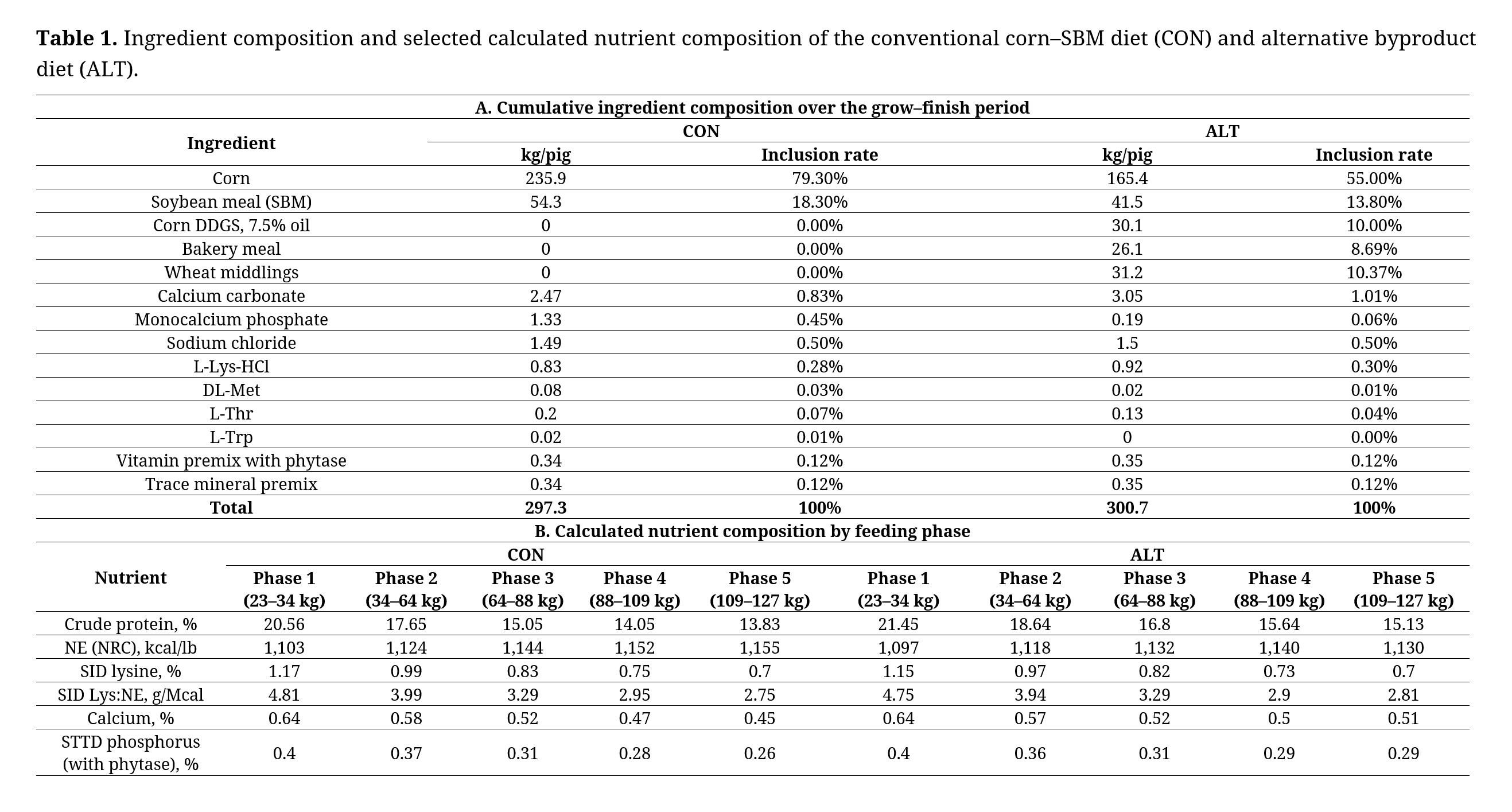 Table 1. Ingredient composition and selected calculated nutrient composition of the conventional corn–SBM diet (CON) and alternative byproduct diet (ALT).
The environmental footprints associated with the two grow-finish swine diets were quantified using an attributional life cycle assessment (LCA) in accordance with ISO 14040 and ISO 14044. The system boundary encompassed the upstream production and processing of the feed ingredients included in each diet (Figure 1). Feed manufacturing, animal production, and manure management were excluded. The functional unit was 1 kg of formulated complete feed, and impacts were calculated using the inclusion rates and environmental footprints of individual ingredients.
In comparison with previous studies, diet-related impacts were additionally expressed per kilogram of final pig live weight (LW). This supplementary reporting basis was calculated by multiplying the impact per kilogram of complete feed by the cumulative feed quantity per pig for each diet and dividing the result by the final live weight. These results represent only the feed ingredient production and processing burdens associated with the modeled grow-finish feeding period. Expressing these burdens per kilogram of final LW does not extend the system boundary to include animal production or manure management; therefore, these results do not represent the total environmental footprint of pig production.
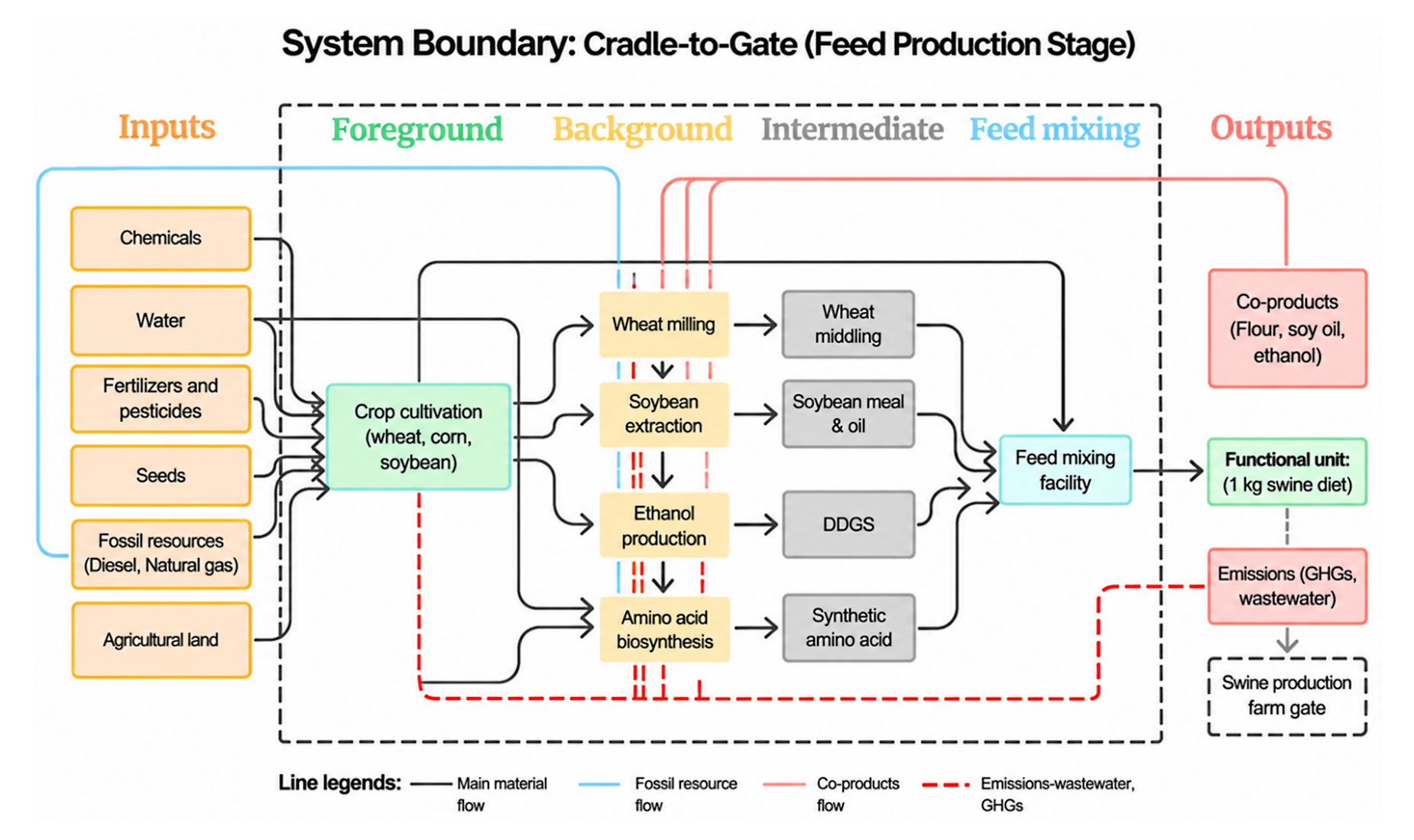 Figure 1.
Process flow chart of the ingredients applied in the diets with their system boundary.
Figure 1.
Process flow chart of the ingredients applied in the diets with their system boundary.
The life cycle inventory (LCI) was compiled from agricultural statistics, process databases, and published studies and normalized to the functional unit. U.S.-specific data were prioritized, while non-U.S. datasets were used as proxies where suitable U.S. data were unavailable. Agricultural input data for wheat, corn, and soybean production were obtained primarily from the USDA National Agricultural Statistics Service (USDA-NASS), supplemented with background inventory data available in SimaPro version 8.5.2.0.
Crop yields and fertilizer and pesticide application rates were represented using three-year averages of U.S. data. A one-year production cycle was assumed, with winter wheat selected to represent wheat production. Background inventories for fertilizer and pesticide supply were obtained from the US-EI U datasets. Energy-related processes were modeled using the USLCI/DATASMART-2017 datasets, and wastewater treatment inventories were obtained from ELCD Database 3. The national-average agricultural data and non-U.S. background datasets did not necessarily represent the specific production conditions assumed for ingredient sourcing.
DDGS inventories were obtained from van Zeist et al. (2012) [30] and Mei (2006) [31], with energy use data from a survey of U.S. ethanol producers reported by Shapouri et al. (2010) [32]. Energy requirements for wheat dry milling were obtained from van Eijk and Koot (2005) [33]. Synthetic amino acid inventories were based on the methods of Marinussen and Kool (2010) [34]. When complete process-specific data were unavailable, an acrylic acid production dataset was used as a proxy for selected inputs and emissions. This proxy does not represent the actual production pathways of individual amino acids and introduces uncertainty into their estimated impacts.
Differences in the geographic origin, reference years, production technologies, and energy systems of the inventory datasets limit their representativeness for the modeled U.S. production context. These limitations were considered when the results were interpreted.
Life Cycle Impact Assessment MethodEnvironmental impacts were evaluated using the hierarchical perspective of the ReCiPe 2016 midpoint method (version 1.06). Four impact categories were selected: global warming potential (GWP), land use, water consumption, and fossil resource scarcity. GWP was assessed over a 100-year time horizon and expressed as kilograms of carbon dioxide equivalents (kg CO2-eq). Land use was expressed as square meter-years of annual crop equivalents (m2·yr crop-eq), water consumption was expressed as cubic meters of water consumed (m3), and fossil resource scarcity was expressed as kilograms of oil equivalents (kg oil-eq). The results were normalized to the functional unit defined in Section System Boundary and Functional Unit.
Environmental Footprints by Mass and Economic AllocationAn attributional LCA framework was used to evaluate the feed ingredients and complete diets. Economic allocation was applied as the base-case approach to partition shared production burdens among coproducts, reflecting differences in their relative economic values. Mass allocation was evaluated as an alternative to assess the sensitivity of the results to allocation choice. Under mass allocation, each coproduct received a share of the common environmental burden proportional to its mass relative to the total mass of the coproduct outputs. Under economic allocation, each coproduct’s share was calculated from its mass multiplied by its unit price, divided by the combined economic value of all the coproduct outputs. Allocation fractions and prices are reported in Table 2.
Coproduct prices were obtained from publicly available USDA Agricultural Marketing Service reports, USDA Economic Research Service data, and U.S. Bioenergy Statistics. The reference period for the prices reported in Table 2 was May 2026. Shared burdens from ethanol production were allocated between ethanol and DDGS using the selected allocation approach. The energy required specifically for drying wet distillers’ grains with solubles (WDGS) was assigned entirely to DDGS [35]. Natural gas-derived process steam was assumed to supply this drying energy.
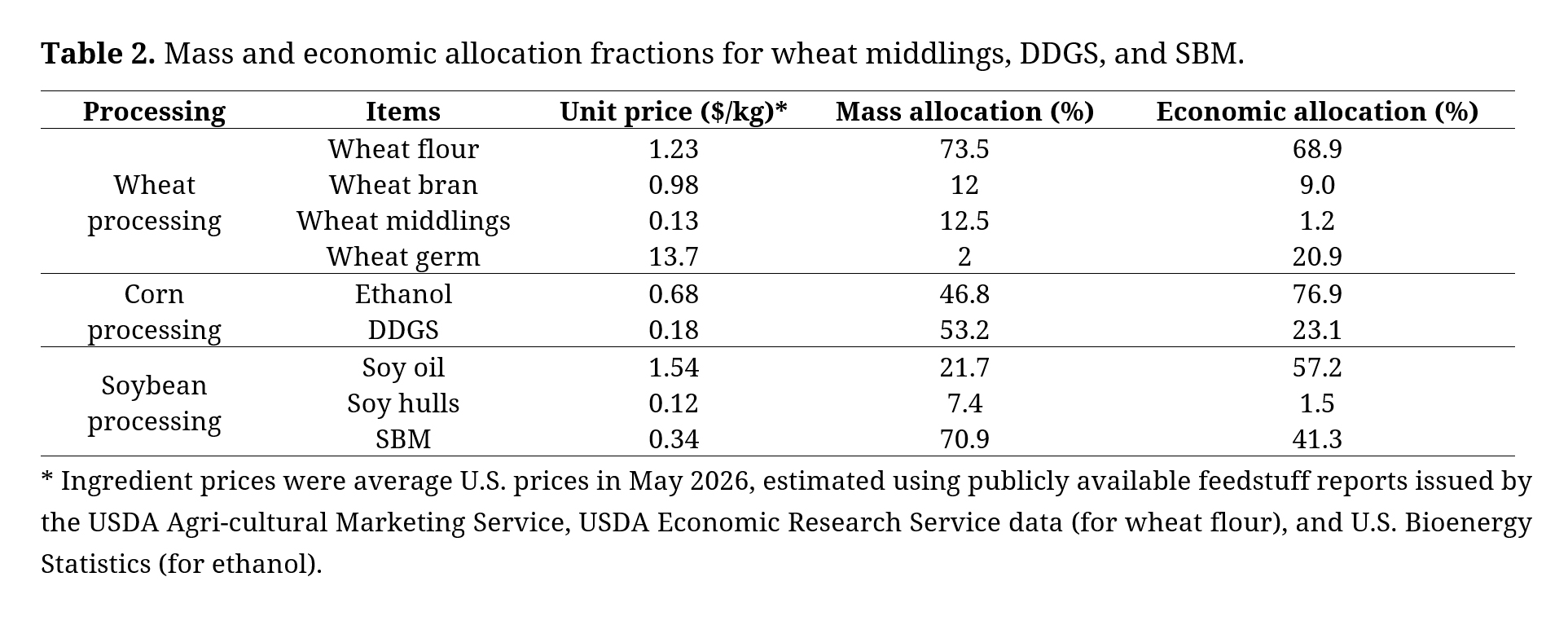 Table 2. Mass and economic allocation fractions for wheat middlings, DDGS, and SBM.
The mass balance for wheat dry milling was based on the methods of Bechtel et al. (1999) [36] and Blasi et al. (1998) [37], and the milling energy requirements were obtained from van Eijk and Koot (2005) [33]. The mass and energy balances for soybean crushing were based on published estimates [38–41]. Sensitivity to coproduct prices under economic allocation was evaluated by separately doubling the price of wheat middlings from USD 0.13 to USD 0.26/kg and doubling the price of DDGS from USD 0.18 to USD 0.36/kg, while all other prices were held constant. The economic allocation fractions and the resulting ALT diet GWP were recalculated for each scenario. The 1% threshold was applied only to reporting individual process contributions. Within each impact category, processes contributing less than 1% of the total impact were not reported separately, but their contributions remained included in the calculated total.
Allocation choice substantially affected the estimated environmental footprints of the wheat middlings, DDGS, and SBM (Tables 2 and 3). The greatest proportional difference occurred for the wheat middlings, which received 1.2% of the shared wheat-production and processing burdens under economic allocation, compared with 12.5% under mass allocation. Their estimated GWP was 0.07 kg CO2-eq/kg ingredient under economic allocation, compared with 0.74 kg CO2-eq/kg ingredient under mass allocation, representing a reduction of approximately 91%. Economic allocation also resulted in lower GWP estimates for DDGS (0.88 vs. 1.35 kg CO2-eq/kg ingredient) and SBM (0.42 vs. 0.71 kg CO2-eq/kg ingredient), corresponding to reductions of approximately 35% and 41%, respectively. Land use, water consumption, and fossil resource scarcity estimates were lower under economic allocation for these three ingredients (Table 3). The results of the contribution analysis identified agricultural inputs, field emissions, and processing energy as important contributors to the ingredient-level GWP (Table 4). These ingredient-level results address RQ2 by demonstrating that allocation choice substantially affected the environmental burdens assigned to wheat middlings, DDGS, and SBM, thereby influencing the calculated footprints of the diets containing these ingredients.
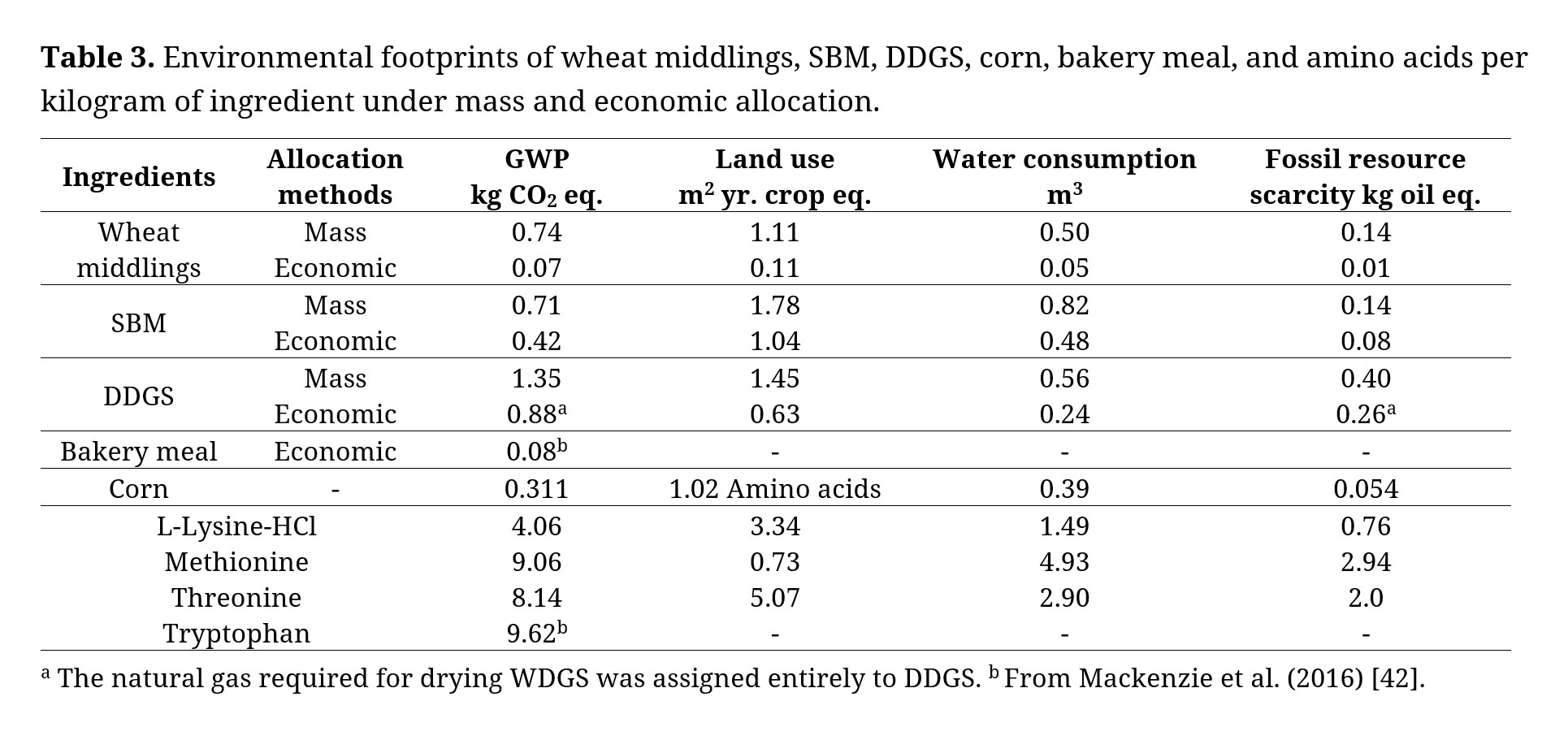 Table 3.
Environmental footprints of wheat middlings, SBM, DDGS, corn, bakery meal, and amino acids per kilogram of ingredient under mass and economic allocation.
Table 3.
Environmental footprints of wheat middlings, SBM, DDGS, corn, bakery meal, and amino acids per kilogram of ingredient under mass and economic allocation.
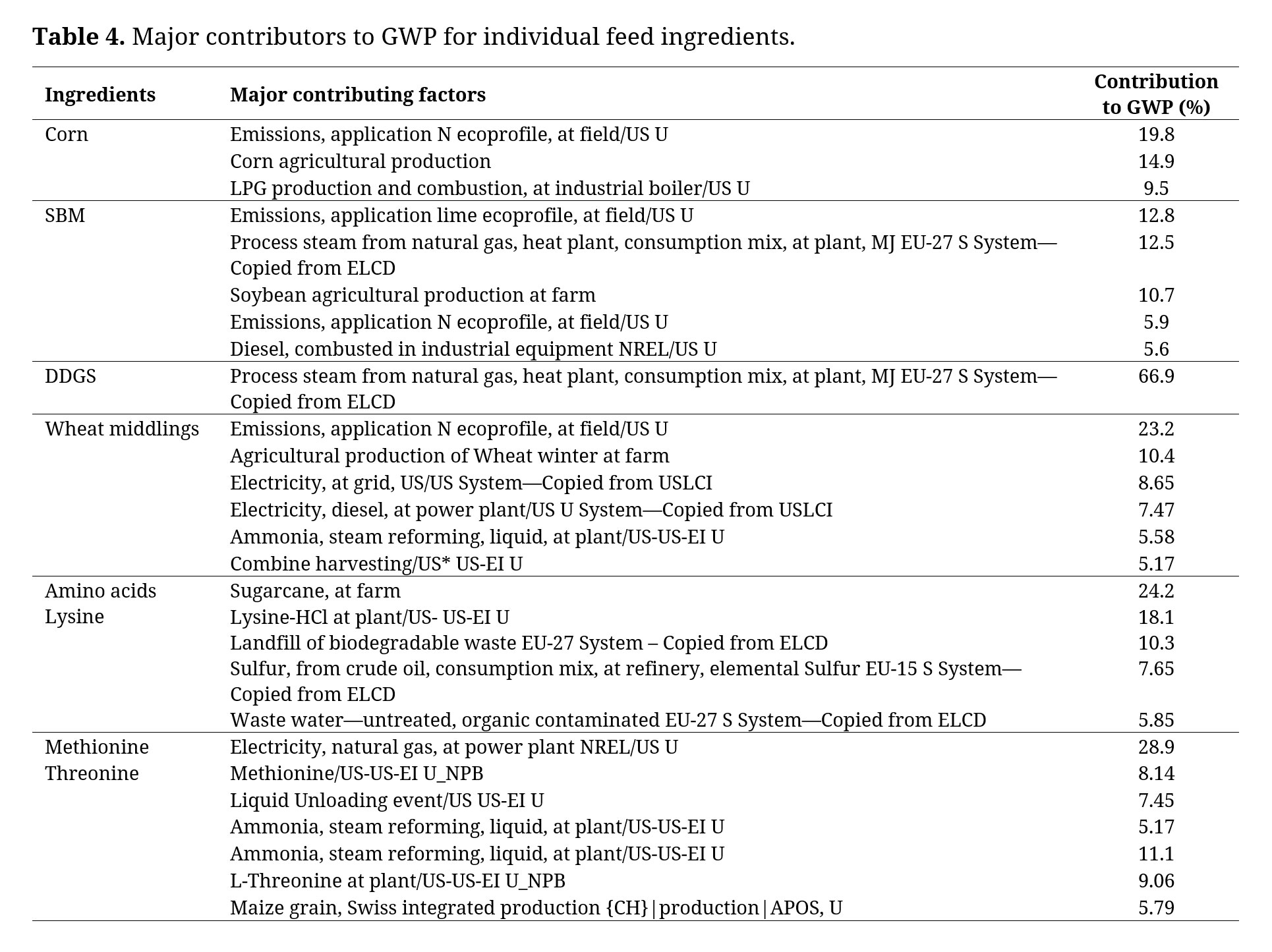 Table 4. Major contributors to GWP for individual feed ingredients.
The environmental impacts associated with feed ingredient production and processing for the CON and ALT diets, expressed per kilogram of pig live weight (LW) under economic allocation, are presented in Figure 2. The estimated GWP of ALT was 0.887 kg CO2-eq/kg LW, approximately 1.6% higher than that of CON (0.873 kg CO2-eq/kg LW). In contrast, the estimated land use and water consumption were approximately 21% lower for ALT. Fossil resource scarcity was approximately 17% greater for ALT, on the basis of the contributions displayed in Figure 2d. These results indicate trade-offs among impact categories rather than a uniform reduction in environmental burdens.
Corn and SBM were major contributors to the environmental footprints of both diets. Together, they accounted for approximately 87% of the total GWP in CON and 61% in ALT under economic allocation. Their lower inclusion in the ALT reduced their contributions to diet-related GWP, land use, and water consumption. However, the burdens associated with the replacement ingredients partly offset these reductions.
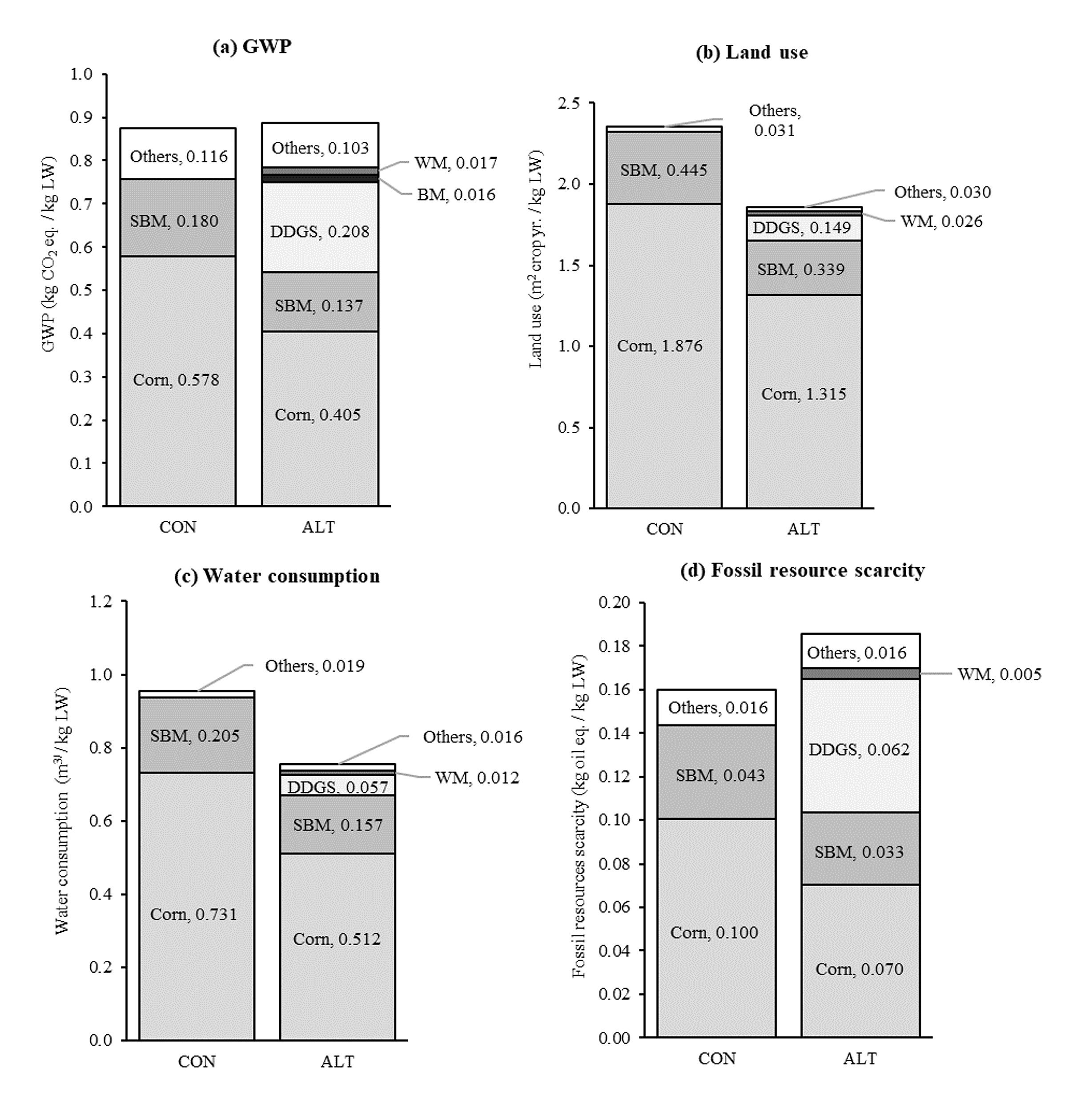 Figure 2.
Environmental impacts associated with feed ingredient production and processing for the conventional corn–soybean meal diet (CON) and alternative byproduct diet (ALT), expressed per kilogram of pig live weight (LW) under economic allocation: (a) global warming potential (GWP), (b) land use, (c) water consumption, and (d) fossil resource scarcity. BM, bakery meal; SBM, soybean meal; WM, wheat middlings; DDGS, distillers dried grains with solubles. “Others” represents contributions included in the totals but not displayed separately.
Figure 2.
Environmental impacts associated with feed ingredient production and processing for the conventional corn–soybean meal diet (CON) and alternative byproduct diet (ALT), expressed per kilogram of pig live weight (LW) under economic allocation: (a) global warming potential (GWP), (b) land use, (c) water consumption, and (d) fossil resource scarcity. BM, bakery meal; SBM, soybean meal; WM, wheat middlings; DDGS, distillers dried grains with solubles. “Others” represents contributions included in the totals but not displayed separately.
At the complete-diet level, the ALT diet had lower estimated land use and water consumption but higher GWP and fossil resource scarcity than CON under economic allocation. These findings answer RQ1 by demonstrating trade-offs among impact categories; therefore, they do not establish that the ALT diet was environmentally superior overall.
Published GWP estimates for individual feed ingredients are summarized in Table 5 to provide context for the present results. Differences in production conditions and LCA methods should be considered when these comparisons are interpreted.
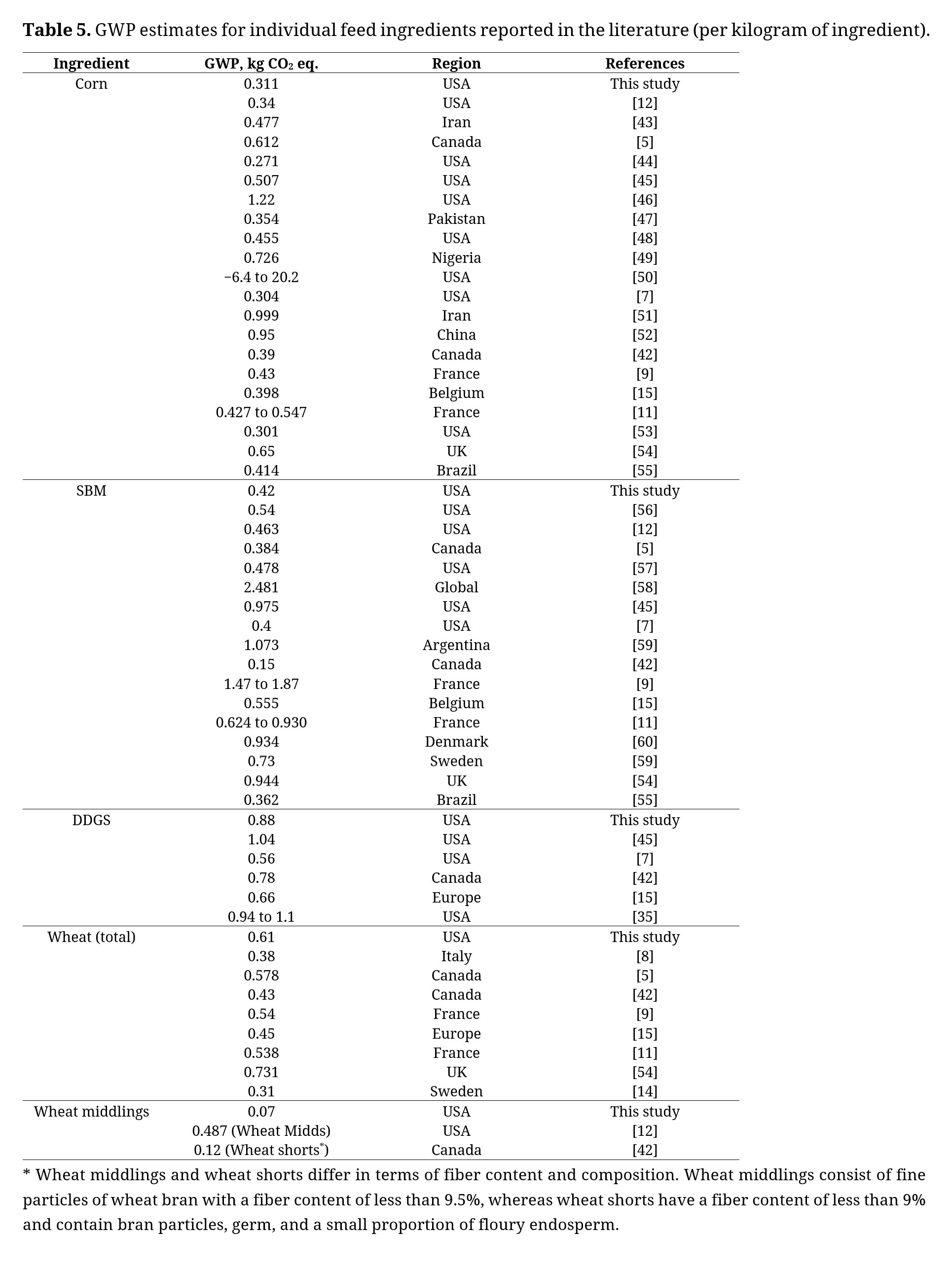 Table 5.
GWP estimates for individual feed ingredients reported in the literature (per kilogram of ingredient).
Table 5.
GWP estimates for individual feed ingredients reported in the literature (per kilogram of ingredient).
Corn accounted for 79.3% of the cumulative feed use in CON and 55.0% in ALT and was a major contributor to the environmental footprints of both diets. Its estimated GWP was 0.311 kg CO₂-eq/kg ingredient, which is consistent with previous estimates for U.S. corn production [53,61]. Agricultural inputs and field emissions were important contributors to the corn-related GWP (Table 4), which is consistent with the role of nitrogen fertilizer production and use identified in previous assessments [53,61].
The lower corn inclusion in the ALT reduced the burdens attributable to corn production, contributing to the lower estimated land use and water consumption of the complete diet under economic allocation. However, these reductions were accompanied by burdens from the replacement ingredients, particularly the processing energy associated with DDGS. Consequently, the complete ALT diet had a slightly higher GWP despite its lower corn contribution. The environmental implications of reducing corn inclusion thus depend on the composition of the reformulated diet, the production requirements of replacement ingredients, and the allocation method applied.
Under economic allocation, the estimated GWP of SBM was 0.42 kg CO₂-eq/kg ingredient. This value was within the range of U.S. estimates presented in Table 5 and generally lower than estimates reported for European feed and pig-production systems [9,11,15,59,60]. Differences among studies may reflect soybean sourcing, transportation, allocation procedures, and land-use change assumptions [9,62]. In the present study, lime application during soybean cultivation and natural gas-derived process steam together accounted for approximately 25% of the SBM GWP (Table 4). These contributions highlight the importance of cultivation inputs and energy processing. Since direct land-use change was excluded from the assessment, the estimated GWP does not capture emissions potentially associated with the conversion of land for soybean production.
SBM inclusion decreased from 18.3% of cumulative feed use in CON to 13.8% in ALT, reducing the burdens attributable to SBM, particularly its contributions to land use and water consumption. However, these reductions were partly offset by the burdens associated with the replacement ingredients. The environmental implications of reducing SBM inclusion therefore depend on the composition of the complete diet and the allocation method rather than on the SBM footprint alone.
DDGS is an established coproduct of corn ethanol production and is widely used in U.S. swine diets [45]. Its environmental footprint depends strongly on energy processing and the allocation of shared ethanol-production burdens. In the present study, the natural gas-derived process steam used for drying WDGS was assigned entirely to DDGS and accounted for approximately 67% of its GWP (Table 4). These results highlight drying energy as an important contributor to the environmental footprint of DDGS.
Allocation choice substantially affected the estimated GWP of DDGS, which was approximately 35% lower under economic allocation than under mass allocation (0.88 vs. 1.35 kg CO₂-eq/kg ingredient). This difference reflects the distribution of shared environmental burdens rather than a change in production processes. Under economic allocation, compared with corn, DDGS had a higher GWP (0.88 vs. 0.311 kg CO₂-eq/kg ingredient), but lower land use and water consumption.
DDGS accounted for 10.0% of the cumulative feed use in ALT and, together with other byproduct ingredients, partially replaced corn and SBM. Its ingredient-level footprint helps explain why reducing conventional ingredient use did not necessarily reduce complete diet GWP. Shurson et al. (2022) [45] similarly reported that compared with a conventional corn–SBM program, the DDGS-containing swine feeding program resulted in higher GHG emissions but lower land use and water consumption. These findings emphasize the need to evaluate DDGS within the complete diet while accounting for processing requirements and allocation assumptions.
Wheat MiddlingsThe environmental footprint assigned to wheat middlings was highly sensitive to allocation choice. Wheat middlings received 1.2% of the shared wheat-production and processing burdens under economic allocation, compared with 12.5% under mass allocation. Their estimated GWP was approximately 91% lower under economic allocation (0.07 vs. 0.74 kg CO₂-eq/kg ingredient), with similarly pronounced differences in land use, water consumption, and fossil resource scarcity. These lower assigned burdens primarily reflect the relatively low market value of wheat middlings and do not establish their inherent environmental superiority. Under mass allocation, their GWP was comparable to that of SBM (0.74 vs. 0.71 kg CO₂-eq/kg ingredient), highlighting the importance of evaluating alternative allocation approaches.
Nutritional characteristics also constrain the extent to which wheat middlings can replace conventional ingredients. Their relatively high fiber content, lower available energy than conventional cereal grains, and variable nutrient digestibility must be considered in diet formulation. Espinosa et al. (2024) [24] reported differences in energy content and amino acid digestibility among wheat middlings from different sources. In the present study, wheat middlings accounted for 10.37% of the cumulative feed use in ALT, which was formulated to meet the NRC and PIC requirements across the five feeding phases. Although ALT had higher calculated CP concentrations than CON did, the calculated NE values and SID lysine-to-NE ratios were similar. Environmental comparisons should therefore account for the nutritional role of wheat middlings within the complete diet rather than rely solely on ingredient-level footprints.
Published GWP estimates also illustrate variation among assessments. Table 5 reports 0.487 kg CO2-eq/kg for wheat middlings from Pope et al. (2024) [12] and 0.12 kg CO2-eq/kg for wheat shorts from Mackenzie et al. (2016) [42], compared with 0.07 kg CO2-eq/kg for wheat middlings under economic allocation in this study. Wheat shorts and wheat middlings are not necessarily equivalent products, and differences in product composition, production conditions, system boundaries, and allocation assumptions limit direct comparisons. Van Zanten et al. (2018) [27], whose evaluated pig diets included wheat middlings, further demonstrated that the environmental outcomes of feed reformulation depend on diet composition and the choice between attributional and consequential LCA. Together, these findings emphasize that the environmental implications of wheat middlings depend on both their nutritional function and the methods used to assign environmental burdens.
Amino AcidsCompared with the major feed ingredients, synthetic amino acids had substantially higher estimated GWP per kilogram. The values ranged from 4.06 to 9.62 kg CO2-eq/kg ingredient, compared with 0.07–0.88 kg CO2-eq/kg for wheat middlings, corn, SBM, and DDGS under the base-case assumptions (Table 3). However, their contributions to complete-diet impacts depend on both their ingredient-level footprints and their inclusion rates. Their relatively low inclusion rates thus need to be considered alongside their nutritional role in meeting essential amino acid requirements.
The amino acid estimates were subject to considerable inventory uncertainty. As described in Section Materials and Methods, incomplete process-specific data necessitated the use of proxy inputs, including an acrylic acid production dataset for selected inputs and emissions. These proxies do not represent the actual production pathways of individual amino acids and limit interpretation of their estimated footprints and process contributions. Consequently, the contribution analysis should not be interpreted as establishing the dominant industrial production mechanisms for these ingredients.
Amino acid supplementation should also be evaluated within the complete formulation because it can alter the requirements for other protein sources and influence feed-related environmental impacts [9,11]. In this study, however, animal performance, nitrogen excretion, and manure emissions were outside the assessment boundary. These results therefore do not establish downstream environmental benefits from amino acid supplementation.
Considerations Regarding Economic AllocationAllocation choice substantially influenced the environmental footprints assigned to byproduct ingredients. Compared with mass allocation, economic allocation assigned lower burdens to DDGS and wheat middlings because their economic shares were smaller than their mass shares (Tables 2 and 3). These differences reflect the partitioning of shared production burdens rather than changes in physical resource use or emissions.
At the complete-diet level, the GWP of the ALT diet was approximately 26% greater than that of CON under mass allocation but only approximately 1.6% greater under economic allocation. Thus, conclusions about the environmental performance of byproduct-based diets depend strongly on allocation assumptions. ISO 14044 prioritizes avoiding allocation where possible, followed by allocation on the basis of underlying physical relationships and, where these relationships cannot be established or used, other relationships such as economic value [20]. Economic allocation was selected here as the base case to reflect the relative market values of coproducts rather than because it necessarily provides more accurate or environmentally favorable results. Reporting both approaches makes this methodological sensitivity explicit. The ingredient- and diet-level results answer RQ2 by showing that allocation choice substantially influenced both the footprints assigned to coproduct ingredients and the relative environmental performance of the two diets.
Price variability is an important source of uncertainty in economic allocation [21]. In the scenarios examined, separately doubling the price of wheat middlings from USD 0.13 to USD 0.26/kg or DDGS from USD 0.18 to USD 0.36/kg, while holding all other prices constant, increased the GWP of the ALT diet by less than 2% relative to its base-case value. This finding indicates limited GWP sensitivity to these individual price changes within the fixed diet formulation. It answers RQ3 by showing that the estimated GWP of the ALT diet under economic allocation remained relatively stable under these coproduct price scenarios. However, it does not establish robustness to simultaneous price changes, alternative formulations, or changes in production conditions.
The limited sensitivity to changes in DDGS price is consistent with the substantial contribution of drying energy, which was assigned entirely to DDGS rather than partitioned according to coproduct prices. For wheat middlings, the relatively small contribution to the total GWP of the ALT diet limited the absolute effect of changes in its allocation fraction. These findings indicate that sensitivity depends on both the allocation procedure and the contribution of the affected ingredient to the complete diet.
Environmental Implications of the Alternative Byproduct DietAt the complete-diet level, ALT showed trade-offs among environmental impacts rather than consistent improvements over CON. Under economic allocation, its estimated GWP was approximately 1.6% higher, while land use and water consumption were approximately 21% lower. Fossil resource scarcity was also greater for ALT. Under mass allocation, the GWP of the ALT diet was approximately 26% greater than that of CON. These results answer RQ1 by indicating potential reductions in land and water demands under the base-case assumptions but do not establish overall environmental superiority.
From a circular-economy perspective, incorporating wheat middlings, DDGS, and bakery meal into swine diets provides a productive use for secondary streams from wheat milling, ethanol production, and food processing [42,45]. These ingredients partially replaced corn and SBM in ALT, reducing the reliance on primary feed crops and potentially reducing competition for resources used in food and feed production [45]. Bakery meal accounted for 8.69% of the cumulative feed use and provided additional energy ingredients derived from bakery and food-processing residuals.
However, circularity does not automatically translate into lower environmental impacts. DDGS and wheat middlings have established markets and competing uses, so their incorporation into feed should not be assumed to avoid waste disposal. Environmental outcomes depend on ingredient composition and nutritional value, processing and transportation requirements, substitution patterns, market conditions, and allocation assumptions. The present attributional assessment quantifies burdens assigned to the evaluated diets; it does not quantify market-mediated consequences of increased byproduct demand or displacement of existing uses. Circularity and environmental performance should therefore be considered related but distinct aspects of byproduct-based feeding strategies.
Table 6 places the results in the context of previous swine LCA studies rather than providing direct performance rankings. Comparability is limited by differences in system boundaries, functional units, allocation procedures, inventory databases, impact assessment methods, and production conditions. The present assessment covered feed ingredient production and processing, excluding feed manufacturing, animal production, and manure management. Studies incorporating these additional stages consequently include burdens outside the present boundary. Expressing results on a common live-weight basis does not eliminate these methodological differences, and differences among studies cannot be attributed to feed formulation alone.
The present assessment was limited to feed ingredient production and processing; feed manufacturing, nutrient excretion, manure management, and associated downstream emissions were excluded. Although the calculated nutrient composition was considered during diet formulation, animal performance and nutrient utilization were not evaluated directly. These results thus do not demonstrate reductions in nitrogen excretion or manure-related emissions. Future assessments should integrate feed-related impacts with animal performance, nutrient digestibility and retention, nitrogen and phosphorus excretion, and manure management to provide a more complete evaluation of byproduct-based swine feeding strategies.
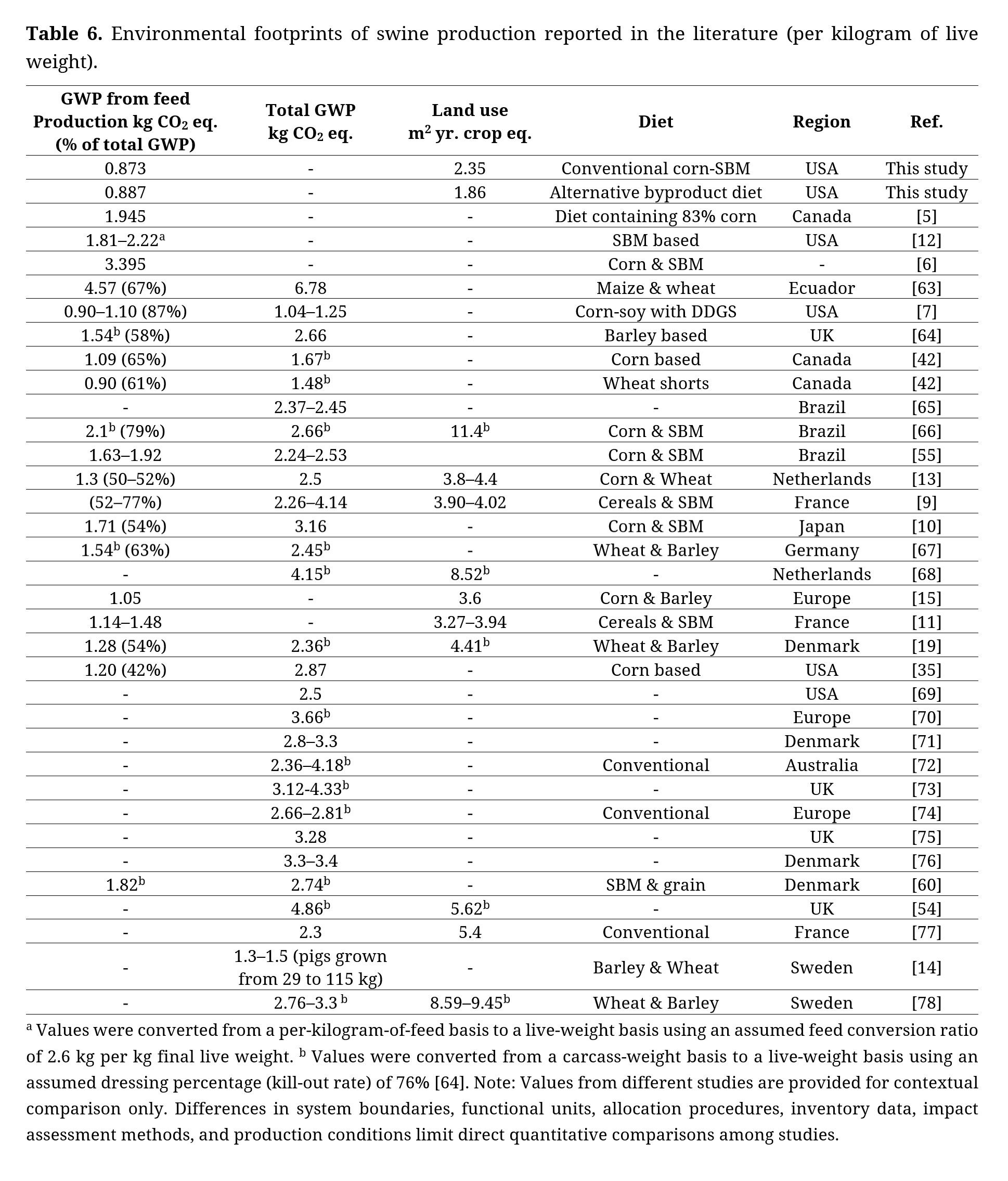 Table 6.
Environmental footprints of swine production reported in the literature (per kilogram of live weight).
Table 6.
Environmental footprints of swine production reported in the literature (per kilogram of live weight).
In this study, an attributional life cycle assessment was used to compare the environmental footprints associated with feed ingredient production and processing for an alternative swine diet containing wheat middlings, DDGS, and bakery meal (ALT) with those of a conventional corn–SBM diet (CON) in the United States. In response to RQ1, under economic allocation, the ALT diet had an estimated GWP 1.6% higher than that of the CON diet, while its estimated land use and water consumption were approximately 21% lower. Fossil resource scarcity was higher for the ALT diet, indicating trade-offs among impact categories rather than an overall environmental advantage. In response to RQ2, allocation choice substantially affected the environmental footprints assigned to coproduct ingredients and the resulting diet comparison. The GWP of the ALT diet was approximately 26% higher than that of the CON diet under mass allocation, compared with 1.6% higher under economic allocation. In response to RQ3, the GWP of the fixed ALT formulation showed limited sensitivity to the individual coproduct price scenarios examined. These findings highlight potential resource-efficiency benefits from byproduct utilization while emphasizing the importance of complete-diet assessment, transparent allocation assumptions, and the consideration of multiple environmental impacts.
The raw data supporting the conclusions of this article will be made available by the authors upon request.
Conceptualization, MAH, and ZL; methodology, MAH; formal analysis, MAH; investigation, ZL and NMK; resources, ZL; data curation, MAH; writing—original draft preparation, MAH, and NMK; writing—review and editing, ZL and SK; visualization, NMK; funding acquisition, ZL. All authors have read and agreed to the published version of the manuscript.
The authors declare that they have no conflicts of interest. The funders played no role in the design of the study; in the collection, analysis, or interpretation of the data; in the writing of the manuscript; or in the decision to publish the results.
This research was funded by the National Pork Board (NPB) Project 17-159. Contribution no. 27-018-J from the Kansas Agricultural Experiment Station.
The authors thank Mike Tokach and Ph.D. student Fangzhou (Arkin) Wu of the Department of Animal Sciences and Industry at Kansas State University for their contributions to diet formulation.
1.
2.
3.
4.
5.
6.
7.
8.
9.
10.
11.
12.
13.
14.
15.
16.
17.
18.
19.
20.
21.
22.
23.
24.
25.
26.
27.
28.
29.
30.
31.
32.
33.
34.
35.
36.
37.
38.
39.
40.
41.
42.
43.
44.
45.
46.
47.
48.
49.
50.
51.
52.
53.
54.
55.
56.
57.
58.
59.
60.
61.
62.
63.
64.
65.
66.
67.
68.
69.
70.
71.
72.
73.
74.
75.
76.
77.
78.
Haque MA, Liu Z, Nallapaneni NM, Ku S. A Byproduct-Based Diet as a Sustainable Feed Option for Swine Production in the United States. J Sustain Res. 2026;8(4):e260081. https://doi.org/10.20900/jsr20260081.

Copyright © Hapres Co., Ltd. Privacy Policy | Terms and Conditions


