Location: Home >> Detail
J Sustain Res. 2026;8(1):e260018. https://doi.org/10.20900/jsr20260018
 ,
Márta Konczos Szombathelyi 2
,
Márta Konczos Szombathelyi 2
1 Doctoral School of Regional and Economic Sciences, Széchenyi István University, 9026 Győr, Hungary
2 Department of Humanities and Human Resources, Faculty of Humanities, Education and Social Sciences, Széchenyi István University, 9026 Győr, Hungary
* Correspondence: Dóra Csöppüs
Background: This study aims to summarize and analyze the possibilities, findings, and results related to the concept of green cities as an environmentally friendly and sustainable model of urban development. A key aspect of this is the integration of innovative, environmentally friendly solutions into a city’s development. Methods: The study integrates a systematic literature review, synthesizing prior research on the topic, with a detailed examination of a Hungarian city as a case study. This approach provides evidence of how an innovative environmental program and climate strategy can enhance a city’s green spaces, boost its competitiveness, and strengthen its image. Results: The study’s insights, derived from a systematic literature review synthesizing global green city research, can serve as a good example to effectively assist the implementation of future green projects in both domestic and international cities. Compilation of key indicators as a model from both the literature and case study, includes the development of green networks, recreational spaces, and an improved city image through community engagement. Conclusions: By examining the multifaceted impact of various green city functions and solutions on sustainability, the analysis offers a comprehensive understanding of how and to what extent green city concepts contribute to shaping the city’s image. Furthermore, the case study helps to recognize that smaller settlements are also capable of implementing effective, green strategies that contribute to the development of their image. A future research direction could be to assess whether cities have strategic planning documents that specifically promote green cities and solutions, and if so, for what time frame they are designed. Such research would allow us to categorize cities based on their green city strategies.
SDG, Sustainable Development Goals; GCI, Green City Initiative; GFF, Green Financing Framework; TOP, Territorial and Settlement Development Operational Program; KEHOP, Environmental and Energy Efficiency Operational Program; SEAP/SECAP, Sustainable Energy and Climate Action Plan; VLR, Voluntary Local Review; ICLEI, Local Governments for Sustainability; TKP, Municipal Environmental Protection Program; GUAP, Green Urban Action Plan; DIMOP, Plus, Digital Renewal Operational Program Plus; EFOP Plus, Human Resource Development Operational Program Plus; MAHOP Plus, Hungarian Aquaculture Operational Program Plus; IKOP Plus, Integrated Transport Development Operational Program Plus; GINOP Plus, Economic Development and Innovation Operational Program Plus; TOP Plus, Area and Settlement Development Operational Program Plus; VOP Plus, Implementation Operational Program Plus; KEHOP Plus, Environmental and Energy Efficiency Operational Program Plus
Sustainable urban development represents a critical challenge for contemporary cities, particularly in the context of climate change and increasing environmental pressures. A sustainable city can be defined as a complex urban system capable of ensuring long-term social well-being, economic viability, and environmental integrity without compromising future generations. Within this framework, the concept of a green city refers to an urban condition in which natural and semi-natural elements are structurally and functionally integrated into the urban fabric, enhancing environmental performance and quality of life. Green urban development thus functions as a planning-driven process that translates sustainability principles into spatial and functional urban transformations, serving as the environmental dimension and operational pathway of sustainable urban development.
The literature suggests that sustainability-oriented urban development also influences the evolution of a city’s image, contributing to competitiveness and identity formation. While larger and more prosperous cities typically possess greater financial and infrastructural capacities, smaller settlements are also capable of implementing effective green strategies adapted to local conditions. This research addresses this gap by presenting a case study of the Hungarian city of Komárom, with the aim of identifying indicators, intervention areas, and transferable best practices suitable for smaller, resource-limited cities. The study demonstrates how a locally adapted yet consistently measurable framework can support the evaluation of green urban development outcomes.
The research is based on document and content analysis of Komárom’s green urban initiatives. By examining the city’s green development practices, the study seeks to establish an indicator-based framework applicable to small cities with limited green spaces and diverse geographical settings. In addition, it explores how green urban development contributes to shaping a positive urban image by linking practical interventions with urban policy objectives and stakeholder perceptions.
The accelerating pace of urbanization and environmental degradation has intensified the need for integrated solutions to urban sustainability. In response, the Green City Initiative (GCI) has emerged as an innovative policy framework that promotes the integration of green infrastructure into urban planning to balance environmental protection and urban development needs [1,2].
Urban green infrastructure and urban green spaces are understood as networks of partially natural areas that preserve ecosystem functions and provide tangible benefits to urban populations while supporting local biodiversity [3–6]. As integral elements of urban infrastructure, green spaces face increasing pressure from urbanization and climate change. Due to their population density and intensive land use, cities play a critical role in addressing global environmental challenges, including air pollution, biodiversity loss, and greenhouse gas emissions [1]. Maintaining urban vegetation is therefore essential for achieving sustainability objectives at both local and global scales. Urban green spaces contribute to climate resilience, improve ecosystem services, reduce energy consumption, and enhance human health and overall urban livability [7–14].
At the policy level, the 2020 EU Biodiversity Strategy committed Member States to conserving and restoring ecosystems through the integration of green infrastructure into spatial planning [15,16]. This framework is reinforced by the EU Green Infrastructure Strategy, which aims to halt biodiversity loss and sustain ecosystem services [17], and further advanced by the EU 2030 Biodiversity Strategy promoting green and blue infrastructure investments and nature-based solutions in urban development [18,19]. Together, these initiatives underpin the concept of the green city, which extends beyond ecological considerations to encompass governance practices and environmentally oriented technologies [1].
The European Commission supports urban planners, policymakers, and businesses in addressing socio-economic challenges while preserving and restoring Europe’s natural environment through two key guidance documents. The EU Guidance on Strategic Framework Development promotes coordinated investments in green and blue infrastructure and enhances the connectivity of Natura 2000 sites [20], while the Strategic Green Infrastructure and Ecosystem Restoration framework provides geospatial tools and methodologies to support ecosystem restoration and climate adaptation [21].
To understand the dynamics and challenges associated with contemporary urban planning, it is essential to integrate the concept of the sustainable city into a global perspective [22,23]. The green city positions itself as a key tool for achieving the Sustainable Development Goals (SDGs)—providing a global framework for sustainability objectives—by harmoniously integrating environmental, social, and economic efforts, resulting in a resilient and thriving sustainable city [24–26]. The sustainable city integrates environmental, economic, and social aspects to foster resilience, innovation, and inclusivity, building on the traditional sustainable development framework that emphasizes economic and social well-being, environmental protection, and effective governance [27]. Eight main characteristics define a green city, including: (1) green planning and implementation, (2) green building realization, (3) green waste management, (4) green transportation systems, (5) efficient use of green water and energy, (6) a green environment, (7) a green community, and (8) green economic strategies [28].
Figure 1 was compiled by the authors based on secondary data from publicly available European-level urban green space and sustainability datasets. Numerous studies have examined the most successful green cities in Europe, highlighting various exemplary practices in sustainable urban planning. These specific examples demonstrate the effectiveness of certain strategies in addressing contemporary urban challenges [29]. The successful transition to sustainability and the creation of a green city relies on several key elements to integrate these sustainable practices into urban development. Best practices in sustainable urban planning are diverse and adaptive, starting from the specific challenges faced by green cities.
Nevertheless, the transition to sustainability and the creation of a green city depends on numerous factors, and its establishment is based on key elements that are essential for achieving the city’s transformation [30,31]. As part of the European Union’s urban development policy, various awards are given to promote green urban concepts, such as the European Green Capital Award and the European Green Leaf Award, which encourage municipalities of different sizes to become greener and more sustainable [32]. The awardees are expected to implement projects that serve as good examples and support the long-term improvement of the quality of life for the local population and the livability of the settlement [33].
The European Green Capital Award and the European Green Leaf Award are additional tools for sustainable urban development. These awards require the development of urban methods based on indicators [34] and indicator sets to measure the performance of green cities [24,35].
City branding has emerged as a key outcome for green cities, increasingly linked to strategies aimed at attracting capital investments [36–39] since the 2010s, as it enhances competitiveness by meeting the growing demand for environmental protection and sustainability [38]. This is particularly relevant for small-sized settlements, where O’Regan [36] found that achieving sustainability is more feasible due to their compact design. The concept of green cities restores the disrupted balance between nature and society, reducing the degree of alienation from the community and the natural world [37], and lays the foundation for this branding. However, climate risk exposes lenders and investors to reputational risk, client default, and limitations in setting internal climate goals [40]. In green cities, GDP growth has a positive impact on performance, whereas population growth has a negative effect [24,30].
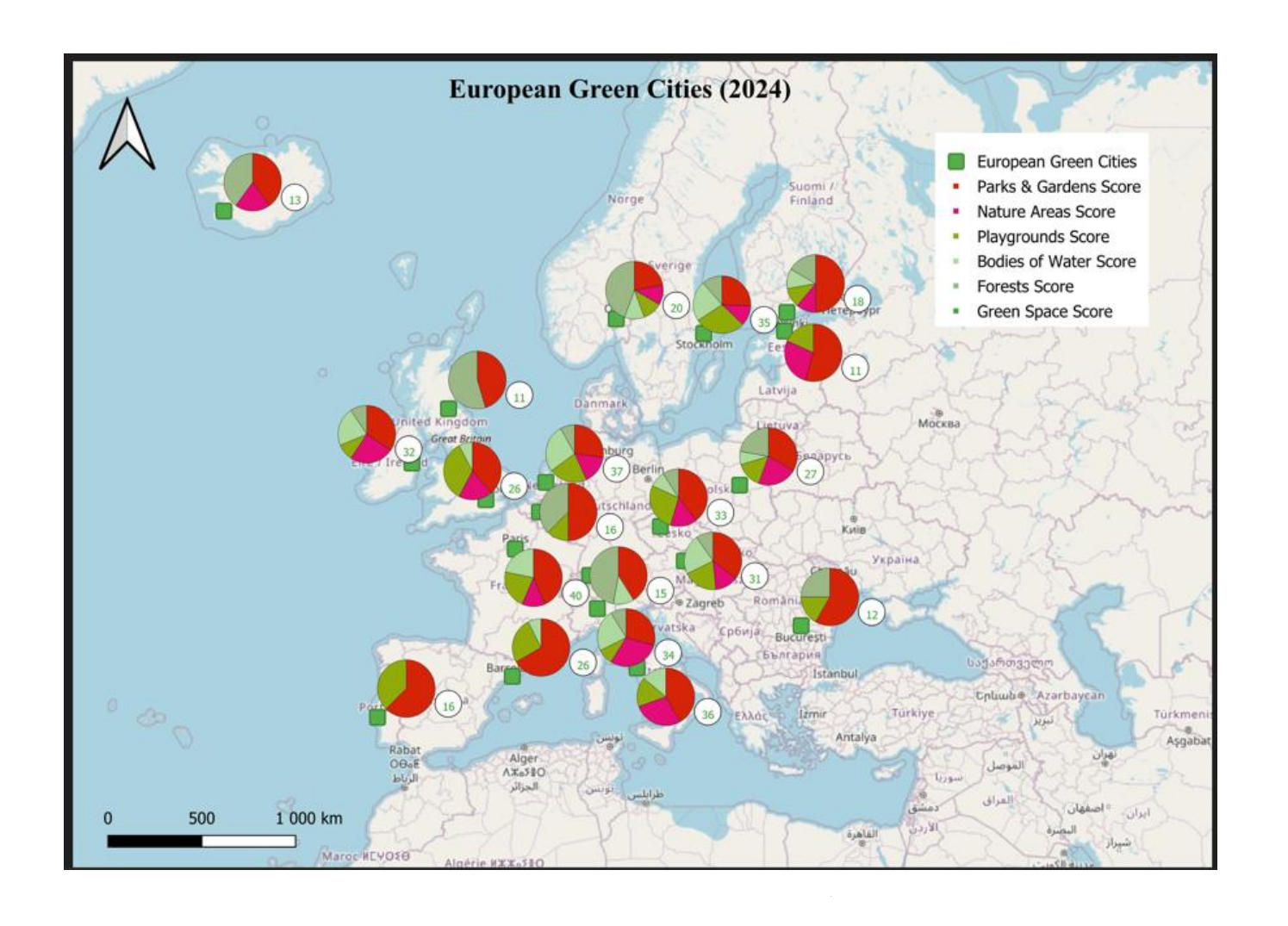 Figure 1. European Green Cities 2024. Source: Compiled by the authors, based on publicly available datasets and secondary sources.
On the international stage, incorporating green financing into urban green development projects is a well-established practice. In contrast, Hungary’s approach differs, requiring adjustments from cities, regulatory bodies, and central/state financing entities. Although preparing a Green Financing Framework (GFF) which facilitates green urban investments is mandatory for some domestic cities, municipalities face implementation obstacles due to limiting factors such as debt restrictions, underdeveloped projects, poor cooperation practices, a lack of organizational culture, and insufficient knowledge [41]. Among municipal green financing options, the green loan/bond framework compliant with international standards, supported by a certified GFF document, is the most relevant for Hungarian cities. Additionally, the Hungarian National Bank’s green capital discount program offers financing for domestic municipalities without requiring a certified loan framework [41].
In Hungary, climate protection planning for municipalities commenced in 2018, resulting in the development of local climate strategies starting in 2022. However, implementing these strategies is proving to be more complex than their creation, as the standardized climate protection documents were developed in a highly decentralized administrative environment guided by specific frameworks. Local governments struggle with limited competence and resources, eroding their autonomy in planning and action [42]. Furthermore, the integration of climate protection aspects into existing development strategies (mainstreaming), alongside the institutionalization and implementation of adaptation and mitigation management, remains in its early stages [43].
Against this backdrop, the present study examines whether green urban development can be operationalized in smaller, resource-constrained cities. Combining a systematic literature review with a detailed case study of Komárom, Hungary, the research aims to develop an indicator-based framework for assessing green urban development in small cities, evaluate its applicability across diverse geographical and economic contexts, and explore how green urban initiatives relate to perceptions of urban image in the case of Komárom.
This manuscript presents a case study of green urban development initiatives in Komárom, Hungary, attempting to demonstrate how smaller cities with limited resources can implement green strategies and enhance their city image. The research adopts a qualitative-dominant, multi-source methodological approach that combines content analysis with a case study framework. A case study is an empirical research approach that focuses on the in-depth examination of a specific spatial, institutional or policy context, allowing for a detailed understanding of complex urban processes and interactions. In this study, content analysis is applied to municipal, project-related and sustainability documents, climate strategies, as well as urban websites and social media platforms, enabling an assessment of how sustainability and green urban development are articulated and emphasized within official documents and public communication. Content analysis is a qualitative–quantitative research method that systematically examines textual and visual materials from institutional and public sources in order to identify dominant themes, narratives and priorities, and to draw conclusions regarding underlying policy orientations and strategic intentions. Within this research, the findings of the content analysis are interpreted through a case study framework, enabling the identified narratives and priorities to be examined within a concrete urban context and in relation to their practical implementation. The analysis of diverse document types and communication platforms allows for a comparative examination of sustainability and green urban development narratives, while the case study provides spatial and institutional contextualization of the findings. By integrating content analysis with a case study approach, the research moves beyond descriptive assessment and enables an interpretative understanding of how sustainability-related concepts are translated from strategic documents into urban-level communication and practice. The study did not involve primary data collection such as interviews or surveys, as its aim was not to examine individual perceptions or attitudes, but to identify municipal-level green urban development practices and measures. While primary data could provide additional insights into stakeholder perceptions, it falls beyond the scope of the present study, which focuses on methodological development rather than behavioral analysis. Reliance on secondary data sources was a deliberate methodological choice consistent with the indicator-based case study approach. The analyzed documents represent formal outputs of municipal decision-making processes and are therefore well suited to examining how green urban development considerations are reflected at strategic and operational levels. Using secondary data also ensured transparency and replicability, as all sources are publicly accessible and verifiable.
Methodological PositioningThe applied research design is exploratory and indicator-oriented in nature. The qualitative-dominant content analysis, conducted by a single coder and operationalized through binary indicators, does not aim to measure causal impacts or the effectiveness of individual interventions. Instead, it serves to identify and systematize observable types of green urban development practices as they appear in municipal strategies, project documents, and public communication. Consequently, the findings should be interpreted as indicative patterns reflecting strategic orientation and communicative emphasis rather than as empirically validated outcomes or impact assessments. This methodological choice is consistent with the study’s primary objective, which is the development and consolidation of a transferable indicator framework for smaller cities with limited resources.
Komárom’s Geography and ClimateKomárom is a border city with approximately 20,000 inhabitants and an area of 70.19 km2, located in Komárom-Esztergom County, Hungary. The city lies on the eastern edge of the Little Hungarian Plain, along a 15 km section of the right bank of the Danube, near the confluence of major mountain ranges and transboundary waterways. Its geographical position supports its role as a regional cultural, tourism, and transport hub, with Budapest located 90 km and Vienna approximately 160 km away [44–46].
The city has a moderately warm and dry climate, with an annual mean temperature of 10.5 °C and average precipitation of 550–600 mm, occasionally reaching 700 mm. Situated on the Danube’s alluvial plain and protected by dikes, Komárom faces flood-related risks, which significantly influence its green infrastructure development and climate adaptation strategies [45].
Research Methodology and ObjectivesThe content analysis followed a qualitative-dominant, indicator-based coding procedure. Textual and visual materials from the analyzed documents were coded according to predefined indicator categories developed through theoretical and empirical considerations. The aim of the coding was not to capture the full content of the documents, but to identify elements relevant to the development of green settlements. The coding categories were organized into thematic groups covering environmental, spatial, institutional and strategic dimensions. Individual indicators were recorded in binary or categorical form depending on whether the given element was explicitly present in the document and the level of its elaboration. As the coding was performed by a single researcher using a binary presence/absence logic, the analysis prioritizes conceptually consistency and transparency over statistical generalizability. Accordingly, the findings should be interpreted as indicative patterns rather that definitive measurements of impact. Given the case study nature of the research, the aim was not to achieve statistical measures of inter-coder reliability, but to ensure interpretative coherence and methodological transparency. To enhance the comparability of the qualitative content analysis results, the indicators were translated into simple quantitative representations. Individual indicators were operationalized using nominal (presence/absence) categorical scales. The purpose of quantification was not to produce absolute performance scores, but to reveal patterns and differences in how individual settlements approach green development. The study adopts an interdisciplinary approach, drawing on secondary sources identified through a deductive method and employing a qualitative, mixed-methods framework. This includes document analysis, a qualitative technique that uses written, visual, or electronic documents to examine their content, creation context, and functional roles, with a focus on authenticity and purpose [47]. The document analysis incorporates municipal, TOP (supporting local and regional development in Hungary), and KEHOP (focusing on environmental protection and energy efficiency) application documents for Komárom, alongside sustainability program descriptions, climate strategies, and media appearances, including social media, the city website, and green city image marketing materials. Complementing this, content analysis organizes and interprets textual data by identifying themes, categories, and patterns [48]. For Komárom’s image, this involves analyzing green-related posts, themes, and comments on Facebook/Instagram, the visual narrative on the city’s website and local media, and the frequency of terms like “green”, “sustainable”, “livable”, and “natural”. By comparing strategic intent (document analysis) with communication appearance (content analysis), the study validates its conclusions. The document analysis was complemented by a keyword-based analysis, as the concept of a “green city image” lacks a universally accepted definition, making thematic identification through keywords particularly suitable. The keyword set was derived from both the relevant literature and the lead author’s previous empirical research [46].
The research aims to uncover causal relationships, using Komárom as a case study to demonstrate that best practices are adaptable for smaller cities with limited resources and diverse characteristics, while also showing that green developments have a potential contribution to the city’s image.
This research adopts a case study approach with the aim of developing a methodological proposal rather than empirically testing an existing urban index. The case study provides a basis for deriving a set of green urban development indicators from observed good practices within a specific urban context, which can subsequently be adapted and applied to other small and medium-sized cities. The selection of indicators followed an inductive logic based on recurring good practices identified in the analyzed documents, strategies and communication materials of the case study city. The indicator set includes elements that are practically implementable, interpretable at the municipal level, and potentially applicable across cities with diverse geographical and institutional characteristics. The quantification of indicators was a deliberate methodological choice and was conducted using a binary (presence/absence) approach. This decision reflects the aim of the research, which is not to measure the intensity or effectiveness of individual measures, but to assess which types of green urban development tools are adopted by a given city. The binary operationalization ensures clarity of interpretation and comparability across cities with different contexts. The research question focused on conceptual patterns rather than explicit keywords. A measure was coded whenever its substantive content could be clearly identified, regardless of the specific wording used in the document.
The primary research question of this study is whether smaller cities with limited resources can implement effective green strategies. We assumed that it is possible to identify green strategies that smaller cities with limited resources can effectively implement, and a municipal environmental protection program can serve as a starting point for this. Komárom’s green strategy is a comprehensive program, with its main elements being the development of the city’s green infrastructure, climate adaptation, community awareness-raising, and the expansion of nature-based recreational opportunities. The pillars of the strategy include creating and renewing green spaces, developing climate adaptation measures, raising awareness of sustainability, and strengthening the regulatory environment. Driven by the city’s climate protection objectives, it aims to develop into a settlement by 2030 that leverages the advantages of existing industrial enterprises while prioritizing the protection and development of natural values, ensuring a healthy living and working environment for residents, reducing greenhouse gas emissions, and enhancing energy efficiency through innovative methods and entrepreneurial participation. Ultimately, the city’s goal is to provide a more livable, ecologically supportive environment, boost environmental awareness with EU funding, and implement this initiative in several phases.
At the international level, no mandatory green strategy document exists; instead, cities operate within their national legal frameworks, often relying on voluntary international agreements to access funding. For instance, the Covenant of Mayors for Climate & Energy requires member cities to develop a Sustainable Energy and Climate Action Plan (SECAP) and commit to reducing greenhouse gas emissions by at least 40% by 2030. Similarly, Agenda 2030 and the UN Sustainable Development Goals (SDGs) encourage local integration through non-mandatory Voluntary Local Review (VLR)—a local-level reporting tool on the implementation of the SDG-s—reports to track progress. Under the European Green Deal and the EU Mission: 100 Climate-Neutral Cities by 2030, 100 cities have pledged climate neutrality, with access to grants and consultancy, though no Hungarian city, including Komárom, is among the initial cohort. Major networks, such as C40 Cities and the ICLEI—an international network supporting sustainable urban development-network, comprising international local governments, promote voluntary, non-binding strategic plans with regular reporting. Komárom, however, participates in the Covenant of Mayors for Climate & Energy, aligning with its green strategy efforts.
Building on the international commitments above, Hungarian cities are required to prepare environmental and sustainability documents, starting with the mandatory Municipal Environmental Protection Program (TKP). This program sets objectives and measures over a 4–6-year period, linking to regional and urban development plans and aligning with international standards to support green urban development. For cities like Komárom that have joined the Covenant of Mayors, the SECAP/SEAP, a municipal-level strategy, addressing climate mitigation and adaptation monitoring system becomes mandatory, facilitating access to EU funds through climate protection applications such as TOP Plus and KEHOP Plus. The next step, a recommended climate strategy, coordinates with county and national plans and requires TOP Plus and KEHOP Plus as prerequisites for funding. Finally, the Green Urban Action Plan (GUAP)—a local strategic document supporting green urban development—serves as a prerequisite for TOP applications and development projects, building on the climate strategy to guide specific green initiatives.
Komárom’s Green City InitiativesKomárom has implemented several green urban development initiatives that can be interpreted through a structured set of indicators capturing policy commitment, physical interventions, community-oriented actions, and climate adaptation measures. Rather than evaluating their effectiveness in causal terms, the following overview documents how these initiatives were operationalized and observed within the case study, providing an empirical basis for indicator development.
The Green City Project, funded through EU TOP municipal financing, represents a measurable intervention in green infrastructure development. Between 2018 and 2021, an investment of 265,000,000 HUF targeted Jókai Park and adjacent streets, contributing to the expansion and renewal of urban green areas, promenades, and connected green networks. These interventions correspond to indicators related to the existence and scale of green infrastructure development and publicly accessible green spaces.
The Livable City—Our Future Komárom Project, supported by 599,600,000 HUF TOP Plus funding until June 2026, further operationalizes green public space development through the creation of recreational parks, cycling infrastructure, playgrounds, and community-oriented facilities. From an indicator perspective, this project reflects measurable dimensions such as the introduction of new green public spaces, multifunctional land use, and infrastructure supporting active mobility and community use.
Climate-related indicators are addressed through the Climate-Friendly Komárom Project, which received 20,000,000 HUF under the KEHOP-1.2.1 program. This initiative focuses on the development of a municipal climate strategy, risk assessment, and awareness-raising activities. Its relevance lies in the formal establishment of climate adaptation planning, the existence of institutional frameworks, and the implementation of educational and participatory programs, rather than in directly measurable environmental outcomes.
The Environmental Protection Program (2021–2026) provides the regulatory and strategic framework required under Act LIII of 1995 on the Protection of the Environment. Its mandatory monitoring, biennial review, and alignment with long-term urban planning documents enable the systematic observation of environmental governance indicators, including regulatory existence, institutional responsibility, and continuity of implementation [49].
To ensure compliance and monitoring, Komárom conducts continuous evaluations of environmental projects and investments, supported by annual reporting and review by the Climate Group established alongside the climate strategy. This institutional arrangement enables the collection of quantifiable data and the refinement of indicators over time, while acknowledging the constraints of data availability and methodological scope.
Overall, these initiatives do not allow for direct causal claims regarding changes in the city’s image; however, they provide a coherent empirical foundation for identifying and operationalizing indicators that describe how green urban development is planned, implemented, and communicated in a small, resource-constrained city context.
To support local environmental initiatives, the European Commission has allocated funding through major operational programs for the 2021–2027 period, providing Hungarian municipalities with financial instruments to address both mandatory and voluntary environmental objectives.
The major operational programs supported by the European Commission for 2021–2027:
●
●
●
●
●
●
●
●
During the preparation of Komárom’s Municipal Environmental Protection Program, continuity with previous municipal strategies, alignment with the National Environmental Program, and coherence with key EU policy frameworks (sustainable development, climate strategy, energy efficiency, and renewable energy use) were ensured. The program was developed in compliance with the Environmental Protection Act, integrating mandatory content elements into a consistent and operational planning framework.
The situation assessment and problem analysis identified key environmental challenges and informed the definition of project proposals and priorities. However, the selection, scheduling, and implementation of measures are significantly influenced by available financial resources and annual budget constraints, which directly affect the feasibility and measurability of proposed interventions.
Effective implementation relies on structured planning, institutional coordination, and the involvement of relevant professional expertise within the municipal administration. In this context, municipalities play a crucial role in translating strategic objectives into operational measures through local regulations, plans, and monitoring tools.
In Komárom, this approach is reflected in green space development plans and regulatory measures, including the revision of local noise regulations, the preparation of noise maps, and the adoption of local ordinances for the protection of woody plants and urban green spaces (Table 1). These governance-based instruments provide a transferable framework that can support indicator-based green city development in municipalities with different geographical and economic characteristics.
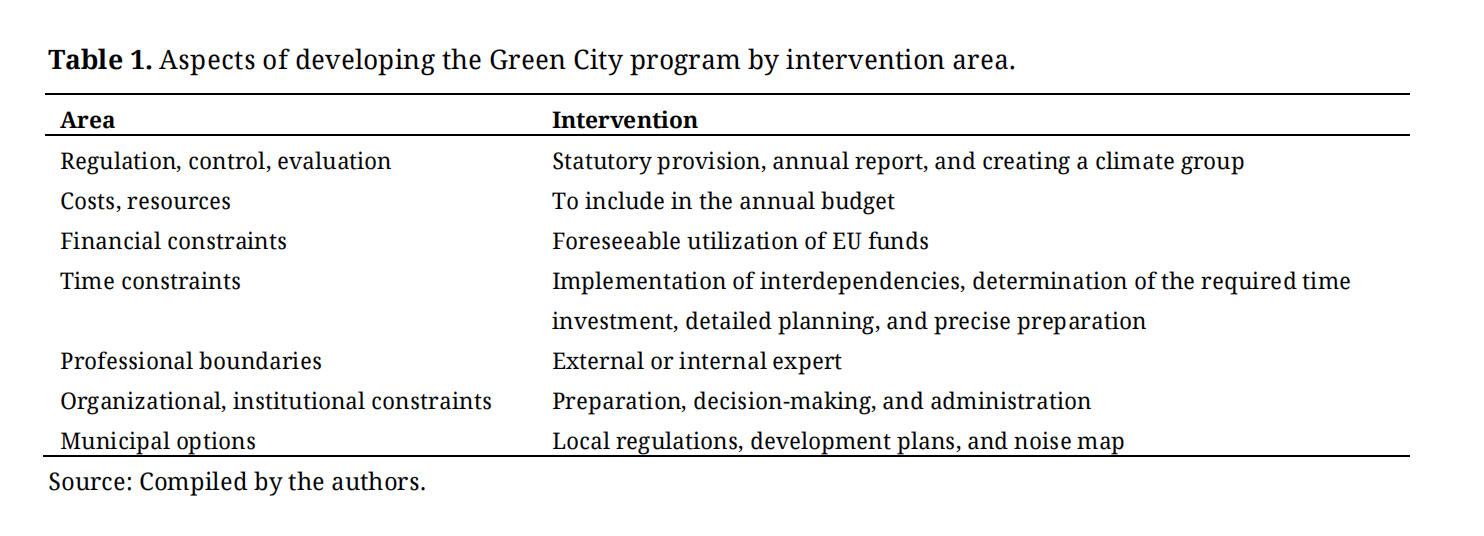 Table 1. Aspects of developing the Green City program by intervention area.
The results of the initiative in Komárom support the analytical assumptions of the study, demonstrating the applicability of the proposed indicator framework within a small-city context. The main elements of the program—developing green infrastructure, raising community awareness, expanding nature-based recreational opportunities, creating and renewing green spaces, developing climate adaptation measures, promoting sustainability awareness, and strengthening the regulatory environment—are feasible for protecting and developing natural values.
Establishing Indicators and OutcomesBased on the green urban development initiatives implemented in Komárom, this study assumed that a transferable indicator set could be developed to assess the green city development of small, resource-limited municipalities. To this end, the initiatives were reviewed to identify observable and measurable outcomes relevant to green urban development. A conceptual content analysis was applied, focusing on the identification of recurring themes, measures, and implementation patterns within municipal strategies, project descriptions, and communication materials. The analysis did not aim to quantify keyword frequency or test statistical relationships but to identify the types of interventions and narratives supporting green city development.
Environmental education and community engagement are realized through a variety of recurring programs, including sustainability-focused competitions, waste collection campaigns, tree-planting actions, and educational events. Over the past decade, approximately 11,000 trees have been planted in Komárom through municipal and grant-supported projects. Additional initiatives include eco-camps, drawing competitions, green waste collection programs, and the integration of environmental themes into preschool and school activities.
Green awareness is further supported through educational publications, brochures, and downloadable materials produced under the Green Komárom initiative in cooperation with experts. These materials aim to present the city’s natural values to residents and visitors while maintaining a scientifically grounded yet accessible format. Their content is based on the authors’ own research and data collection.
Institutional support for green development is reinforced through regulatory instruments, including the Green Space Maintenance and Tree Protection Ordinance adopted in 2023, which establishes formal rules for the protection and maintenance of urban green spaces.
Digital tools also contribute to green awareness and engagement. These include the Green Komárom website, mobile applications, downloadable cycling routes, and social media platforms supporting environmental communication and education. Komárom’s Green Komárom online community includes approximately 3,900 members, compared to a population of 19,171 as of January 1, 2025 [50].
Sustainable mobility initiatives include a community-based bicycle rental system and the gradual introduction of electric vehicles into public transport. In 2025, two electric buses were delivered through grant-funded development, contributing to the modernization of public transportation infrastructure.
The city also emphasizes the multifunctional use of natural and semi-natural areas. The renovation of the Monostori Free Beach combined habitat preservation with community-oriented development, renewing approximately 4000 m2 of green space using native vegetation. Community-based environmental maintenance activities, such as the cleaning of public gardens, further support biodiversity while engaging local volunteers.
Several institutions participate in formal environmental education frameworks, including the Green Kindergarten and Eco-School programs. Guided nature tours and biodiversity-oriented initiatives, such as meadow transfer projects supporting pollinators, contribute to awareness-raising, habitat conservation, and community involvement [45].
Komárom’s urban practices—sustainable urban planning, participatory decision-making, green infrastructure development, energy efficiency, and greening transportation—align well with international green city concepts, which are becoming increasingly important as urbanization accelerates [1,2]. The strategic planning of the city and the integration of climate adaptation into multiple sectors align with the principle of mainstreaming, which involves embedding climate resilience and sustainability into all aspects of urban policy and development—such as economic planning, infrastructure, and community engagement—rather than treating them as separate initiatives. This necessity is supported by international research, which highlights the effectiveness of this approach in achieving long-term environmental goals [17,18,43].
These achievements reflect Komárom’s progress in implementing its green strategy, building on the mainstreaming principle to address specific environmental and social goals:
●
●
●
●
●
●
However, problems remain, including:
●
●
Overall, Komárom has adopted good practices in the urban green transition, aligning with literature models and EU guidelines through tools like strategic planning, community involvement, ecosystem-based development, and city branding. Addressing the identified financial and institutional challenges will be key to fully integrating green financing and climate strategies into its urban development framework. Urban examples were compared with the relevant literature in order to demonstrate the theoretical grounding and relevance of the proposed indicators. However, the study did not aim to conduct a critical or causal analysis of why certain initiatives were successful or encountered difficulties, nor to examine the specific enabling or constraining factors behind their implementation. This decision is consistent with the methodological focus of the research, which prioritizes indicator development rather than impact assessment. The study does not pursue a comparative analysis across cities, as the role of the case study is methodological rather than evaluative. Starting from a single urban context, the research aims to derive transferable indicator types rather than assess performance differences between cities.
Building on the successful examples of the city of Komárom, the following 13-point set of indicators were developed (Table 2) to measure the development of a smaller, resource-limited settlement as a green city. The development of the indicators followed a multi-step process. First, green urban development measures and initiatives recurring across different document types and communication platforms were identified through content analysis. These measures were then grouped and abstracted to formulate generalizable indicators that refer to types of interventions rather than individual projects. Based on this, a city can be rated from 1 to 13, which confirms our hypothesis that the development of a city as a green city can be measured. The proposed indicators are not presented as standalone empirical results but as interpretative outcomes derived from the case study analysis. The indicator set is framed as a methodological contribution that translates city-specific experiences into more generalizable insights.
By proposing a transferable, indicator-based framework grounded in a single case study, the research contributes to ongoing discussions on how urban green indices can be conceptually derived and operationalized for smaller cities. This inductive, case study–based indicator development ensures sensitivity to local context while offering a transferable framework applicable to other cities.
To ensure the practical applicability of the indicator set, a measurement specification was defined for each indicator. Depending on the nature of the intervention, indicators were operationalized using nominal (presence/absence), ratio (counts, area), percentage-based, or categorical scales. This mixed measurement system enables comparability while remaining sensitive to the specific context of smaller cities. While the initial coding framework was informed by theoretical considerations, the final indicator set emerged inductively from the practices identified in the case study. The unit of analysis was not individual words or expressions, but identifiable measures or programs related to green urban development. Accordingly, the analysis did not require word-level examples or frequency tables.
The content analysis was conceptual in nature and focused on identifying green development measures rather than analyzing specific keywords or relational patterns. The selection of indicators was guided by two criteria, their explicit appearance in formal municipal documents and public communication, and their relevance to decision-making competences available to smaller municipalities. This approach ensures that the indicators are not only theoretically grounded but also empirically observable and realistically measurable within resource-constrained urban contexts.
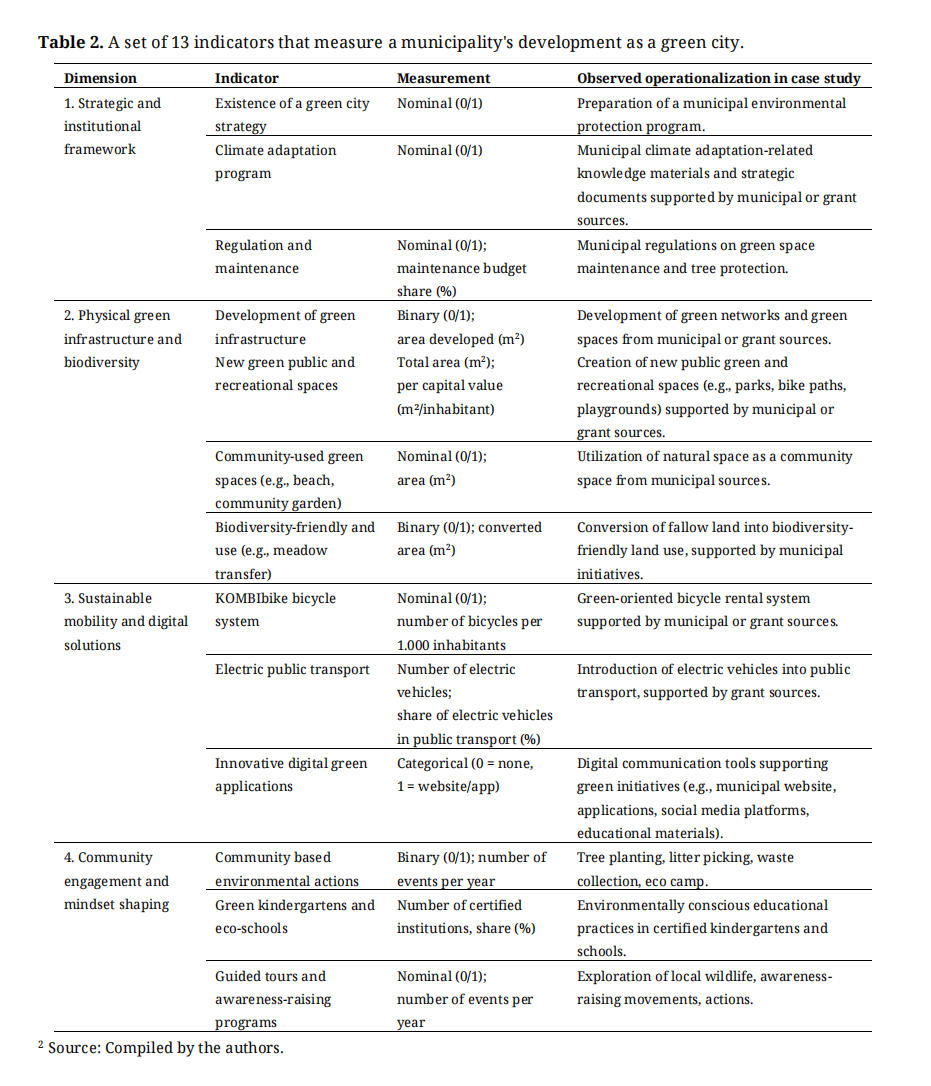 Table 2. A set of 13 indicators that measure a municipality's development as a green city.
We assumed that green urban development models are adaptable to cities with different geographical and economic conditions. We were unable to confirm or refute this hypothesis through content analysis and document analysis methods; therefore, we do not consider this assumption proven or verifiable.
We hypothesized that in the case of Komárom, green urban development could contribute to shaping the city's image. We examined the official websites, Facebook pages, and green image films related to Komárom. Overall, we investigated the impact of digitalization on shaping the green city image from the perspectives of sustainability, technology, and green urban concepts. Due to technological advancements and digital transitions, new opportunities are emerging for the planning, management, and development of cities [51]. The examination of the digitalization of communication tools pertains to how residents observe and respond to the green events, phenomena, and developments in their environment. The shift can aid in achieving urban sustainability through the application of smart technologies, enabling city leaders to design livable cities that consider sustainability principles [52–54].
The Green Komárom Facebook group has 3,900 members, and the population of Komárom is 19,171 as of January 1, 2025 [50]. The Facebook page’s promotional video, created in 2022, has been viewed 644 times on YouTube. However, the video is continuously displayed on an LED wall in the city center, and its viewing data cannot be measured. There is also no publicly available data on the website's traffic or the number of app downloads. Nevertheless, the size and activity of the Facebook group suggest that green urban development plays a visible role in the representation and communication of Komárom’s city image, although this observation cannot be interpreted as a direct causal effect.
We assume that, through the example of Komárom, it can be demonstrated that green urban development has a positive influence on the city's image. We applied the keyword method to the project topics and descriptions, as there is no universally accepted definition of a green urban image. In a previous work by the lead author, the residents of Komárom were asked to provide characteristics through a questionnaire that they used to personify their city [46]. From these previous responses, we selected the characteristics that can be attributed to green urban developments. The results are presented in Table 3, which demonstrates the positive impact of green urban developments on the city's image; thus, the findings provide indicative support for the assumption that green urban development contributes to the shaping of the city’s image, within the analytical limits of the applied methods.
In summary, the image of a green city is a consciously constructed identity that communicates the city's sustainability efforts and environmental developments.
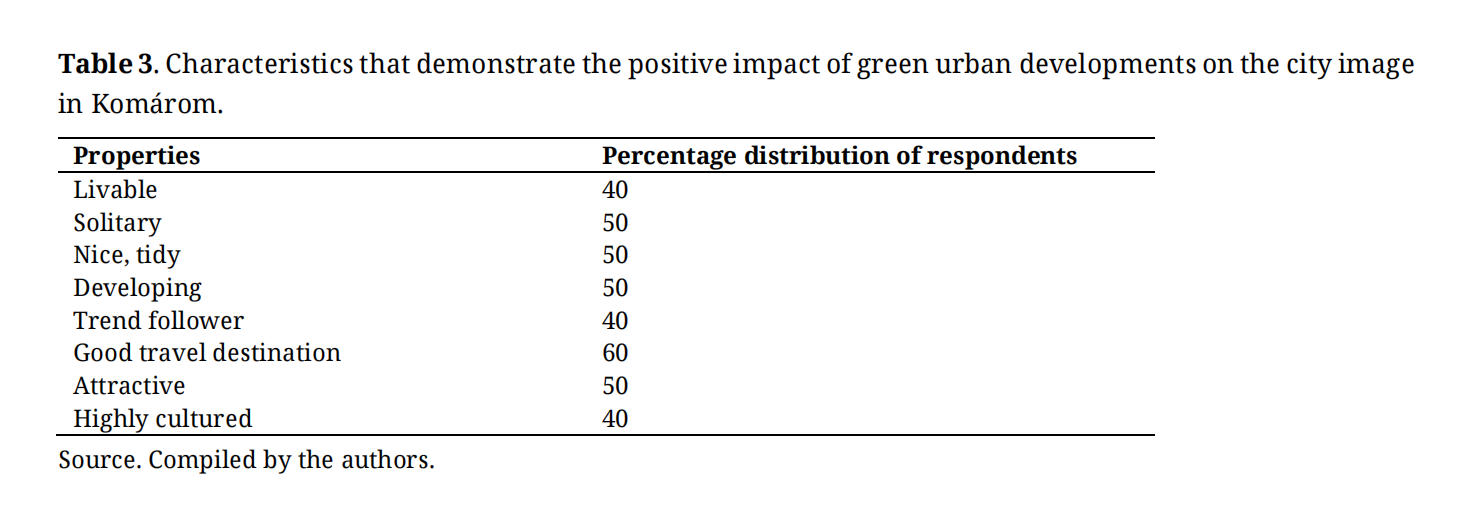 Table 3. Characteristics that demonstrate the positive impact of green urban developments on the city image in Komárom.
This study aims to summarize and analyze the concept of green cities based on an evaluation of green developments in the city of Komárom, drawing on international literature models and considering the integration of innovative, green solutions into urban image development. The study attempted to cover sustainability aspects from multiple perspectives (strategic planning, ecosystem-based urban planning, participation, mobility, and financing), but several limitations of the research can be identified:
●
●
●
●
●
●
●
●
●
●
●
No data were generated from the study.
Conceptualization, DC and MKS; Methodology, DC and MKS; Formal Analysis, DC; Investigation, DC and MKS; Writing—Original Draft Preparation, DC; Writing—Review & Editing, DC and MKS; Visualization, DC; Supervision, MKS.
The authors declare that there is no conflict of interest.
This research received no external funding.
1.
2.
3.
4.
5.
6.
7.
8.
9.
10.
11.
12.
13.
14.
15.
16.
17.
18.
19.
20.
21.
22.
23.
24.
25.
26.
27.
28.
29.
30.
31.
32.
33.
34.
35.
36.
37.
38.
39.
40.
41.
42.
43.
44.
45.
46.
47.
48.
49.
50.
51.
52.
53.
54.
Csöppüs D, Szombathelyi MK. Green City Development in a Mid-Sized Hungarian City: A Case Study of Komárom’s Environmental Initiatives. J Sustain Res. 2026;8(1):e260018. https://doi.org/10.20900/jsr20260018.

Copyright © Hapres Co., Ltd. Privacy Policy | Terms and Conditions


