Location: Home >> Detail
J Sustain Res. 2026;8(2):e260033. https://doi.org/10.20900/jsr20260033
 ,
Anna Makarska ,
Kerasia Sousouri ,
Theodore Metaxas *
,
Anna Makarska ,
Kerasia Sousouri ,
Theodore Metaxas *
Department of Economics, University of Thessaly, 38221 Volos, Greece
* Correspondence: Theodore Metaxas
The aim of the present study is to explore the relationship between urban resilience and urban sustainability through a combined qualitative methodological approach. It examines resilience strategies using two major Greek cities, Athens and Thessaloniki, as case studies. The motivation for this research stems from the inclusion of both cities in the global 100 Resilient Cities (100RC) Network. For the purposes of the study, three key documents were analyzed: the City Resilience Framework and the Resilience Strategy Reports for Athens and Thessaloniki. The analysis revealed that Athens and Thessaloniki adopt different approaches to strengthen their resilience, particularly in terms of governance structures and the priorities that have been set. However, these approaches can be perceived as complementary, suggesting the potential for a network model of inter-city collaboration in Greece. Overall, the findings suggest that resilience contributes to the long-term achievement of sustainability and functions both as both a prerequisite for and a core component of it, ensuring urban stability, adaptability, and endurance.
Over 332 million people in the European Union live in urban areas, including cities, towns and suburbs, of whom the 39% resides in cities. According to recent forecasts, the proportion of the population living in urban areas is expected to increase to over 80% by 2050 [1]. The rapid pace of urbanization has led to a significant increase in the urban population worldwide. Furthermore, it is projected that by 2050 more than 80% of the world’s population will live in urban areas, substantially increasing the demand for immediate infrastructure improvements and upgrades [2–4].
Currently, climate change is negatively affecting various components of urban areas, including people, communities and the built environment [5]. Additional pressures on urban areas arise from migration and economic cycles, in combination with natural hazards [6]. These challenges are particularly critical, as urban areas are often characterized by poor urban design, weak regulatory systems, and inadequate public services, all of which increase urban vulnerability and reduce urban resilience [3,7].
Urban resilience and urban sustainability have been extensively examined in the literature, as both concepts focus on the capacity of urban areas to respond and adapt to crises such as climate change, natural disasters and socioeconomic pressures. The present study examines two resilience strategic plans developed for two major cities within the framework of the global 100 Resilient Cities (100RC) Network. By applying a quantitative methodological approach, using comparative analysis, the study aims to identify differences across five main dimensions of the cities’ resilience plans. Specifically, the governance, environmental, social, urban mobility and nature-based solutions perspectives are examined in both plans.
To better understanding the differences in resilience planning approaches between the two cities, the following five research question are posed:
RQ1: What are the differences in the resilience strategies of Athens and Thessaloniki regarding their governance approach?
RQ2: What are the differences in the resilience strategies of Athens and Thessaloniki regarding their environmental dimension?
RQ3: What are the differences in the resilience strategies of Athens and Thessaloniki regarding their social dimension?
RQ4: What are the differences in the resilience strategies of Athens and Thessaloniki regarding their urban mobility dimension?
RQ5: What are the differences in the resilience strategies of Athens and Thessaloniki regarding the proposed nature-based solutions?
To address these research questions, this paper is structured as follows. Section “Define Urban Resilience in Brief” presents the definition of urban resilience as discussed in the literature. Section “Urban Resilience and Urban Sustainability: Define Their Relationship” examines the relationship between resilience and sustainability, while Section “Sustainable Development-Agenda 2030-SDG 11” briefly introduces Agenda 2030. Section “Methodology” outlines the methodological approach of the study, and Section “Comparative Analysis on The Resilience Strategies Between Athens and Thessaloniki” presents the comparative analysis. Finally, Section “Conclusions” summarizes the conclusions.
Resilience was initially introduced as a term in the ecological systems literature. According to Holling:
“Resilience determines the persistence of relationships within a system and is a measure of the ability of these systems to absorb changes in state variables, driving variables and parameters and still persists. In this definition resilience is the property of the system, and persistence or probability of extinction is the result” [8].
However, contemporary literature offers multiple definitions of urban resilience, which can create conceptual ambiguity. [9] For example, Leichenko [10] defined resilience as, “the ability of a city to withstand a wide range of shocks and stresses”. Similarly, Desouza et al. [11] emphasized the capacity of urban systems to react to and absorb changes within complex urban environments. Furthermore, it has been pointed out that urban resilience should examine the various interrelated elements of a city [12]. Moreover, Metaxas and Psarroppoulou [13] note that resilience has been embedded in the strategic planning of numerous cities, shaping long-term urban development policies. Similarly, Capologno et al. [14] argue that urban resilience should be integrated into long-term strategic planning processes. Urban resilience can thus be understood as a coordinated process within socio-ecological systems that is influenced by external pressures [15]. It enables cities to maintain continuity through pressure and shocks by positively adapting and transforming towards sustainability [16].
Several studies have examined urban resilience from different perspectives. For instance, Leichenko [10] argued that urban resilience is the ability of a city to withstand a wide range of pressures. According to Desouza et al. [11], urban resilience can react to and absorb changes in complex urban environment. Additionally, it has been suggested that urban resilience involves the ability to prevent disasters [17], to endure disasters [18] or to absorb all the disturbances caused by disasters while simultaneously maintaining essential functions and structures [19]. Moreover, Thornbush et al. [20] argue that the aim of urban resilience is to ensure the future stability of a city’s social, economic, and natural systems. From another perspective, Datola [21] defines urban resilience as the ability of an urban system, along with its socio-ecological and socio-technical networks, to rapidly transform those subsystems that limit its current or future adaptive capacity, in order to maintain or restore its desired functions after a disturbance. Patel and Nosal [22] support the framework proposed by Ostadtaghizadeh et al. [23], who argue that the key dimensions characterizing urban resilience are physical (infrastructures), natural (ecological and environmental), economic (community and economic development), institutional (governance) and social (communities and humans).
A resilient city, therefore, is defined by the overall capacity of its governance systems, together with its natural, economic and social structures, and stakeholders exposed to risk in order to be prepared in advance, plan for uncertainty, resist, absorb and adapt to risks, and recover effectively from their impacts [24]. Consequently, resilience should be placed at the forefront of urban strategic planning. In the real world, citizens, businesses, and neighborhoods constitute complex systems who’s their functioning depends on how effectively they communicate and interact in order to adapt changes [25]. Desouza and Flanery [11], approach cities as complex systems and raise the critical question of how they can achieve resilience. This question becomes even more complex when considering the range of stakeholders involved, the processes required and the boarder international and political dynamics.
Modern challenges arising from the limited financial resources and infrastructure, as well as from the weak cooperation among individuals and institutions within the urban environment, and various social threats (e.g., terrorism and war) undermine social cohesion and challenge the resilience of the city [10].
The relationship between urban resilience and sustainability is often conceptually misunderstood [26]. Several approaches have been proposed in the literature to explain the relationship between these two terms. According to Marchese et al. [27] there is a tendency among some researchers to perceive and apply these concepts as entirely distinct and unrelated. In contrast, many scholars suggest that resilience and sustainability should not be examined as separate perspectives [12]. For instance, Holling [28] suggested that resilience should be regarded as a key indicator of sustainability. Similarly, Romero-Lankao et al. [29], emphasized that resilience is fundamental to achieving long-term sustainability within socio-political and socio-ecological urban systems. Likewise, Folke et al. [30] argued that in a transforming world, resilience plays a crucial role in achieving sustainability.
A balanced combination between sustainability and resilience can generate those strategies that enable both concepts to reach their full potential [31]. From the perspective of urban planning, it can be argued that both concepts are interrelated, interdependent and, ideally, should not be examined in isolation [32]. Although they may sometimes appear to be competing concepts, successful urban development cannot be achieved unless resilience and sustainability are incorporated into decision-making processes [15].
The current literature identifies three key frameworks for conceptualizing the relationship between urban resilience and sustainability [27]:
a)
b)
c)
To raise awareness and strengthen urban sustainability and resilience, the Rockefeller Foundation has recently developed and funded the “100 Resilient Cities (100RC)” initiative. This project aims to support 100 cities worldwide in addressing natural, social and economic challenges (e.g., climate change, urbanization, globalization), while promoting urban resilience practices at the global level.
United Nations Agenda 2030 was adopted in 2015 by world leaders who agreed upon 17 Sustainable Development Goals (17 SDGs) [35]. Sustainable Development Goals constitute a holistic and more complex approach of growth, in contrast to the traditional economic paradigm which focuses on a limited set of dimensions. A successful implementation of the SDGs is the only accurate way of humanity to handle sustainability and ensure human well-being, economic prosperity and environmental protection [36].
Through SDG11 the sustainability and resilience in urban areas are explicitly emphasized. To examine the sustainability and resilient of cities without exclusions, SDG11 is structured around specific indicators, including ensuring access to adequate housing, basic services, and transport; upgrading slums; improving urban planning and management; reducing the environmental impact of cities, particularly air pollution and waste generation; providing universal access to safe, inclusive, and green public spaces; and strengthening resilience to disasters, as well as protecting cultural and natural heritage [37,38].
The success of SDG11 depends on the level of integration into local circumstances, financial constraint, and the existing urban planning framework. Furthermore, several of the indicators can be measured at the local level, positioning cities as key actors in both the implementation and monitoring of progress toward sustainable development [39].
For the purposes of the present study and to address the research questions, a qualitative comparative research design was adopted. More particularly, the methodology of the study combines case study analysis, structured contented analysis and comparative analysis. These approaches provide the opportunity for an in-depth examination of urban resilience strategies within a common framework.
Initially, a case study was employed focusing on the resilience reports of Athens and Thessaloniki. These reports were developed within the framework of the two cities’ participation in the “100 Resilient Cities (100RC) Network”. This network is an international collaboration aimed at enhancing urban resilience to social, economic, and environmental challenges in major cities. Previous studies have highlighted both positive and negative aspects of the Rockefeller Foundation’s resilience framework in participating cities. On the positive side, cities had the opportunity to adopt a structured framework for risk assessment and resilience planning. In addition, participatory and cross-sectoral governance approaches were introduced and tested within the 100 Resilient Cities network, while global collaboration facilitated knowledge exchange and the sharing of best practices. Specifically, Athens had the opportunity to institutionalize resilience thinking within its governance structures.
On the negative side, the framework focused primarily on municipal boundaries, often overlooking regional impacts. Moreover, stakeholder engagement was frequently shallow due to tight implementation deadlines. More importantly, several actions did not promote genuine transformative change but instead consisted of superficial, repackaged existing initiatives [40].
The case study approach is a qualitative research method that is used to examine complex phenomena [41]. The term “case study” refers to a research strategy that focuses on a specific and bounded system or problem. When we refer to a “case”, we refer to a meaningful entity with spatial and temporal boundaries, functional components, and a distinct identity. Cases usually involve people, specific groups, programs, educational institutions or organizations. In some cases, they may also concern events or processes [42,43].
Secondly, a structured content analysis was applied in order to examine the strategic documents of both cities. According to Woodrum [44], the special potential of content analysis lies in its explicit linkage of qualitative symbol usage with quantitative data, and the fact that category construction is simply another form of concept operationalization that is well known to research design. Krippendorf [45], defines content analysis as a research technique for making replicable and valid inferences from texts (or other meaning material) to the context of their use. An earlier definition considers content analysis as “a technique for objective, systematic, and quantitative description of the manifest content of communication” [46]. According to Handayani et al. [47], content analysis is crucial for capturing inferences and logic of interpretation from selected documents. Regarding content analysis, is has been used in several studies related to urban resilience and urban sustainability analysis [48–50]. In this study, the critical documents analyzed are the following: (a) City Resilience Framework, (b) Resilience Strategy Reports for Athens and Thessaloniki.
The analysis followed an inductive coding process, in which categories and themes emerged from the text rather than being predefined. The unit of analysis consisted of each strategic objective, initiative, or intervention mentioned in the documents. Initial readings of the reports were used to identify recurring patterns and dimensions related to urban resilience, which were then organized into the five analytical dimensions: governance, environmental, social, urban mobility, and nature-based solutions. To ensure consistency and reliability, coding was performed independently by the authors, and variations were resolved through discussion until consensus was reached. This approach ensured a transparent and systematic synthesis of each city’s resilience strategy while enabling comparative analysis.
Finally, a comparative analysis was conducted to identify similarities and differences between the resilience strategies of the two cities. Comparative analysis, is also a well-known methodological process in many research areas including resilience and sustainability [51–53]. Comparative analysis should be distinguished from the general notion that all analysis is inherently comparative, as all attempts to identify causes involve comparing what happened with a mental image of what is likely to have happened in the absence of certain features [54]. Comparative case studies, in particular, involve the structured analysis and synthesis of patterns across two or more cases with shared characteristics or goals [13].
The Cases Studies Athens in BriefAfter its independence from the Ottoman Empire in 1830, the city of Athens, located in central Greece, was declared the capital of the new state in 1834. During the 20th century, Athens experienced extensive urbanization and population growth. Impressively, the population of the Athens metropolitan area increased from 1.4 million to more than 3 million between 1951 and 1981. Almost 200 years later, Athens has evolved into the largest municipality in the country. Today, the metropolitan area of Athens covers more than 3000 km2 and according to 2021 census it has more than 3.8 million inhabitants, almost one-third of Greece’s total population. Rapid population growth, combined with the organization of the 2004 Olympic Games, contributed to uncontrolled urban development, which had made the city vulnerable to future crises. The global economic crisis of 2007–2008 exposed these vulnerabilities and highlighted the need for a well-designed urban resilience strategy, not only to address financial instability but also to confront climate change and natural disasters.
According to the “Resilient Athens: a strategy for 2030” report [55], there are several crises that the city is facing including earthquakes, storms, heatwaves, social disturbances, and cybercrime. Moreover, Athens’ overall resilience has been weakened by the prolonged economic recession, aging infrastructure, increased migrations flows and diminished public trust in governmental institutions. These stresses and threats over the city’s resilience, convinced local authorities for the necessity for a strategical designed resilience framework to enhance city’s adaptive capacity and ensuring its sustainability.
Thessaloniki in BriefThessaloniki, the second largest city in Greece, is located in the northern part of the country and constitutes an important economic and cultural center of the wider Macedonia region. According to the 2021 census, there are almost 1.1 million inhabitants in the metropolitan area of Thessaloniki. Due to its strategic geographical location, Thessaloniki has been functioned as a crossroads between Eastern and Western cultures. Its port, the second largest passenger and commercial port in the Balkans, has significantly influenced its development. Over the centuries, Thessaloniki’s cultural heritage has been influences by the Roman, Byzantine, and Ottoman Empire as well as by the Jewish and Greek communities, each leaving a distinctive imprint on its urban fabric and traditions. This multicultural legacy has enhanced the city’s tourism appeal. Today, tourism is one of the most essential economic sectors contributing to the city’s well-being. The city hosts more than 30 museums and 15 UNESCO world heritage sites [56], and its airport has recorded more than 2.5 million tourist arrivals in 2024 [57].
During the 20th century, one of the most essential stresses the city had to face was the large-scale demographic transformation. In 1922, the population of the city was doubled after 130,000 refugees from Asia Minor came and settled in the city. Conversely, during the Second World War, more than 50,000 inhabitants, mainly from the Jewish community, almost 20% of the total population, were deported to concentration camps across Central and Northern Europe. In recent years, Thessaloniki has also received large-scale refugee movements, mainly from Syria and other countries of the Middle East. In response, the city developed solidarity networks of citizens and volunteers to support refugees and strengthen social cohesion [56]. Apart from the migration stresses, the city is also vulnerable to natural threats such as floods, earthquakes, and wildfires, according to its Resilience Strategy. These threats over the city’s resilience, underscore the necessity of a strategically designed resilience framework to enhance the city’s adaptive capacity and ensuring its sustainability.
The resilience strategy plan Athens 2030 vs. Thessaloniki 2030The present chapter presents the priorities and visions for the future urban development of Athens and Thessaloniki in relation to their respective challenges, stresses and resilience strategies. Both plans were developed within the within the framework of the “100 Resilient Cities (100RC) Network”, an international program aimed at strengthening urban resilience to social, economic, and environmental challenges in major cities. According to the methodology of ARUP, the preparation of each city’s resilience strategy followed three main phases. The phase I was the assessment of the baseline, the phase II was the development of Strategy and the phase III is the implementation. Both Strategies have a timeline till 2030. That means that these documents are dynamic and need to be monitored, measure indicators and update with new trends. Therefore, the implementation of these strategic plans could actually determine whether resilience is part of the marketing and the image of each city along with the interconnections with sustainability.
The “Resilient Athens: a strategy for 2030” was developed by the Municipality of Athens in collaboration with the Rockefeller Foundation, as part of the Resilient Cities Network program started in 2014. The strategy is structured around several pillars, including health and well-being, economy and society, infrastructure and environment, and effective governance, all aligned with the Sustainable Development Goals of the United Nations. Through this framework, Athens aspires to become an “Open City,” a “Green City,” a “Proactive City,” and a “Vibrant City.”
The strategy includes 65 key actions-interventions and 53 sub-actions in order to prevent major risks such as heatwaves, floods and social stresses. These actions include the implementation of a heat action plan in combination to urban coiling measures inspired by nature-based solutions such as tree planting and urban park creation. Additional actions include measures to promote sustainable mobility, such as the adoption of electric buses and the development of bike lanes. Other actions are related to waste management and the circular economy, such as organic waste diversion. Finally, the strategy includes a plan for cultural and community engagement as mechanisms for preserving the city’s identity and strengthening social cohesion. In order the goals of the plan to be achieved, the strategy includes the creation of a municipal resilience and sustainability office responsible for coordinating all the actions, monitoring the progress, maintaining timeframes, are securing funding sources [55].
Similarly, the “Resilient Thessaloniki: a strategy for 2030” was developed by the Municipality of Thessaloniki in collaboration with the Rockefeller Foundation. The resilience strategy for Thessaloniki was designed to protect the city’s historic and coastal identity against natural threats such as heatwaves, floods, and sea-level rise, as well as economic and social vulnerabilities exacerbated by the 2007–2008 economic crisis. For improving the city’s resilience, the plan focuses on several pillars including the promotion of sustainable and low-carbon mobility using multimodal transport hubs, the reduction of traffic impact related to tourism and urban logistics, investment in green and blue infrastructures to improve coastal protection and urban cooling, and increased public stakeholders’ preparedness against natural disasters such as floods or earthquakes. Overall, Thessaloniki’s strategy focuses on linking resilience to sustainable tourism and the blue economy.
In order the goals of the plan to be achieved, the strategy includes a participatory approach between municipality departments, collaboration within the framework of EU project such as Interreg and the Covenant of Mayors, and collaboration with regional partners [56]. Table 1 summarize the authors’ comparative interpretation of the strategies, structured to enable systematic cross-city comparison rather than quantitative measurement.
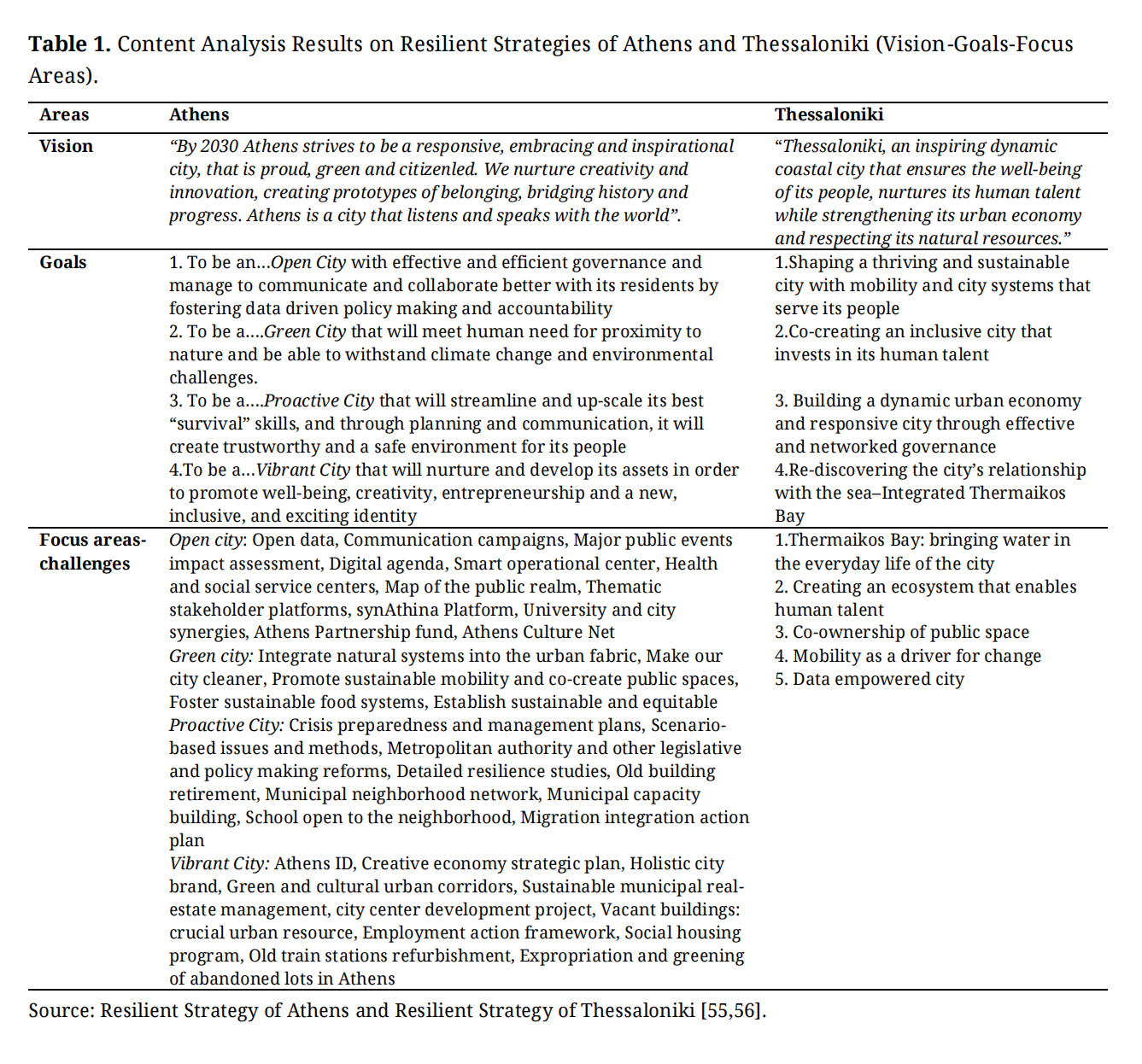 Table 1. Content Analysis Results on Resilient Strategies of Athens and Thessaloniki (Vision-Goals-Focus Areas).
The content analysis of the resilience strategies 2030 for Athens and Thessaloniki was conducted based on three analytical dimensions, including the vision, the goals and the main challenges identified in each document. The first dimension that the two resilience strategies were examined was related to the vision of each city regarding its future development. In both strategies, citizens and creativity are the core of their urban transformation narrative. This perspective reflects an understanding of resilience as a cultural and social construct and not as a solely technical or environmental process.
In the case of Athens, the vision describes an inspiring, green, and creative metropolitan center. The city’s historical legacy is positioned as a bridge to a sustainable future in which innovation, environmental restoration, and social cohesion coexist. The ambition for Athens is to be re-establish as a global metropolis that balances cultural identity with ecological responsibility. On the other hand, in Thessaloniki’s strategy the vision about its sustainable future is related to its geomorphological and environment context. Thessaloniki is a coastal city and the well-being of its citizens is in direct relation to the preservation and sustainable management of its natural resources. As a result, Thessaloniki’s natural landscape defines the city’s resilience and identity.
The second analytical dimension concerns the main strategic goals of each resilience plan. The main objectives of Athens’ strategy are summarized in four central pillars. Athens aims to become an Open, Green, Proactive and Vibrant city. Through its resilience strategy, Athens aims to rebuilt the relationship between the municipality and citizens by strengthening governance capacity and participatory mechanisms. In addition, Athens’s strategy recognizes future challenges that are associated with the climate crisis and proposes initiatives aimed at protecting people through urban green infrastructures and warning systems. Finally, it highlights the necessity of cultural regeneration and innovation, thus the promotion of creative industries is emerging as means of economic and social regeneration. Conversely, Thessaloniki’s strategy prioritizes sustainable mobility, coastal protection and economic diversification. The city’s important role as a regional hub in Southeastern Europe is reflected in its resilience strategy, which seeks to link physical resilience with social and economic resilience through integrated infrastructure development and spatial planning.
The third analytical dimension addresses the main challenges identified in the two strategies. Both cities are facing complex challenges related to climate change, economic instability and urbanization. However, their approaches differ according to their spatial characteristics and socio-economic contexts. Athens’s strategy focuses on improving administrative capacity, encouraging civic engagement and implementing nature-based solutions to reduce environmental and social stresses. In contrast, Thessaloniki highlights challenges associated with its coastal and geomorphological characteristics. Consequently, the strategy of the city focuses on the comprehensive coastal management, to improve sustainable mobility systems and the promotion of creative industries in order to diversifying its economic base, strengthen adaptive capacity and reduce systemic risks.
Inspired by their participation in the “100 Resilient Cities Network”, both Athens and Thessaloniki have invested in strengthening their resilience to future environmental, economic and social stresses and crises. However, differences in each city’s scale, spatial characteristics, challenges, and locally identified priorities have led to distinct strategic approaches. Athens has approached it resilience strategy from a typical social-ecological model, in which the improvements in urban livability and the reduction of social vulnerability are primary achieved through environmental interventions. In contrast, Thessaloniki follows a more territorial resilience model in which several infrastructural, mobility and economic interventions are proposed aiming to improve the city’s adaptive capacity to climate-related and social stresses.
To deepen the understanding of these differences, five key analytical dimensions were examined: governance, environmental policy, social cohesion, urban mobility, and nature-based solutions. Table 2 present the authors’ comparative interpretation across the five dimensions, structured to enable systematic cross-city comparison rather than quantitative measurement.
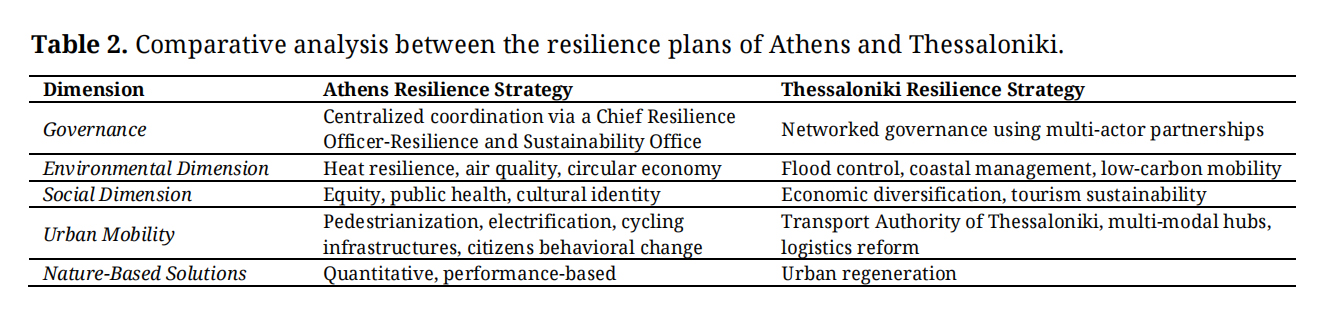 Table 2. Comparative analysis between the resilience plans of Athens and Thessaloniki.
The analysis of the Resilience Strategies 2030 for Athens and Thessaloniki reveals that both cities seek to strengthen their sustainability, improve citizens’ well-being and transform their urban environment to improve their adaptive capacity and reduce exposure to different stresses they facing. As Table 1 reveals, the two cities approach resilience from different philosophical starting points. Athens focuses on becoming an “Open” and “Vibrant” metropolis, while Thessaloniki prioritizes its identity as a “Dynamic Coastal City”. The comparative analysis across the five key dimensions presented in Table 2 indicates that Athens and Thessaloniki have adopted different resilience strategies that reflect their distinct contexts. Athens follows a more centralized and performance-based model of governance, prioritizing heat resilience, air quality improvement and circular economy measures. In contrast, Thessaloniki adopts a more networked and regeneration-oriented approach, focusing on flood management, low-carbon mobility, coastal protection, and economic diversification. Both approaches are contextually grounded, each with different mechanisms to strengthen urban resilience. In the following sections these five dimensions are analyzed in greater depth to provide a more comprehensive understanding of how both cities seek to enhance sustainability and reinforce urban resilience.
Athens vs. Thessaloniki Resilience: Governance DimensionFrom a governance perspective, several structural differences between the two strategies can be identified. Athens exhibits a stronger degree of organizational continuity that prioritizes internal coherence and municipal leadership. In contrast, Thessaloniki prioritizes regional integration and multi-actor collaboration, seeking to promote a broader partnership diversification. Specifically, Athens adopts a more vertical, top-down approach, whereby all the necessary actions, monitoring, and coordination processes for the successful implementation of the plan are directed by the newly established Resilience and Sustainability Office and the its Chief Resilience Officer (Table 1). This approach has been chosen in order to make easier the connections between the municipal operations with nation and EU policy instruments.
In contrast, Thessaloniki’s strategy is based on a horizontal approach as shown on Table 2. Unlike Athens, Thessaloniki’s plan does not include the creation of a Resilience Office. Instead, implementation is coordinated through the Department of Strategic Planning within the framework of the 100 Resilient Cities initiative. Furthermore, it adopts a network-based governance model where importance is given in partnerships and collaboration among municipal departments, academic institutes, EU project consortia and the civil society (Table 2). Through this approach, Thessaloniki invests in its collaborative capacity, however, it also increases dependence on project-specific funding streams and the continuity of European grants.
In conclusion, Athens exhibits a stronger degree of organizational continuity that prioritizes internal coherence and municipal leadership. In contrast, Thessaloniki prioritizes regional integration and multi-actor collaboration, seeking to promote a broader partnership diversification.
Athens vs. Thessaloniki Resilience: Environmental DimensionBoth cities recognize climate change as a critical urban risk. However, they prioritize different environmental threats. (Table 1). Athens’s strategy identifies heatwaves, air pollution and flooding as major environmental challenges (Table 2). Its strategy includes crisis preparedness and management plans, complemented by several pilot initiatives such as the #coolathens program. These measures involve the implementation of early warning systems and the redesign of public spaces to enhance green infrastructures. For achieving those goals, the strategy of Athens is aligned with the National Climate Strategy, which promotes low-carbon transitions and integrates circular economy principles into municipal infrastructures and urban management practices.
Thessaloniki’s strategy is also aligned with the National Climate Strategy. Conversely, its strategy prioritizes flood risk, sea-level rise and CO2 emissions from urban mobility. Its resilience plan focuses on coastal zone management, drainage system improvements, and enhanced cooperation between local authorities and volunteer organizations during emergencies. Finally, the city’s resilience plan emphasize investment in green and blue infrastructures to mitigate flood risks and enhance its overall resilience (Table 2).
In summary, Athens aims to improve its urban microclimate against rising of the average temperatures and the intense heatwaves through green infrastructures. On the other hand, Thessaloniki, after several flooding events (in 2009 and 2014), seeks to improve its hydro-climatic resilience and infrastructural adaption to extreme weather conditions.
Athens vs. Thessaloniki Resilience: Social DimensionSocial resilience is one of the most important pillars in both Athens and Thessaloniki’s resilience plans. However, both cities prioritize different risks and stresses that may threaten their social resilience (Table 1). The economic crisis of 2007-08 caused several significant economic, social and environmental impacts in Athens, which were further exacerbated by the migration flows of 2015. These challenges have affected the city’s approach to social resilience. Athens’s resilience strategy prioritizes reducing social inequalities, promoting migrant integration and improving public health through cultural participation programs and local economy schemes within the green and creative economy. The strategy also includes the strengthening of public housing programs and targeted support for vulnerable population groups (Table 2).
Thessaloniki also experienced similar challenges over the years; however, it approaches their social resilience through a different lens. The city’s resilience strategy focuses in economic diversification and tourism management in order to enhance its social resilience. Thus, the strategy aims to support local entrepreneurship and sustainable tourism to reduce vulnerability to economic shocks. Another aspect of the social dimension in the resilience plan of Thessaloniki is the emphasis on community participatory in urban planning. To do so, community gardens, urban vineyard and collaborative design workshops are among the proposed interventions (Table 2).
Overall, both Athens and Thessaloniki have recognized the importance of culture and public participation in strengthening resilience through a social approach. However, we can claim that, Athens prioritize social equity and public well-being while Thessaloniki focuses in economic revitalization and community engagement (Table 1).
Athens vs. Thessaloniki Resilience: Urban MobilityReducing CO₂ emissions and mitigating climate change constitute major objectives of both resilience strategies. Urban mobility is one of the major factors affecting CO2 emissions, therefore it is a major axis for both Athens and Thessaloniki’s resilience strategies (Table 1). In the Athens’ resilience plan is proposed the expansion of pedestrian networks, the development of cycling infrastructures, and the electrification of public transport. These initiatives are planned to be launched on a pilot basis in the historic city center, before being extended to the rest neighborhoods across the city. Through this approach, city authorities aim to promote modal transformation and improve urban air-quality (Table 2).
Thessaloniki’s mobility strategy is more structurally transformative. At the core of the initiatives for enhancing the city’s urban mobility resilience is the establishment of the Transport Authority of Thessaloniki (TheTA), responsible for coordinating and monitoring all public urban transport services (urban buses lines, overground and underground rail network, and sea transport). Additional measures include the application of transit development principles around the new metro stations, the creation of multi-modal transport hubs, and initiatives aimed at reformulating the city’s logistics. The main goal of these actions is to reduce traffic congestion and air pollution mainly caused by tourism and port activities (Table 2).
In summary, both strategies of Athens and Thessaloniki’s are aligned with the objectives of the European Green Deal. Athens adopts a more environmentally oriented approach that requires behavioral change among citizens. Thessaloniki in contrasts, focuses on spatial restructuring and institutional coordination to enhance long-term mobility resilience.
Athens vs. Thessaloniki Resilience: Nature-Based SolutionsThe fifth pillar that it was examined in both Athens’s and Thessaloniki’s resilience strategies were the integration of nature-based solutions. Athens employs nature-based solutions to enhance urban cooling, improve air quality, and also, for the urban biodiversity restoration. Within its strategy initiatives such as the “Green and Cultural Corridors Network” and the “Pocket Parks” program illustrate the application of ecological design principles. Furthermore, Athens’ resilience strategy includes clearly defined quantitative objectives for increasing per-capita green spaces and also identifies potential financing mechanisms for all necessary interventions (Table 2).
The proposed nature-based solutions in Thessaloniki’s strategy are more spatially oriented and linked to the city’s identity. The main intervention envisioned is the creation of a continuous coastal area that connects the waterfront, port and cultural corridors. Additionally, in Thessaloniki’s strategy urban agriculture initiative, rooftop gardens, and urban reforestation are included (Table 2). However, Thessaloniki’s plan does not specify quantitative objectives and rather, it presents a more conceptual and comprehensive framework for integrating nature-based solutions into the city’s urban landscape.
The analysis reveals different priorities regarding the proposed nature-based solutions to achieve long-term sustainability and adaptive capacity. Athens focuses on quantifiable environmental outcomes such as green space expansion and urban cooling, while Thessaloniki emphasizes spatial and socio-cultural integration of nature-based solutions, such as coastal and urban regeneration. These differences reflect contextual adaptations to each city’s environmental, historical, and socio-economic conditions rather than indicating the superiority of one model over the other.
The aim of the present study is to analyze the resilience strategies of two major Greek cities in order to provide valuable insights into how urban governance approaches resilience in the era of climate transition. To this end, the resilience strategies of Athens and Thessaloniki were examined and analyzed. The motivation for this research derives from the participation of both cities in the global 100 Resilient Cities (100RC) Network.
Although both cities followed a common methodological approach through the resilient cities network, differences in their approach have been revealed through a comparative analysis across five key dimensions of their strategies: the perspective of governance, environmental, social, urban mobility and nature-based solutions. These findings indicate that effective resilience strategies emerge from the interaction between institutional capacity, socio-ecological context and stakeholder participation.
One of the most important differences concerns governance structures. Athens’s strategy uses an institutionalized governance approach be establishing a Resilience Office within the municipal organizational chart, responsible for monitoring the resilience objectives and ensure continuity. Athens’ strategy places strong emphasis on environmental and social dimensions, particularly extreme heatwave management, social inclusion, and equity. The proposed nature-based solutions indicate the benefits of Athens’s centralized coordination mechanism, and how the cross-sectoral policies can align with the European frameworks such as the European Green Deal.
In contrast, Thessaloniki adopts a spatially adaptive and mobility-centered model that emphasizes external partnerships and collaborative governance mechanisms. Thessaloniki’s strategy is influenced by its geographic position and the dependence of the city’s prosperity on specific economic sectors such as tourism and logistics. As a result, it prioritizes flood risk reduction, coastal adaption and sustainable mobility. Thessaloniki’s strategy success depends significantly on EU-funded programs. This approach is vulnerable to externalities and does not ensure continuity, but it encourages innovation, experimentation, and stakeholders’ participation.
Examining the resilience strategies of both Athens and Thessaloniki reveals that there is no single governance approach that can universally define resilient urbanism. It can be claimed that the resilience of a city emerges from an adaptive alignment among institutional capacity, environmental risks and pressures, and social priorities. Athens and Thessaloniki follow distinct approach to strengthen their resilience. These approaches at a first glance may be perceived as competitive but in a better understanding they may perceive to be complementary, suggesting the potential for a network model of inter-city collaboration in Greece.
In conclusion, the examination of the resilience strategies of Athens and Thessaloniki contributes to the broader discourse on urban resilience and sustainability. Athens’s approach emphasizes centralized governance and quantifiable environmental targets, while Thessaloniki’s approach highlights partnerships, innovation, and spatially adaptive strategies. Both paradigms demonstrate complementary pathways to building urban resilience, each adapted to the city’s institutional capacity, socio-ecological context, and strategic priorities. Ultimately, building resilient cities is not a linear or uniform process, but a complex and dynamic endeavor requiring both stable governance structures and participatory mechanisms capable of adapting to emerging challenges and opportunities.
No data were generated from this study.
Conceptualization: TM; Methodology: IN, AM, KS; Investigation: IN, AM, KS, TM; writing—original draft preparation, IN, AM, KS; writing—review and editing, IN, AM, KS, TM; supervision, TM; project administration, TM. All authors have read and agreed to the published version of the manuscript.
The authors declare that they have no conflicts of interest.
This research was no funded.
Authors would like to thank Meletios Andrinos for his valuable contribution.
1.
2.
3.
4.
5.
6.
7.
8.
9.
10.
11.
12.
13.
14.
15.
16.

Copyright © Hapres Co., Ltd. Privacy Policy | Terms and Conditions


