Location: Home >> Detail
J Sustain Res. 2026;8(3):e260062. https://doi.org/10.20900/jsr20260062

Business School, University of Technology Sydney, Sydney, NSW 2007, Australia
This paper examines the potential of smart tourism to contribute to sustainable destination development, identifying the key theoretical and practical challenges that hinder this transition. It first clarifies the concept of smart tourism and reviews its economic, social, and environmental implications for stakeholders. Although positive impacts are frequently cited as evidence of smart tourism’s sustainability benefits, the sustainability construct itself remains insufficiently defined and often used uncritically. Three major challenges are highlighted. The first is recognising that human wellbeing is the fundamental objective of tourism development, including smart tourism. The second is the need for a coherent and consistent conception of sustainability that prioritises stakeholder wellbeing outcomes and integrates appropriate indicators for evaluating progress. The third challenge is to develop strategies that support a more people-centred approach to smart tourism research and policy, embedding wellbeing considerations across the policy cycle. Together, these challenges underscore the importance of reframing smart tourism within a wellbeing-oriented sustainability agenda.
Technological advancements are reshaping the travel, tourism, and hospitality industries, under the umbrella name of ‘smart tourism’. Core technologies include: Internet of Things (IoT): sensors for crowd density, energy use, environmental monitoring, Big data analytics: real-time insights into visitor behaviour and mobility, Artificial intelligence: demand forecasting, personalised recommendations, resource optimisation, Mobile platforms: interactive maps, digital tickets, smart mobility systems, and Cloud computing and open data infrastructures [1,2].
Two major perspectives regarding the role of smart tourism may be identified. On what might be regarded as the Mainstream (growth-oriented) perspective, new technologies can be applied to increase destination management capabilities, the efficiency of tourism business operations, quality of visitor experiences, and stakeholder interconnectivity, including residents, businesses, and governments [1]. On the alternative, ‘Transformative perspective’, new technologies can be used, not for more growth, but to support wellbeing, reduce impacts, manage limits, and distribute benefits equitably [3]. Proponents of this perspective increasingly interrogate sustainability, wellbeing, and governance issues, arguing that ‘smartness’ can be harnessed to bring about a shift from smart-for-growth to smart-for-wellbeing-aligning tourism’s digital transformation with distributive, regenerative, and democratic objectives [4]. Advocates of the transformative view are actively engaged in developing what broadly is termed a ‘smart tourism mindset’. This refers to a way of thinking, planning, and acting within tourism systems that leverages digital technologies, data-driven intelligence, and collaborative governance to enhance sustainability, wellbeing, and value creation. It goes beyond merely adopting digital tools and instead reflects a cultural and strategic orientation that embraces learning, adaptability, participation, and long-term systemic improvement [3].
This paper offers support for and a defence of the transformative perspective. It clarifies core concepts and maps pathways through which smart systems can enhance visitor, resident, and ecological wellbeing. To promote this perspective, several challenges must be addressed by researchers. A general failure to address these challenges has resulted in much confusion in the smart tourism literature, impeding progress in our understanding of preferred destination development paths. A primary challenge involves the requirement to define the ultimate goal of smart tourism development. Until this goal is defined, analysis and policy implementation and assessment in this field will continue to ‘fly blind’. Another important challenge is to develop a clear understanding of the concept of ‘sustainability’, a term often employed in the smart tourism literature, but little understood. While a substantial number of benefits of smart tourism to stakeholder can be identified, the extent to which they support sustainable tourism development is problematic. Indeed, there is substantial evidence that continued tourism growth is incompatible with any attempt to achieve sustainable development paths. A further challenge is to develop a smart tourism mindset that enables these challenges to be overcome while providing a platform to direct further research.
The structure of the paper is as follows. Section Nature of Smart Tourism defines the nature of smart tourism, identifying its core components and providing examples of smart tourism in action. Some potential benefits of smart tourism are identified as are some of the risks associated with smart tourism development. Section Wellbeing as the Primary Aim of Smart Tourism argues that the fundamental goal of smart tourism is stakeholder wellbeing. The future of smart tourism is not more efficiency or growth-it is wellbeing-led design, where technology is a tool for human flourishing, community resilience, and ecological regeneration. In contrast to the somewhat superficial views of sustainability that tend to characterise smart tourism discourse, section The ‘Sustainability’ Concept offers a dynamic conception of sustainability, with stakeholder wellbeing outcomes as an essential element of the concept. Claims that the use of new technologies promote sustainable tourism development are assessed and found to be exaggerated. Several types of benefits of smart tourism are identified, but the extent to which they support sustainable tourism development is problematic. Section Smart Tourism in a Wellbeing Economy argues that the ‘Wellbeing Economy’ is an ideal framework to drive a ‘smart tourism mindset’ while section Smart Tourism and the Policy Cycle discusses how this mindset can act to embed wellbeing outcomes into the smart tourism policy cycle. The paper concludes with some observations on the values necessary to drive smart tourism theory and practice into the future.
On the ‘standard view’, smart tourism refers to the purposeful application of digital technologies, data infrastructures, and intelligent systems to enhance the planning, management, delivery, and experience of tourism services. Its diverse set of outcomes include improvements in destination management, resource efficiency, visitor experiences, and destination sustainability [5,6]. In practice, smartness depends on the capability to integrate data across silos, translate insights into timely interventions, and align these with public interest goals. Smart tourism is not simply a technological upgrade; it is an organizational and governance innovation with implications for inter-operability, cross-sector collaboration, standards, and ethics [7,8]. Smart tourism leverages digital technologies, data analytics, and intelligent systems to improve the efficiency, sustainability, and inclusiveness of tourism experiences. To capture the demand-side role in smart ecosystems, tourists generate data, shape service design, and co-produce experiences.
Smart Tourism in ActionSmart tourism can help destinations to manage resources more effectively, reduce environmental impacts, and (potentially) enhance the quality of life for residents and visitors alike. The benefits of smart tourism can be categorized according to its impact on four key stakeholder groups: destination management organisations (DMO), tourism businesses, tourists, and residents. Potential benefits are displayed in Box 1.
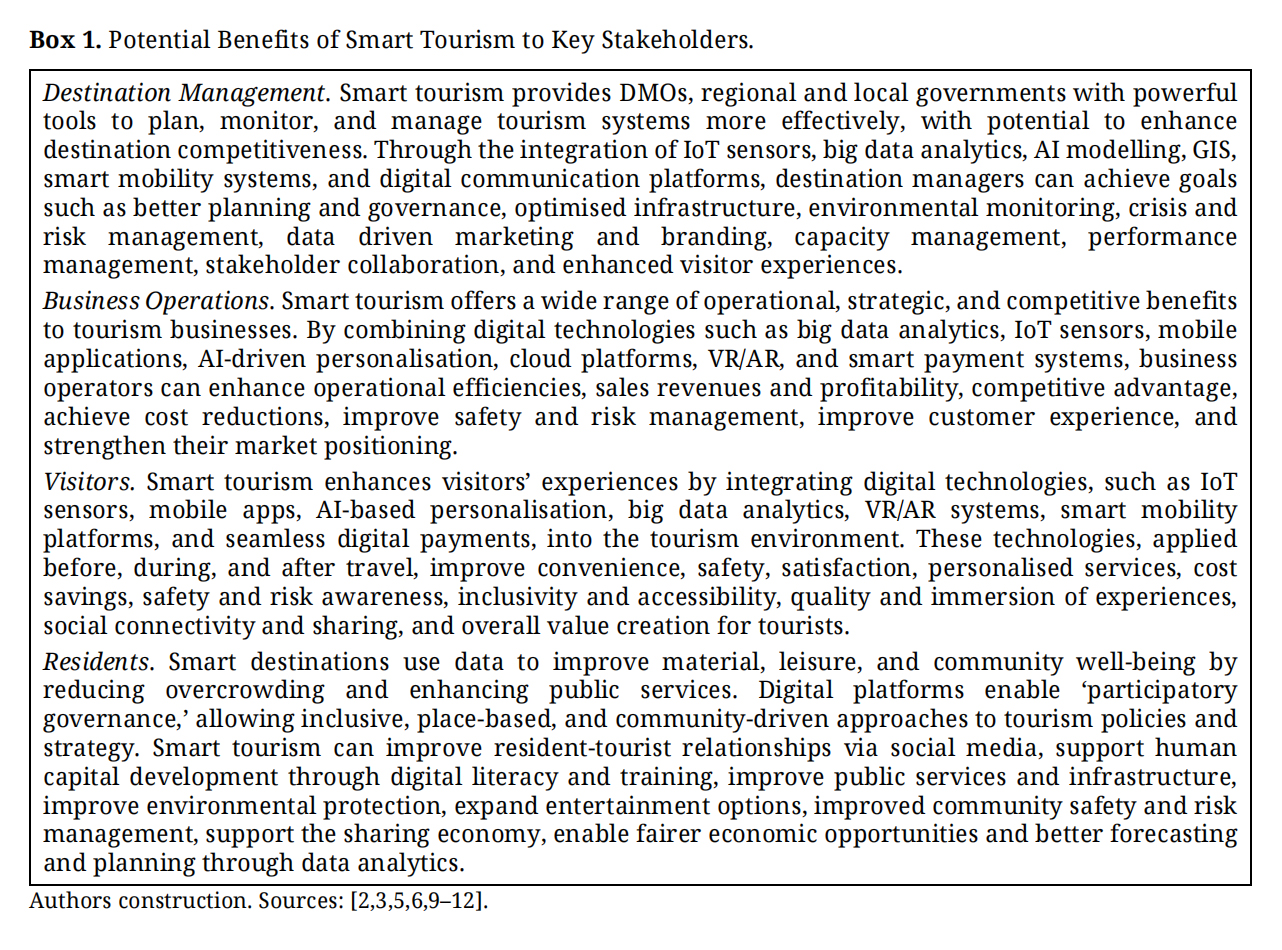 Box 1. Potential Benefits of Smart Tourism to Key Stakeholders.
In short, smart destinations provide the digital infrastructure and governance, smart businesses innovate on top of that infrastructure, while smart tourists and residents interact with both, generating data and co-creating value. However, risks and limitations must be addressed.
Risks and LimitationsDespite its widespread promotion as a pathway to more efficient, sustainable and competitive destinations, the specific impacts of smart tourism remain contested. The types of benefits listed above, promoting sustainable development in particular, do not follow inevitably in practice from smart tourism. A growing body of scholarship argues that ‘smartness’ is not inherently beneficial and may also reproduce or intensify structural problems within tourism destinations. While smart tools can enhance efficiency and visitor experience, they also create a suite of technological, ethical, socio-economic, and governance risks. Critical perspectives highlight several clusters of risks and limitations as displayed in Box 2.
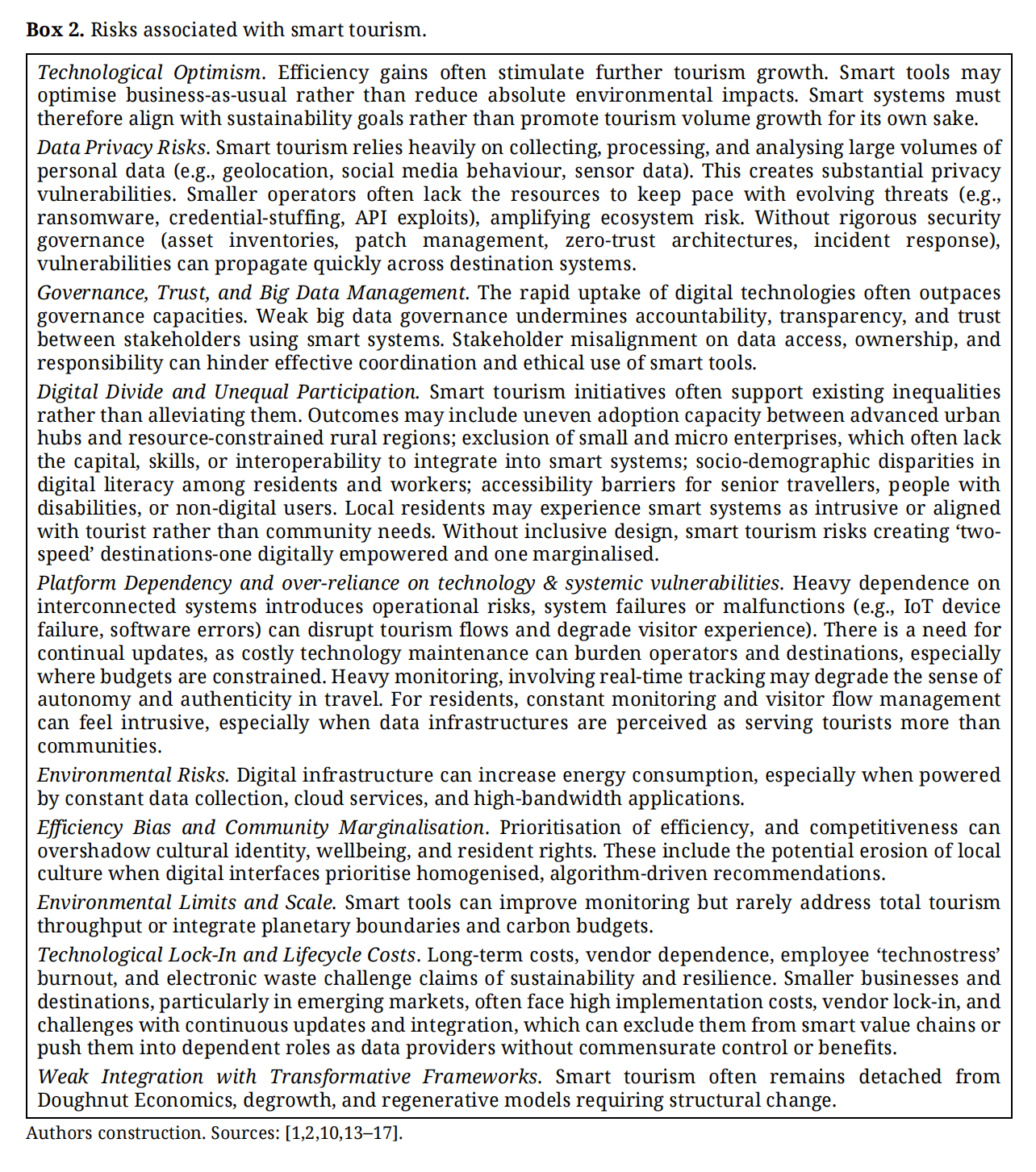 Box 2. Risks associated with smart tourism.
Smart tourism is widely considered a key driver for sustainability. but its effectiveness is often described as a ‘double-edged sword’. While it provides advanced tools to mitigate environmental and social impacts, it also introduces new risks like over-tourism and a loss of cultural authenticity. Smart tourism can undoubtedly enhance operational efficiency, visitor experience, and, if carefully governed, support sustainability objectives. However, current evidence reveals a risky landscape. The most pressing vulnerabilities concern privacy (opaque datafication, weak consent), cybersecurity (frequent breaches and malware), and governance (insufficient accountability and stakeholder alignment), compounded by inequalities in capabilities and access, operational fragility, environmental externalities, and socio-cultural trade-offs. A credible path forward requires embedding privacy-by-design and robust cybersecurity into every layer of smart deployments; developing accountable, participatory data governance; investing in inclusive capacity building; and treating environmental and cultural stewardship as design constraints, not afterthoughts. Only then can smart tourism deliver on its promises without undermining the trust, equity, and sustainability upon which industry success ultimately depends.
Despite its potential benefits, smart tourism can undermine stakeholder wellbeing if not carefully designed. While each type of risk identified in Box 2 is being accorded insufficient attention, collectively they are underpinned by two failures of smart tourism scholarship. These comprise a failure to fully articulate wellbeing as the fundamental aim of smart tourism and a failure to apply a conceptually correct notion of sustainable development. Addressing each type of failure is essential to the development of a smart tourism mindset, that can reduce the abovementioned risks and enhance the potential of smart tourism to deliver its promised benefits to stakeholders.
Empirical FindingsEmpirical research on smart tourism increasingly demonstrates measurable impacts across economic, social, and environmental domains, although evidence on long-term and intergenerational outcomes remains limited. Systematic reviews indicate that AI, Big Data, and IoT applications improve demand forecasting, service personalization, and operational efficiency, while enabling real-time monitoring of tourism systems [18,19]. For example, predictive analytics using mobile positioning and platform data enhances visitor flow management and reduces congestion pressures through anticipatory planning [15].
Environmental applications are among the strongest empirically supported: IoT-based monitoring systems allow destinations to track ecosystem conditions and optimise resource use in real time, contributing to more adaptive and regenerative management strategies [17]. At the same time, digital tourism platforms improve service quality and market access but generate structural risks, including platform concentration, SME dependency, and labour precarity [20].
Social impacts are mixed. While smart tourism initiatives can enhance resident wellbeing and urban liveability, empirical studies show outcomes vary across groups and depend heavily on governance quality and community acceptance [21]. Behavioural interventions supported by digital systems can shift tourist practices toward sustainability, although effects are often context-specific and difficult to sustain over time [22].
Across these domains, trade-offs are evident. Efficiency gains may redistribute rather than reduce tourism pressures, while the environmental benefits of smart systems are partly offset by their own energy and material footprints. Intergenerational effects remain underexplored but include emerging risks such as technological lock-in, digital infrastructure dependence, and uneven climate-related redistribution of tourism benefits and costs [23]. Overall, the empirical literature supports the transformative potential of smart tourism but highlights the need for integrated, long-term impact assessment frameworks that capture cross-domain and intergenerational effects.
Much of the smart tourism literature assumes that sustainable development is the end goal of tourism analysis and policy. In contrast, it is well established in the social science literature that the primary goal of industrial development is to enhance human wellbeing now and, in the future [24–28]. Treating wellbeing seriously implies that policy makers must go beyond impact analysis to estimate the effects on human wellbeing. Wellbeing outcomes provide more detailed input into analysis and decision making regarding sustainable development than do standard key performance indicators that focus on economic, social, and environmental impacts only. Taking contribution to wellbeing to be the ultimate or overarching goal of smart tourism implies that wellbeing outcomes do not merely complement or are additional to impact indicators. Impact indicators must now be seen as instrumental to wellbeing variables which have primary status in evaluating smart tourism policy. While wellbeing is often acknowledged to be a desirable outcome of smart tourism development, this claim is often made in passing with no details provided as to the sources and indicators of wellbeing. The extensive literature on wellbeing—its conceptual foundations, indicators, and analytical frameworks—is being largely overlooked [29–31].
Human wellbeing is a multidimensional concept encompassing material living standards, health, capabilities, opportunities, social relationships, and a sense of meaning or purpose in life [31–35]. Internationally comparable measures of individual, household and social wellbeing are being developed by statistical agencies and researchers, often with community input from public surveys and visioning exercises, to provide a credible basis for guiding destination developments [36]. Subjective sources of wellbeing comprise at least three elements: life satisfaction, affective/emotional feelings and states, eudaimonia relating to thriving and self-worth each with different drivers and consequence [36]. In contrast, objective sources of wellbeing include material living standards (income, wealth, housing quality), alongside quality of life variables such as mental and physical health, fair income distribution, education and skills, decent work and other workplace features, social relationships, opportunities for civic engagement, work-life balance, financial security, personal safety, and environmental quality. Detailed lists of indicators associated with different sources of wellbeing have been constructed [27,37–39]. They can be presented in dashboard fashion to help determine the wellbeing outcomes, present and future, pertaining to smart tourism development activity.
Recent thematic reviews of smart tourism research have failed to identify stakeholder wellbeing outcomes, with seemingly little awareness of the relevance of quality-of-life considerations [2,14,17,40]. While wellbeing considerations are acknowledged, narrow subjective life satisfaction and experiential measures have been employed [41]. This is despite growing concern that reliance on subjective wellbeing measures provides only partial insight into overall wellbeing [29,31,42,43]. Subjective measures may overlook structural determinants of wellbeing, limiting their relevance for policy. Individuals often misjudge their future wellbeing and tend to prioritize immediate outcomes over long-term considerations. To assess the sustainability of alternative development paths, researchers must go beyond narrow subjective ‘satisfaction’ or ‘perception’ measures to embrace more robust wellbeing measures based on established wellbeing frameworks comprising an appropriate mix of objective and subjective indicators of current and future wellbeing [27,28,44]. Smart tourism research also needs to acknowledge that policies to promote the wellbeing of the present generation will not necessarily promote future stakeholder wellbeing [23,45]. Distinguishing the sources of intra- and inter-generational wellbeing allows sustainability considerations to be embedded into tourism analysis and policy [36,46–48].
Established wellbeing frameworks offer indicators that can be adapted to measure stakeholder wellbeing in smart tourism contexts. Several wellbeing frameworks have been developed in recent years. These are structured approaches that help organizations and governments understand and improve collective and individual flourishing by identifying key drivers of wellbeing, and highlighting types of interventions for social improvement. An ideal wellbeing framework recognizes both subjective and objective dimensions of wellbeing; distinguishes between drivers of current and future wellbeing; embeds sustainability through indicators linked to four capital types- economic, human, social, and natural; and is flexible enough to allow for both generic and contextual indicators, making it adaptable to different destinations and development contexts. Prominent wellbeing frameworks include: The Better Life Initiative [38], Planet Happiness [49], Wellbeing Alliance [50] and Gross National Happiness Index [51]. The Better Life Initiative, which meets each of the ideal framework characteristics. has been employed recently in a range of studies of tourism development and resident wellbeing, including studies of tourism participation in the SDG agenda, destination competitiveness and tourism degrowth [43,47,52,53] As yet, it has not been applied in the context of smart tourism outcomes.
To meet the challenge faced by smart tourism in embedding stakeholder wellbeing outcomes into policy formulation, implementation, and evaluation, a wellbeing lens can be employed, acting as a filter or prism to identify changes in social wellbeing associated with new technologies and alternative development paths [4,31]. Comprising a broad multidimensional indicator set, based on a credible wellbeing framework, the wellbeing lens can be used to convert economic, social, and environmental impacts to reveal the wellbeing outcomes of alternative development paths. Wellbeing dimensions in a lens applied to smart tourism can encompass individual wellbeing (health, safety, life satisfaction); community wellbeing (social cohesion, cultural vitality, resident quality of life); and ecological wellbeing (ecosystem integrity, respecting ecological ceilings). The wellbeing lens can help to forge stronger links across public agencies and between public, private, and civil society actors in strategizing to enhance stakeholder wellbeing in smart destination development. Constructing the wellbeing lens through a public participatory process is crucial to identifying stakeholder wellbeing priorities, and to ensure widespread support for smart tourism initiatives [44]. Over time, the composition of the wellbeing lens can be refined as new indicators are developed, and consensus emerges among policymakers on how best to capture current and future wellbeing conditions.
The smart tourism literature frequently references ‘sustainability’ without offering a coherent or consistent definition. The most widely accepted definition of sustainable development refers to economic growth that meets the needs and aspirations of current populations without compromising the ability of future generations to meet their own needs [54]. A sustainable tourism industry thus would be characterised by reduced environmental impacts, promotion of cultural integrity and community wellbeing, generating fair economic value, operating within planetary boundaries, and distributing benefits fairly over the long-term [3].
While some scholars argue that smart tourism inherently promotes sustainability [23,55], others go further to assert that smart tourism guarantees sustainable development [56,57]. On the stronger view, a destination cannot be considered to be ‘smart’ unless it is also sustainable [41]. Many contributions to the field uncritically accept the notion that smart technologies offer a ‘concrete pathway’ to sustainability [40]. This approach reflects the optimism that technological solutions combined with good management, can reverse the negative consequences of industrial development, including environmental degradation. A growing number of tourism scholars advocate for development models that are sceptical of the capacity of technological innovation alone to reverse the environmental and social harms caused by tourism growth [31,52]. While these issues are actively debated in the wider social sciences, they are largely ignored in smart tourism research, where technological optimism prevails. Evaluating these claims requires a critical examination of the concept of sustainability itself, a neglected topic in smart tourism research.
Much of the literature fails to rigorously analyze the relationship between smart tourism and sustainability, often applying the term ‘sustainable’ to any tourism development outcome with perceived benefits to stakeholders. The positive effects of smart tourism listed in Box 2 are often presented as evidence of the ability of smart tourism to provide an important basis or ‘strong pathway’ for sustainable development of the tourism industry [5,58]. On this basis, smart tourism destination development is claimed by researchers to contribute to each of the 17 United Nations sustainable development goals. A listing of potential benefits, however, does not, in itself, imply that smart tourism promotes sustainable destination development. To determine this, stakeholder wellbeing changes must be accounted for. For each of the SDGs, the extent to which smart tourism progresses its achievement is debatable [5,47,59]. Although smart tourism may improve resource efficiency and stakeholder engagement, such outcomes alone do not constitute sustainable destination development. Efficiency gains may not be equitably distributed to tourism stakeholders, and technological solutions may overlook deeper structural issues such as inequality, cultural integrity, and ecological limits. Without a clear and consistent definition of sustainability, assertions that smart tourism promotes sustainable development lack credibility.
Despite its centrality to sustainable development, stakeholder wellbeing has received limited attention in smart tourism research. Current research on smart tourism is obsessed with technological capability and enablers of growth with too little effort directed to envisioning the values required to drive its development and applications [3]. Sustainability is fundamentally a dynamic concept, achieved by preserving or enhancing capital stocks that maintain wellbeing over time.
Four main types of capital assets are relevant to the wellbeing outcomes associated with smart tourism development. These capital types are set out in Box 3, together with wellbeing indicators associated with each type.
While the wellbeing outcomes of all stakeholders should be accounted for, it is primarily resident wellbeing, transmitted through changes in capital stocks, that determines whether a destination is progressing along a sustainable development path [45,60–62]. However, the role of changing capital stocks in shaping the sustainability of smart destination development remains under-researched. Decisions made by the current generation regarding investment and resource use determine the quantity and quality of resources available to future generations. In this way, changes in capital stocks serve as a transmission mechanism for shaping future wellbeing outcomes. For tourism development to be considered sustainable, the per capita wellbeing of future generations must be at least equal to that of the present generation. Sustainability is thus a dynamic concept, involving the preservation or enhancement of the total stock of capital that maintains wellbeing over time [36,45,46,63].
Smart tourism research, and tourism research generally has largely overlooked the role of capital stock changes in transmitting social wellbeing outcomes intra- and inter-generationally [29,30]. As a consequence of this neglect, smart tourism scholars have tended to apply a static conception of sustainability, emphasizing the effects of technology changes on the current impacts of development projects, with limited attention to long-term or intergenerational wellbeing outcomes [10,56]. In the absence of a theoretically grounded, dynamic concept of sustainability that incorporates resident wellbeing, there is little evidence that destinations regarded as ‘smart’ are achieving genuine sustainability targets [60]. If, as many researchers affirm, a destination cannot be truly smart without being sustainable [6,9], serious doubts arise as to whether any destination globally qualifies genuinely as a smart destination.
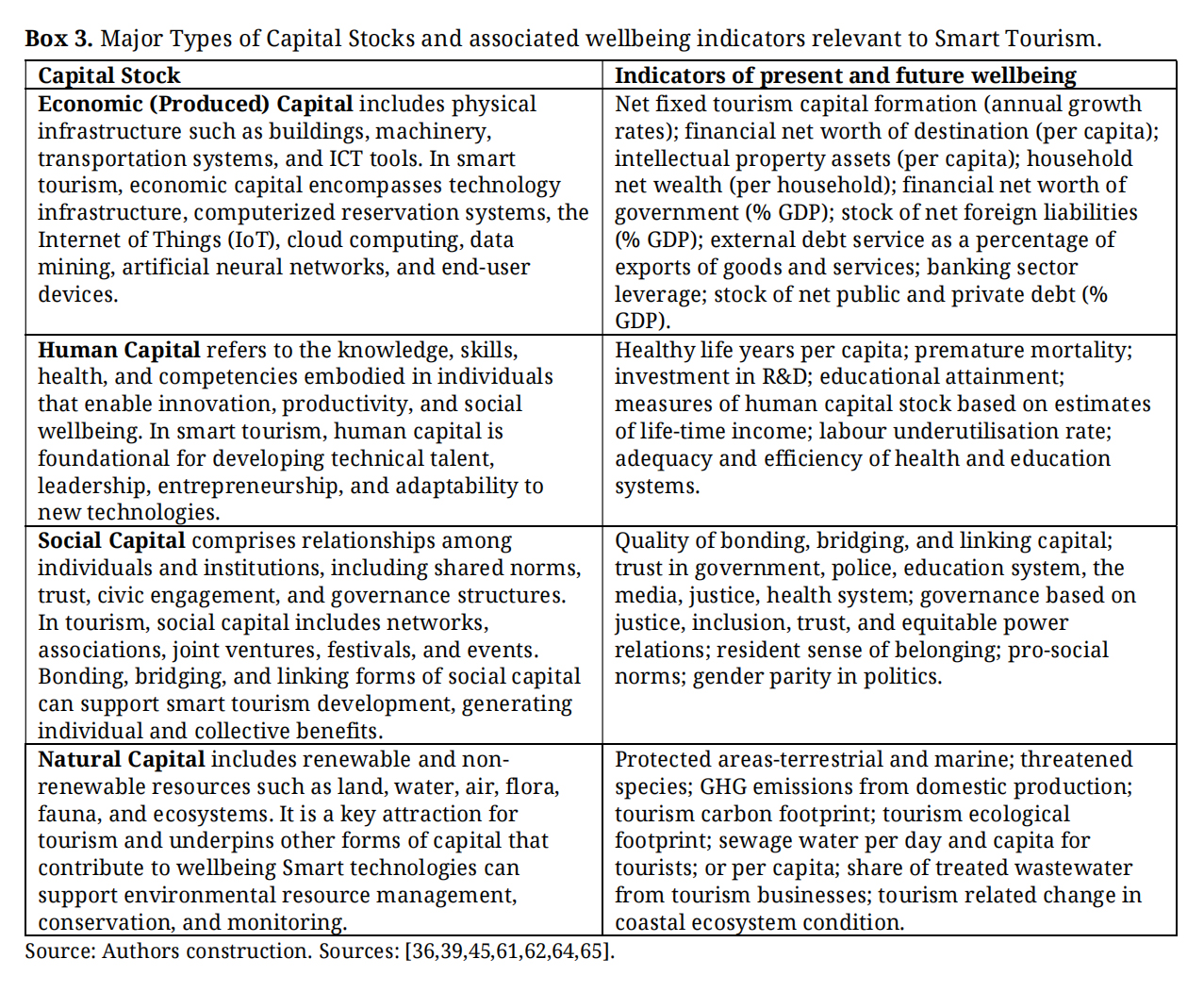 Box 3. Major Types of Capital Stocks and associated wellbeing indicators relevant to Smart Tourism.
Scholars in the wider social sciences continue to debate whether sustainability requires maintaining the total capital stock with substitution allowed (weak sustainability), or whether certain types of capital are irreplaceable in their contribution to wellbeing (strong sustainability) [36]. In the tourism research literature generally, there has been little exploration of whether different types of capital are substitutable in achieving sustainable development. Smart tourism research has yet to engage meaningfully with this debate.
Recognition of the role of capital stocks in transmitting wellbeing across generations raises many research areas neglected thus far in the smart tourism literature. Not only do researchers need to understand the nature of each type of capital stock but measurable and credible metrics must be applied for policy purposes. These issues are being addressed in the general tourism literature [29,45] employing indicators based on the Better Life Initiative [28,38], and ecological economics approaches [24,60–63]. Further research is required to align this body of research with smart tourism analysis and policy. In particular, research is needed to identify which ICT investments should be prioritized based on their potential contribution to stakeholder wellbeing and how such indicators are to be operationalised.
Recognising that the values embedded in smart tourism agenda have been neglected, researchers have argued recently for the formulation of a ‘smart tourism mindset’ wherein smart tourism is conceptualized and implemented at a destination, with a particular focus on the values that inform and shape its progress [3]. The Smart Tourism Mindset makes values more explicit, embedding them into frames of thinking, from goal setting to governance to value (co-)creation activities [3].
The destinations that thrive in the future will be those that treat data and digital tools as public‑interest infrastructure, governed for justice, used to expand capability sets, and steered by transparent wellbeing dashboards. The perspectives offered in this paper align closely with the core principles of the so-called Wellbeing Economy [4,63,66,67]. A Wellbeing Economy (WBE) is an economic system explicitly designed to deliver human and ecological wellbeing rather than prioritising GDP growth. It reframes economic success in terms of dignity, fairness, sustainability, participation, and collective thriving [50,63,68]. Arguably, the development of a ‘smart tourism mindset’ can learn much from the evolving literature on the WBE both in theory and practice. The policy and measurement architecture now exists to define success beyond volume and to hold actors accountable for outcomes that matter [31,69]. Several OECD countries have recently formed the Wellbeing Economy Government Organisations (Wego) partnership to advance three key principles of wellbeing at the core of policymaking- living within planetary ecological boundaries, ensuring the equitable distribution of wealth and opportunity, and efficiently allocating resources to enhance social wellbeing [50].
The WBE concept, which is gaining traction as a serious alternative to ‘business as usual’ in industrial development globally, is substantially relevant to smart tourism planning, policy development, and assessment [70]. Smart tourism can be a powerful mechanism for improving wellbeing only when its design aligns with the core principles of a wellbeing economy. Applying these principles shifts smart tourism from a technocratic efficiency project to a wellbeing-centred, community-empowering governance model. Box 4 captures some major connections between the WBE and smart tourism.
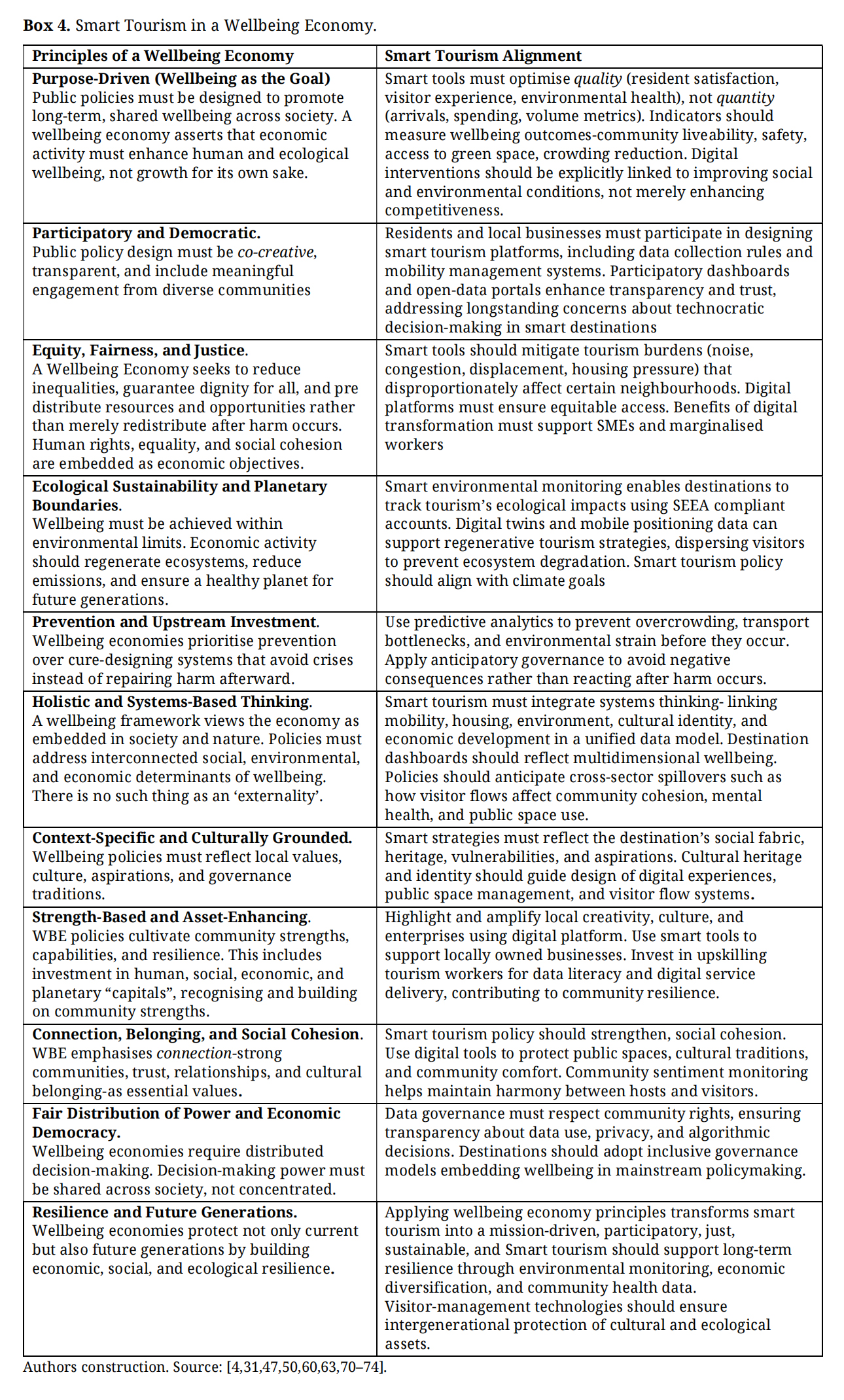 Box 4. Smart Tourism in a Wellbeing Economy.
An implication of the analysis presented herein is that destination managers and researchers attempting to develop a smart tourism mindset can leverage a wellbeing framework to promote a whole-of-government approach aimed at enhancing stakeholder wellbeing at all stages of the tourism policy cycle. The proposed use of a wellbeing lens nicely complements the development of a smart tourism mindset by helping to identify the most effective interventions for priority areas and strengthening policy coherence and accountability in smart tourism development. It also helps to support the recommendation that smart tourism researchers adopt more holistic notions of wellbeing wherein smart tourism research and development ‘continuously strives for betterment, not just technological progress’ [3].
The public-policy process is typically conceptualised as a multistage cycle comprising agenda setting, policy formulation, implementation, evaluation, and monitoring [48,75].
A wellbeing lens has three key implications for smart tourism policy. First, purpose: tourism policy should be assessed according to its contribution to sustainable wellbeing, not solely economic performance. Embedding wellbeing goals into smart tourism decision-making helps ensure that digital initiatives improve outcomes for people and places. Second, measurement: indicator systems must integrate social and ecological dimensions alongside standard economic metrics, drawing on harmonised frameworks. Third, process; policymaking should be participatory, locally grounded, and aligned with principles of wellbeing-centred policy design. Collectively, these shifts require explicit consideration of stakeholder wellbeing across the entire policy cycle to guide trade-offs and support sector transformation.
Agenda Setting. A wellbeing framework supports more balanced and forward-looking agenda setting within smart tourism planning. It directs digital capabilities toward outcomes that matter for societal wellbeing and environmental stewardship. By identifying core wellbeing components and their interrelationships, such frameworks help policymakers prioritise issues within the broader “agenda universe” [76]. They also highlight inequalities, vulnerabilities, and areas of community deprivation relevant to smart tourism development.
Endorsing wellbeing frameworks requires long-term commitment beyond electoral cycles. Public dialogue about what constitutes a ‘good life’ can strengthen social capital and support consensus around policy priorities. Participatory approaches to indicator development reinforce the social contract between governments and citizens and ensure attention to outcomes often overlooked in conventional policy analysis [44]. In doing so, wellbeing frameworks can reorient debates about the purpose of smart tourism toward more equitable and meaningful outcomes.
Policy Formulation. Policy formulation establishes the objectives of smart tourism initiatives and examines risks, trade-offs, and contextual factors affecting their feasibility. A wellbeing perspective enhances policy design by aligning interventions with priority wellbeing outcomes. It facilitates the identification of vertical and horizontal inequalities-across gender, disability, Indigeneity, age, ethnicity, geography, and occupational groups-that may require targeted support [38,74]. It also draws attention to inequalities in access to services and opportunities that shape stakeholder wellbeing.
Policy Implementation. Implementation translates strategic direction into coordinated action. This phase requires clear responsibilities, adequate resources, and cross-agency collaboration. Increasingly, government budget processes link spending proposals to anticipated wellbeing impacts [75]. Assessing smart tourism initiatives through wellbeing metrics strengthens transparency and accountability, reduces siloed decision-making, and clarifies trade-offs [44]. By leveraging granular, people-centred tourism data, destinations can align smart investments with societal priorities. Despite growing statistical interest in wellbeing measurement, smart tourism research has yet to fully engage with the valuation of net wellbeing outcomes in implementation.
Policy Evaluation. Evaluation assesses whether policies achieve their intended objectives. In smart tourism, evaluation requires restructuring key performance indicators so that digital optimisation serves wellbeing indicators rather than traditional volume metrics. A wellbeing lens enables more holistic analysis of how smart tourism influences people’s lives, cutting across economic, social, and environmental domains [68]. It also strengthens long-term planning by incorporating assessments of natural, economic, human, and social capital, thereby revealing intergenerational implications and potential sustainability constraints [77].
Policy Monitoring. Monitoring ensures continuous accountability and supports evidence-based decision-making. This requires regular reporting, independent oversight, and robust statistical infrastructure. High-quality, comprehensive data across multiple wellbeing dimensions are essential for assessing the societal impacts of smart tourism over time [77]. Continued investment is needed to improve indicator coverage, granularity, timeliness, and international comparability.
Embedding wellbeing outcomes across all stages of the policy cycle promotes a more holistic understanding of smart tourism’s contribution to societal progress. It also enhances trust in tourism governance and enables stakeholders to engage more meaningfully in economic development processes. As noted above, global adoption of wellbeing frameworks in smart tourism will face political and institutional challenges. Building statistical capacity often competes with other priorities, especially in developing destinations where data constraints are severe [44,72]. The prevalence of informal tourism activities further complicates data collection. Additional barriers include entrenched institutional mindsets, resistance from vested interests, and the continued dominance of GDP-centred paradigms, which impede the integration of more holistic measures of destination progress [68,73,75].
Smart tourism is evolving from an early focus on technological optimisation-improving efficiency, managing visitor flows, and enhancing competitiveness-to a broader orientation centred on public value, sustainability, and social wellbeing. In a wellbeing economy, digital systems shift from driving growth to supporting stewardship, enabling destinations to operate within ecological limits, strengthen community resilience, protect cultural assets, and distribute benefits more equitably. Smart technologies thus become instruments for managing tourism responsibly rather than expanding it.
A central theme of this paper has been to argue the essentiality of wellbeing outcomes for gauging progress in smart tourism and in the policy cycle. A wellbeing-centred smart tourism system requires governance arrangements that prioritise public value over private profit. Essential components include: co-production with residents in strategy design and implementation; integration of multidimensional wellbeing indicators into monitoring and evaluation; transparent reporting of social and ecological impacts; democratic and community-centred digital governance, and critical oversight to ensure technologies alleviate, rather than intensify, pressures on communities and ecosystems.
Despite substantial conceptual evolution, smart tourism research still tends to emphasise technological capacity, with limited engagement with wellbeing theory, indicator development, or the political economy of smart systems. Research efforts remain fragmented, and a coherent framework linking smart tourism, sustainability, and stakeholder wellbeing is lacking. This paper has noted the absence of a tangible, actionable blueprint for smart tourism development, with excessive emphasis on digital infrastructure and insufficient attention to the values and institutional arrangements that should guide technological adoption.
A growing body of work recognises that continued tourism growth is incompatible with long-term sustainability. Smart tourism, when anchored in a wellbeing economy, offers a pathway to reorient destination development away from growth imperatives and toward human flourishing, community resilience, and ecological regeneration. This requires redefining success beyond GDP, integrating wellbeing metrics into policy and practice, and acknowledging the dynamic nature of sustainability and intergenerational responsibilities.
To realise this potential, smart tourism must navigate significant conceptual, ideological, and practical challenges. These include limited wellbeing literacy within the field, fragmented governance, and entrenched institutional norms that privilege economic expansion. Without addressing these barriers, smart tourism will struggle to contribute meaningfully to sustainable destination development. Persistent techno-optimism obscures issues of distributive justice, power asymmetries, and the lived experiences of residents in affected destinations. A wellbeing approach counters this by prioritising outcomes that genuinely matter for society, such as health, equity, cohesion, cultural vitality, and environmental stability, and by embedding these priorities in governance processes, performance metrics, and decision-making. Applying a dashboard of current and future wellbeing indicators, tailored to local contexts, equips policymakers to identify policies that enhance or undermine social wellbeing. It also offers a more coherent foundation for guiding smart tourism investment, ensuring that digital tools serve democratically defined goals aligned with ecological ceilings and social foundations.
Ultimately, the future of smart tourism lies not in accumulating more data or technologies, but in wellbeing-led design. A Great Transition, anchored in justice, ecological resilience, and shared prosperity, is required to ensure that tourism contributes positively to people and planet. Smart tourism can play a central role in this transformation, but only if guided by clear values, inclusive governance, and a commitment to sustainable wellbeing.
No data were generated from the study.
The author declares that he has no conflicts of interest.
The research received no funding.
1.
2.
3.
4.
5.
6.
7.
8.
9.
10.
11.
12.
13.
14.
15.
16.
17.
18.
19.
20.
21.
22.
23.
24.
25.
26.
27.
28.
29.
30.
31.
32.
33.
34.
35.
36.
37.
38.
39.
40.
41.
42.
43.
44.
45.
46.
47.
48.
49.
50.
51.
52.
53.
54.
55.
56.
57.
58.
59.
60.
61.
62.
63.
64.
65.
66.
67.
68.
69.
70.
71.
72.
73.
74.
75.
76.
77.
Dwyer L. Smart Tourism, Sustainability and Stakeholder Wellbeing: Implications for Analysis, Practice and Policy. J Sustain Res. 2026;8(3):e260062. https://doi.org/10.20900/jsr20260062.

Copyright © Hapres Co., Ltd. Privacy Policy | Terms and Conditions


