Location: Home >> Detail
J Sustain Res. 2026;8(4):e260085. https://doi.org/10.20900/jsr20260085
 ,
M. J. Bastante-Ceca 2 ,
R. Viñoles-Cebolla 2
1
2
*
Background: The Caribbean sugar industry faces growing pressure to improve resource efficiency and meet global sustainability standards, yet no multi-year comparative studies exist for the Dominican Republic. Methods: This study examined six consecutive harvest seasons (2019/2020–2024/2025) across all three large-scale sugar mills in the eastern Dominican Republic—Central Romana, Cristóbal Colón, and Porvenir—covering the entire active milling capacity of the region. Official INAZUCAR production data were combined with estimated resource consumption indicators and qualitative insights from more than ten semi-structured interviews with production staff and operational managers. A two-factor ANOVA (Mill × Harvest Year) without replication, with Tukey HSD post hoc comparisons, was used to assess whether differences among mills were statistically significant. Results: Mill identity was the dominant driver of performance variation for both sugar production (F = 141.864, p < 0.0001, η2 = 0.948) and industrial yield (F = 37.348, p < 0.0001, η2 = 0.779). Central Romana maintains solid technical efficiency but has experienced sustained supply-side contraction since 2021/2022; Cristóbal Colón shows stable, consistent performance throughout the study period; Porvenir has deteriorated progressively, reaching a near-collapse of industrial yield (0.94%) in 2024/2025. Conclusions: These findings show that sustainability strategies cannot be applied uniformly across the sector and must be tailored to the specific structural conditions of each mill. Mill-specific approaches aligned with SDG 6, SDG 9, and SDG 12 are needed, offering empirical evidence previously unavailable for the Dominican and Caribbean context.
The global sugar industry remains a central pillar of economic development in many tropical countries, contributing to food security, renewable energy generation, rural employment, and agro-industrial activity. Between the 2019/2020 and 2024/2025 harvest seasons, the sector has faced mounting pressure to modernize its production models, reduce resource consumption, and align with increasingly strict environmental standards. In leading sugar-producing countries such as Brazil, India, Thailand, and Mexico, the scientific literature documents meaningful progress in energy efficiency, circular economy practices, and by-product valorization, progress that has been made possible through the systematic application of efficiency indicators, Life Cycle Assessment, and integrated resource management frameworks [1–4].
Global sugar production rests on two pillars of unequal size: sugarcane supplies most of the world’s output and sugar beet the remainder [5]. Production is now pulling back. World output for 2026/27 is forecast at 184.9 million metric tons, 1.2 million below the previous season, with Thailand alone down 1.8 million tons to 9.5 million, while in Brazil a higher mandatory ethanol blend has led mills to favor ethanol over sugar at a 52/48 ratio [6]. In Europe, extreme heat and drought have cut the beet crop, EU production is expected to fall from 16.6 million tons in 2025/2026 to 13.4 million in 2026/2027, and the tax on sugar-sweetened soft drinks planned in Germany adds further uncertainty for the industry [7]. The Dominican Republic does not rank among the major sugar producing countries [8], but these conditions set the commercial and technological environment in which its mills operate, and they make a national assessment of resource efficiency more relevant rather than less.
Research applying Life Cycle Assessment (LCA) to the sugar industry has demonstrated that evaluating the full environmental burden of production reveals improvement opportunities that operational data alone cannot capture. Cedano et al. (2024) [9] applied this approach to the Dominican sugar industry, confirming that energy and environmental impacts in sugar production can be systematically quantified through life cycle methods, and establishing a methodological foundation that the present study extends through a multi-year, multi-mill comparative analysis. At the same time, studies on water and energy use confirm that targeted interventions such as condensate recovery, closed-loop water systems, boiler optimization, and bagasse valorization can substantially reduce both environmental pressure and operational costs [10–13].
This body of international evidence contrasts sharply with the situation in the Dominican Republic. Despite more than five centuries of sugarcane cultivation and a sector that currently contributes approximately 1.6% of national gross domestic product (GDP) [14], the country lacks multi-year studies that integrate production efficiency metrics, resource consumption data, and environmental performance indicators across multiple mills. The Dominican Republic currently has four active sugar mills: Central Romana, Cristóbal Colón, and Porvenir in the eastern region, and Ingenio Barahona in the southwestern region. During the 2024/2025 harvest season, the four mills together produced 520,831 metric tons of sugar, of which the three eastern mills contributed approximately 83% [15]. Total national sugarcane area reaches approximately 119,000 hectares. No ethanol is currently produced at an industrial scale from sugarcane in the Dominican Republic. Existing sustainability assessments are limited in scope, typically based on a single year of data, and do not cover the full range of active mills. This methodological gap makes it difficult to identify trends, evaluate long-term improvements, or design evidence-based sustainability strategies for the sector.
The eastern region of the Dominican Republic concentrates the three largest and most representative sugar mills currently in operation: Central Romana, Cristóbal Colón, and Porvenir. Together they account for most of the national sugar production and agro-industrial activity, operating in an area where water use, energy demand, and by-product management have direct consequences for rural communities and surrounding ecosystems. Unlike countries such as Brazil or India, which benefit from robust datasets and well-established methodological applications, the Dominican sugar sector relies mainly on isolated and fragmented evidence, limiting its capacity to make informed decisions and move toward more competitive and sustainable production models. This gap is particularly relevant in the context of global sustainability commitments: the water consumption, energy demand, and industrial waste generation of sugar milling are directly linked to United Nations Sustainable Development Goal 6 (SDG 6: clean water and sanitation), SDG 7 (affordable and clean energy), SDG 9 (industry, innovation, and infrastructure), SDG 12 (responsible consumption and production), and SDG 13 (climate action). Without multi-year, multi-mill comparative data, the sector cannot benchmark its environmental performance against these global standards or credibly assess its trajectory toward responsible industrial production.
This study addresses that gap directly. The central research question guiding this work is: do Central Romana, Cristóbal Colón, and Porvenir follow structurally different trajectories in sugar production, industrial yield, and resource consumption across six consecutive harvest seasons (2019/2020–2024/2025), and if so, what are the implications for mill-specific sustainability strategies? Using data from six consecutive harvest seasons (2019/2020–2024/2025) and covering 100% of the large-scale mills in the eastern region, this research pursues three specific objectives: (1) to document multi-year trends in production, industrial yield, and resource consumption across Central Romana, Cristóbal Colón, and Porvenir; (2) to evaluate whether observed differences among mills are statistically significant using two-factor ANOVA with Tukey HSD post hoc comparisons; and (3) to integrate quantitative findings with qualitative evidence from semi-structured interviews to build a contextually grounded understanding of the sector’s operational and environmental performance.
This study employed a mixed-methods research design that integrated quantitative analysis with qualitative data collection to evaluate the operational and environmental performance of sugar mills in the eastern region of the Dominican Republic across six consecutive harvest seasons (2019/2020–2024/2025). The mixed-methods approach was adopted because production records document observed outcomes but cannot account for the contextual, institutional, and operational factors that explain why those outcomes occur. Combining quantitative trend analysis with semi-structured interviews and document review allows for a more complete and contextually grounded interpretation of mill performance than either approach could provide independently [16].
The three mills included in the study, Central Romana, Cristóbal Colón, and Porvenir, represent the entirety of large-scale sugar operations in the eastern region. This was not a sample but the full population of active mills in the area, ensuring complete population coverage and eliminating sampling bias.
Quantitative Data SourcesProduction data, including cane milled, sugar produced, industrial yield, and operating days, were obtained from the official harvest reports published by the Dominican Sugar Institute (INAZUCAR) for each of the six harvest seasons analyzed [15,17–20]. These six seasons are: 2019/2020, 2020/2021, 2021/2022, 2022/2023, 2023/2024, and 2024/2025. Each season is designated by two consecutive calendar years because the sugarcane harvest in the Dominican Republic typically begins in January and ends in July or August, spanning parts of two calendar years. The season 2019/2020 therefore corresponds to the harvest that began in early 2020, and so forth. The six-season dataset spans production activity from 2020 through 2025, covering a continuous six-year operational record for all three mills. These reports represent the most direct and reliable record available for the Dominican sugar sector, as they are compiled and published by the national regulatory institution responsible for overseeing the industry.
Complementary sources included the annual sugar reports published by the USDA Foreign Agricultural Service for the Dominican Republic [21–23], the annual report of the Central Bank of the Dominican Republic [14], and sector publications from the Ministry of Agriculture [24]. These sources helped place the local data within a broader economic and sectoral framework.
The variables selected for this study, which include production volume, industrial yield, resource consumption, and by-product generation, were chosen because of their direct relevance to evaluating operational efficiency and environmental performance in agro-industrial systems, and because they appear consistently across the literature on sugar industry sustainability [4,10].
Estimation of Resource Consumption IndicatorsOne of the realities of working with Dominican sugar industry data is that mills do not currently publish standardized records of water use, energy consumption, steam demand, or bagasse generation. These figures are simply not part of the official reports. To avoid ignoring these variables, which are essential in any sustainability assessment, consumption indicators were estimated using conversion factors that are well established in the technical sugar industry literature [4,10,12].
The factors applied were the following: bagasse generation = 20% of cane milled; steam consumption = 50% of cane milled; electrical energy consumption = 21 kWh per ton of cane milled; water use = 7 m3 per ton of cane milled. These factors were applied consistently across all three mills and all harvest seasons to ensure comparability. Throughout the results section, estimated values are clearly identified as such. They are useful for understanding relative differences and directional trends between mills, but they do not replace direct measurement data and are not presented as exact figures. To assess the robustness of the directional conclusions to variation in conversion assumptions, a sensitivity analysis was conducted applying ±20% variation around each base factor value. The analysis confirmed that the ranking of mills by resource consumption and the directional multi-year trends remain stable across all tested scenarios: Central Romana consistently shows the highest absolute resource use, Cristóbal Colón maintains an intermediate position, and Porvenir records the lowest values. These directional patterns are therefore not sensitive to the specific conversion factors chosen, which supports the validity of the comparative analysis presented in Section Quantitative Analysis.
Statistical AnalysisTo verify whether the differences observed among the three mills were statistically significant and not simply a consequence of scale or random variation, a two-factor ANOVA was applied using Mill (3 levels: Central Romana, Cristóbal Colón, Porvenir) and Harvest Year (6 levels: 2019/2020 to 2024/2025) as the independent factors, and sugar production or industrial yield as the dependent variable in each model. This method is appropriate when the goal is to evaluate the simultaneous effect of two categorical factors on a continuous outcome [25]. The design matrix consisted of 3 mills × 6 harvest seasons = 18 observations per response variable. Because the data represent official aggregate annual records reported at the mill level by INAZUCAR, each Mill × Year combination yields exactly one observation, making within-cell replication not feasible in this context—a condition inherent to sector-level administrative datasets rather than a limitation of the study design. Two-factor ANOVA without replication, where the interaction term serves as the error term for testing main effects, is a recognized and valid analytical approach for this data structure [25,26]. Because the interaction term is used as the error term, it is confounded with the residual and cannot be estimated or tested on its own. No interaction F-statistic or p-value is therefore reported in this study. Differences between the temporal trajectories of the three mills are examined descriptively, from the annual series reported in the Results section and from the interaction plots. Tukey HSD post hoc comparisons were applied to identify which mills differed significantly from one another in terms of mean performance. The ANOVA and post hoc results are reported in the Results section. Interaction plots displaying observed annual values for each Mill × Year combination are presented in the Results; the non-parallel trajectories across mills are described qualitatively in Section Production Scale, Industrial Yield, and Operational Divergence and are not the subject of a statistical test.
Qualitative Data Collection and Analysis Semi-Structured InterviewsMore than ten semi-structured interviews were conducted with professionals directly involved in the operations of the mills in the eastern region. The decision to use semi-structured interviews, rather than fully structured or unstructured formats, reflects the dual objective of the qualitative component: to gather comparable information across mills on a defined set of themes, while preserving the flexibility to explore contextual factors specific to each operation. A semi-structured format is particularly appropriate when research targets experienced practitioners whose detailed knowledge of operational processes may reveal findings that a rigid questionnaire would miss [27]. A sample size above ten interviewees, covering the full range of professional roles across all three mills in the study population, is consistent with the thematic saturation criteria applied in applied organizational and agro-industrial research [28]. Participants included production staff and process engineers, operational managers and mill directors, and occupational health and safety personnel. Although the interview guide covered the same thematic areas across all participants, the specific probing questions were adapted to the professional role of each interviewee: technical questions on process parameters were directed at engineers and production staff, while managerial and strategic questions were addressed to mill directors and operations managers.
All interviews followed a structured thematic protocol that covered five main areas: (1) resource use practices, including water, energy, and steam management; (2) by-product and waste management, particularly bagasse, ash, and effluents; (3) operational challenges specific to each mill; (4) cane supply and field management constraints; and (5) the main obstacles to improving environmental and sustainability performance in the sector. The interview guide is provided as Table S1. Interviews were conducted in Spanish and took place in person at the mill facilities and via videoconference, according to the availability and location of each participant. Ethics and consent: This research involved human participants in their professional and occupational capacity and was conducted in accordance with the Declaration of Helsinki. Data collection was limited to professional knowledge and operational experience related to participants’ roles in the sugar milling industry; no sensitive personal data, medical records, or biological samples were collected. As this research involved professional informants in an occupational setting and did not involve vulnerable populations or sensitive personal information, formal institutional review board approval was not required under applicable institutional and national regulations. All participants were fully informed of the research objectives, the voluntary nature of their participation, and the intended use of the data prior to the interview. Written informed consent was obtained from each participant before data collection commenced. All identifying information has been anonymized, and no data are presented in a form that could identify individual participants or organizations.
Document AnalysisOfficial documents were reviewed to provide context for the quantitative data and to identify broader patterns that production numbers alone could not explain. The main sources consulted included INAZUCAR harvest reports, the environmental impact assessment issued by the Ministry of the Environment of the Dominican Republic [29], and sector publications from the Ministry of Agriculture [24].
Integration and TriangulationInterview findings and document analysis were processed using thematic content analysis. Recurring themes were grouped into four categories, namely operational performance, resource management, environmental challenges, and structural constraints, and then systematically cross-referenced with the quantitative trends. This triangulation process was key to ensuring that the patterns observed in the data were consistent with what the people working in the sector reported. In cases where the quantitative and qualitative evidence pointed in different directions, both perspectives were included and discussed in context.
The sugar industry is one of the most established agro-industrial activities in the Dominican Republic, and the eastern region continues to be the country’s main production hub. This area includes the three active sugar mills: Central Romana, Cristóbal Colón and Porvenir. Together, they represent the entire operational milling capacity of the eastern region and contribute a substantial portion of national sugar output across the six harvest periods analyzed in this study (from 2019/2020 to 2024/2025), based on official information reported by INAZUCAR.
Historically, the eastern region has benefited from favorable agro-climatic conditions and long plantation traditions, which have allowed sugarcane cultivation and processing to remain essential components of the regional economy. The multi-year record confirms that each mill follows its own operational path, reflecting differences in installed capacity, cane supply, technical infrastructure, and long-term strategic performance.
Quantitative AnalysisTo understand how sugar production has evolved in the eastern Dominican Republic, this study examined the multi-year operational data reported by INAZUCAR from the 2019/2020 to the 2024/2025 harvest seasons. When looking at these data, each mill shows a very clear trajectory over time, with noticeable differences in scale, stability, and efficiency.
In the case of Central Romana, the trends indicate that the mill sustained high production levels up to the 2021/2022 harvest. After that point, sugar output declined by roughly one third, marking the most pronounced contraction in the last five years. Cane milled shows the same downward pattern, particularly after 2022. Despite this reduction in volume, the mill’s industrial yield was high in the early harvests (≈11%–12%) but declined after 2021/2022, indicating reduced extraction performance in later seasons despite continued large-scale operation.
Cristóbal Colón follows a different trajectory. Between 2019 and 2024, the mill shows minor variations, with a slight rise in production around 2021/2022 followed by a moderate decline in the subsequent years. Its industrial yield remains stable within the 10%–11% range, which reflects a relatively consistent industrial operation, even though cane availability changes from season to season. It is a mill that has neither expanded significantly nor shown the sharp contractions observed in the other mills.
Porvenir, the smallest mill in the region, presents a more concerning pattern. Its production has fallen continuously across the study period. From 2020/2021 to 2024/2025, sugar output dropped by more than half, accompanied by persistent reductions in cane milled. Its industrial yield has also weakened over time, moving from around 5.7% to 0.94% in 2024/2025. This combination indicates an ongoing operational deterioration likely linked to limited cane supply, older equipment, or challenges in maintaining process stability. The instability in its operating days reinforces this interpretation.
The behavior of by-products mirrors these overall trends. Bagasse generation, which directly depends on the volume of cane milled, decreases sharply in Central Romana and Porvenir after 2021/2022, while Cristóbal Colón shows only moderate fluctuations. Estimated water and energy consumption follow the same logic: Central Romana remains the highest consumer due to its scale; Cristóbal Colón remains in an intermediate position; and Porvenir records the lowest levels, although with notable instability that reflects its operational constraints.
Taken together, the trends observed between 2019 and 2024 reveal three distinct operational paths: a large mill that keeps its internal efficiency but is progressively reducing its production scale; a medium-sized mill that remains technically stable with minor year-to-year variations; and a small mill facing a sustained structural contraction. These multi-year patterns set the context for the comparative analysis that follows. They also highlight the need for differentiated strategies across the mills, particularly in terms of modernization, resource management, and long-term sustainability.
Comparative Performance Analysis of the MillsObserving the multi-year evolution of the three mills in the eastern region, Table 1 shows that each one follows a distinct structural trajectory, which reveals important differences in installed capacity, operational resilience, and resource management.
In the case of Central Romana, the table confirms that it is a large-scale mill whose internal efficiency remained relatively stable until 2021/2022, as reflected in its industrial yield of around 11%–12%, which declined in the following seasons. However, the sustained reduction in cane milled and sugar produced after the 2021/2022 harvest suggests a possible combination of factors: limitations in cane availability, shifts in commercial strategy, more demanding climatic conditions, or adjustments in agro-industrial scheduling. Even so, it continues to show the highest volumes of bagasse, energy consumption, and water use, reflecting both its size and the magnitude of its operations. This trend indicates that its main challenge is not efficiency, but the long-term sustainability of its production scale.
For Cristóbal Colón, the data show a medium-capacity mill with notable technical stability. Its industrial yield consistently fluctuates around 10%–11%, indicating a controlled and steady process. Although its production shows some fluctuations, it does not exhibit structural breaks like those of Central Romana or the pronounced declines seen in Porvenir. Its energy and water consumption remain within reasonable ranges for its scale, suggesting an efficient and moderately resilient operation, although somewhat vulnerable to variations in cane supply from independent growers.
Porvenir’s profile is the most concerning from a technical perspective. The table shows a continuous decline in almost all indicators: less cane processed, lower sugar output, decreasing industrial yields, reduced bagasse generation, and a marked instability in operating days. This pattern is commonly associated with mills that have limited installed capacity, depend heavily on external cane supply, operate with older equipment, or struggle to maintain a consistent flow of raw material. The progressive decline in industrial yield is particularly relevant, as it may reflect issues in cane quality, process calibration, or both. Technically, Porvenir appears to be operating under a scenario of sustained contraction, where maintaining operational continuity is its primary challenge.
Taken together, the table reveals three very different operational models: a large mill reducing its scale while maintaining internal efficiency (Central Romana); a medium-sized mill that remains stable and technically consistent (Cristóbal Colón); and a small mill experiencing accumulated losses in capacity and efficiency (Porvenir). This divergent behavior suggests that the eastern sugar agro-industry faces differentiated challenges: optimization and environmental sustainability for the largest mill; stability and modernization for the medium mill; and structural strengthening or reconversion for the smallest one. From a technical standpoint, this table not only compares numerical values but also helps identify operational patterns, risks, and opportunities specific to each mill, which are essential for planning investments, maintenance strategies, and sustainability initiatives.
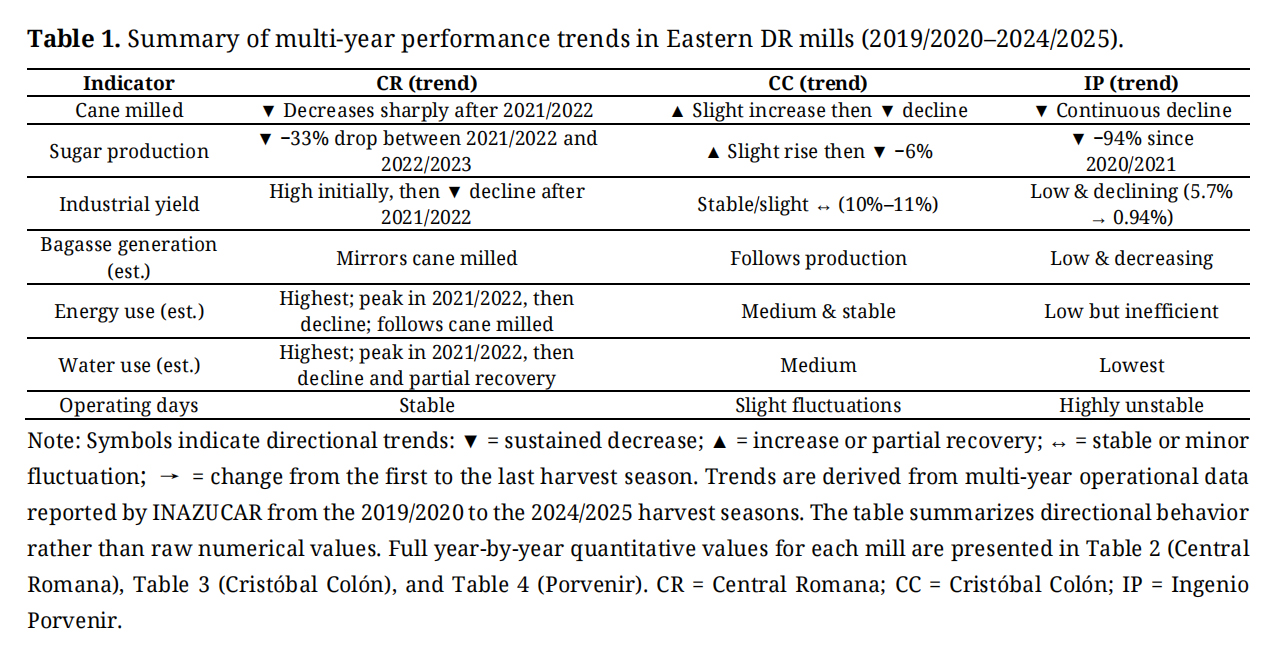 Table 1. Summary of multi-year performance trends in Eastern DR mills (2019/2020–2024/2025).
Central Romana is the largest sugar mill in the eastern region and the one that concentrates the highest industrial capacity in the entire country. The annual data presented in Table 2 show that the mill maintains a higher industrial yield than the other two throughout the period, although that yield falls appreciably after the 2021/2022 harvest.
However, after the 2021/2022 harvest, a steady reduction in both cane milled and sugar produced becomes evident. This decline does not appear to stem from internal inefficiencies, but rather from external factors such as reduced cane availability, strategic adjustments, climatic conditions, or agro-industrial scheduling decisions. Even with this contraction, Central Romana continues to be the mill that mills the most cane, produces the most sugar, and consumes the most resources simply due to its scale. Indicators such as estimated bagasse generation, steam consumption, energy usage, and water use follow the same pattern: they decrease when cane supply falls but remain the highest among the three mills analyzed, which is consistent with the magnitude of its operations. Operating days remain relatively stable each year, showing that the mill maintains operational continuity even when cane supply fluctuates. Although detailed employment data are not available for each season, production patterns confirm that Central Romana remains the primary industrial employer in the Dominican sugar sector. Overall, the multi-year analysis shows a mill operating at a gradually smaller production scale and with a falling industrial yield after 2021/2022, while still the most efficient of the three in conversion terms, highlighting future challenges related to cane availability and operational sustainability.
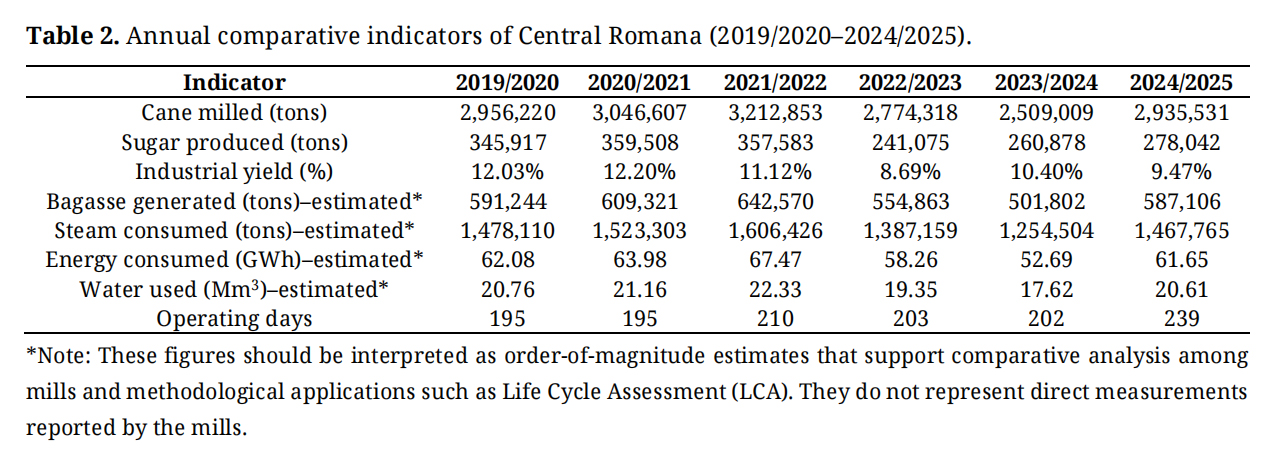 Table 2. Annual comparative indicators of Central Romana (2019/2020–2024/2025).
Cristóbal Colón shows a stable behavior throughout the analyzed period. As shown in Table 3, the mill operates within a very defined pattern: it does not exhibit abrupt jumps or production collapses, but rather moderate variations that are typical of a relatively controlled system. Cane milled remains within a narrow range, with a drop in 2021/2022 followed by a gradual recovery, indicating a flow of raw material that, although dependent on external factors, maintains a certain level of regularity.
Sugar production follows the same logic. The mill consistently remains around 140–150 thousand tons per harvest, confirming that the industrial process stays stable and without signs of operational stress. Industrial yield behaves similarly, staying between 9.56% and 10.66%, a range that reflects a well-calibrated process without significant deterioration in extraction efficiency. By-products and industrial consumption align with this pattern. Bagasse generation closely follows the volume of cane milled, showing the direct relationship between both variables. Steam and energy consumption remain coherent with the mill’s scale and with the stability of its operations; there are no unexpected increases or drops that would suggest internal issues. Water use follows the same behavior, staying within a very similar range year after year, typically between 10 and 11 million cubic meters.
One element that stands out is the increase in operating days during the 2024/2025 harvest, when the mill goes from operating around 180 days to 240 days. This may indicate adjustments in operational programming, an extended milling season, or a strategy to maximize the reception of available cane. Although production does not increase proportionally, it does show a flexible system capable of adapting to changing conditions.
Overall, Cristóbal Colón presents a very particular technical profile: it is not a large-scale mill like Central Romana, and it does not exhibit the structural contraction observed in Porvenir. Its behavior is that of a medium-sized mill that has managed to maintain operational stability, with internal efficiency that remains under control and without signs of structural deterioration. Its main challenge seems to be linked more to cane availability and its ability to sustain or increase competitiveness in the medium term, rather than to failures within the industrial process.
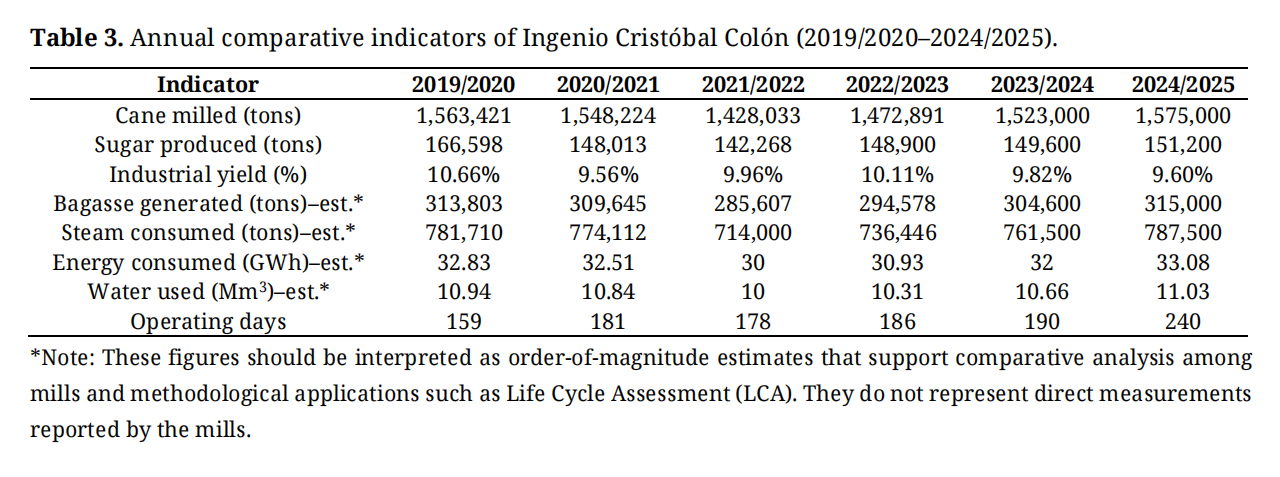 Table 3. Annual comparative indicators of Ingenio Cristóbal Colón (2019/2020–2024/2025).
Porvenir is clearly the mill with the most fragile and uneven behavior during the period analyzed. Table 4 shows that its trajectory from 2019/2020 through 2024/2025 is marked by continuous drops in cane availability, strong fluctuations in sugar output, and a gradual decline in process efficiency. Unlike the other mills, Porvenir has not been able to stabilize its production cycle, and this shows up in very irregular volumes of cane milled and sugar produced.
Sugar production reveals a pronounced downward trend. After reaching 16,393 tons in 2020/2021—its strongest performance during the study period—the mill enters a contraction phase: it falls to 9,045 tons in 2021/2022, recovers slightly in 2022/2023 and 2023/2024, and then experiences a dramatic collapse in 2024/2025, producing only 926 tons. This type of pattern usually reflects structural difficulties in securing sufficient cane, combined with internal limitations that prevent the mill from sustaining a steady industrial process.
Industrial yield follows the same direction. What had been a modest but functional yield between 5.7% and 6.8% during 2019–2021 steadily decreases until it reaches 0.94% in 2024/2025. The extremely low industrial yield recorded in the final season reflects a severe operational contraction driven by a combination of factors: the mill processed less than half of its programmed cane volume—98,183 tons against a planned target of 200,000 tons—largely due to the intense rainfall registered at the start of the harvest season in the eastern region, which reduced the efficiency of mechanized harvesting equipment, limited cane availability, and lowered sucrose concentration in the standing crop [15]. Yields this low are typically associated with severe process discontinuity rather than normal operational variation.
The behavior of by-products and industrial consumption mirrors these conditions. Bagasse generation drops significantly in the last harvest, falling to 19,636 tons—less than half of previous years. Steam use, electricity, and water also decline, not because of efficiency improvements, but simply because the mill is receiving far less cane. Water use, for example, goes from 1.25 million cubic meters in 2019/2020 to only 0.69 million in 2024/2025.
Operating days are also irregular. While the mill operated 188 days in 2020/2021 and again in 2024/2025, other years show much shorter seasons, signaling difficulties in keeping a consistent milling schedule. This kind of instability is common in mills highly dependent on external cane supply or with mechanical limitations that affect continuous operation.
Overall, Porvenir shows a profile with significant structural constraints. Its small scale, unstable cane supply, and the deterioration of industrial efficiency place it in a vulnerable position compared to Central Romana and Cristóbal Colón. While one is reducing scale but remains efficient, and the other maintains stable technical performance, Porvenir shows a buildup of weaknesses that directly affects its competitiveness. Its long-term viability will depend on improving cane management, strengthening its operational capacity, and modernizing key aspects of its industrial process.
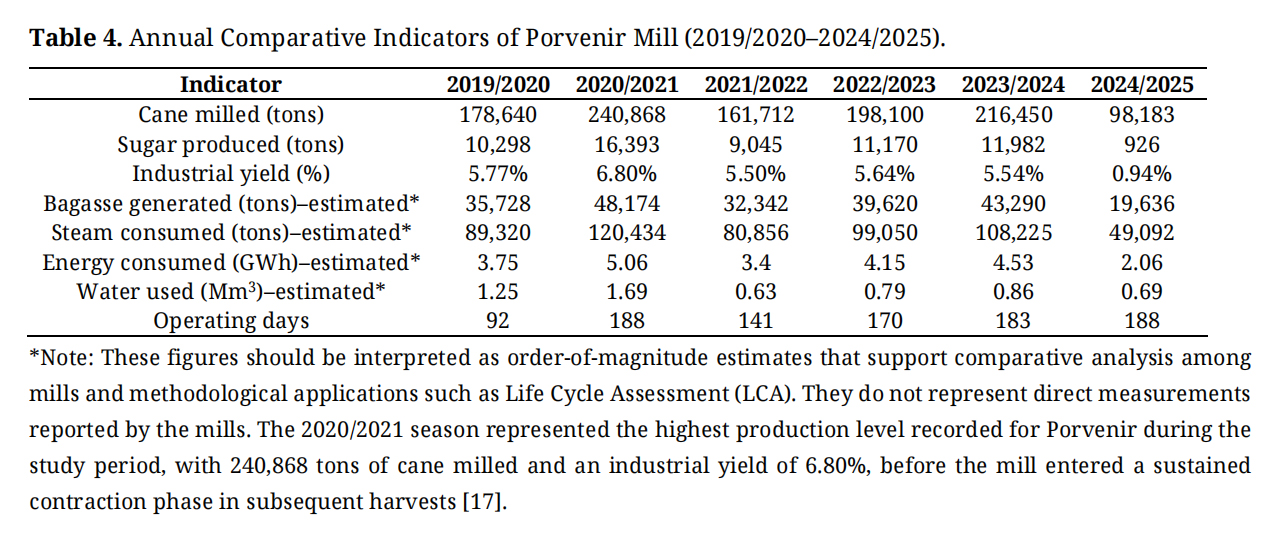 Table 4. Annual Comparative Indicators of Porvenir Mill (2019/2020–2024/2025).
The divergent trajectories described in Sections Comparative Performance Analysis of the Mills and Individual Mill Performance Profiles are summarized graphically in Figures 1–4. Figures 1 and 2 show multi-year sugar production and industrial yield for the three mills. Figures 3 and 4 show water and energy consumption trends respectively. These figures highlight the structural differences among mills that are analyzed statistically in Section Statistical Evaluation of Differences among Mills (ANOVA).
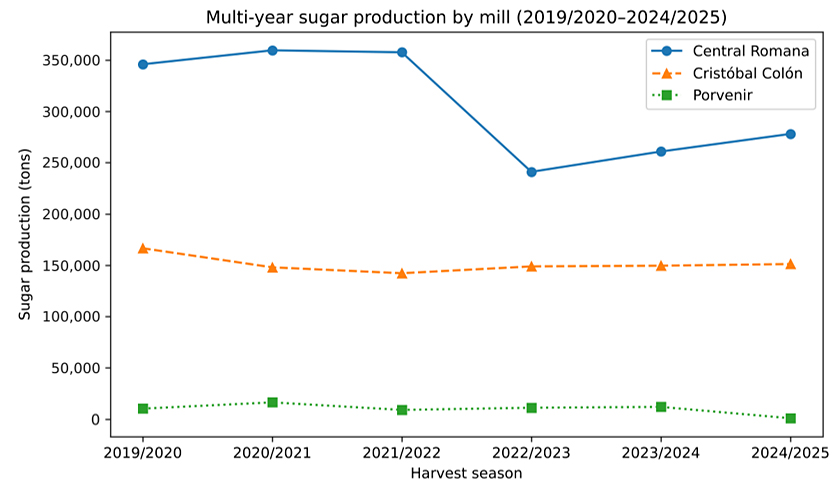 Figure 1.
Multi-year sugar production (tons) for Central Romana, Cristóbal Colón, and Porvenir during the 2019/2020–2024/2025 harvest seasons. Central Romana shows a sharp contraction after 2021/2022; Cristóbal Colón maintains relatively stable output; Porvenir exhibits pronounced instability and a production collapse in 2024/2025.
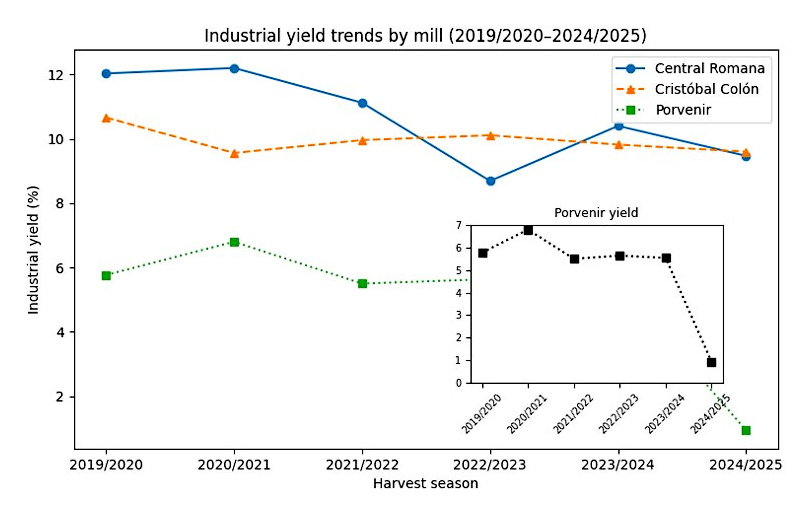 Figure 2.
Industrial yield (%) trends for Central Romana, Cristóbal Colón, and Porvenir during the 2019/2020–2024/2025 harvest seasons. Note: The inset highlights the yield trajectory of Porvenir due to its substantially lower values relative to the other two mills.
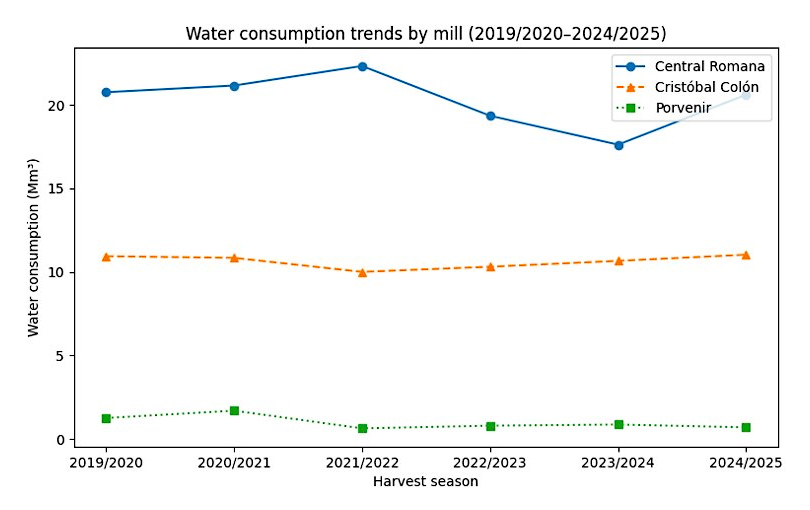 Figure 3.
Water consumption trends for Central Romana, Cristóbal Colón, and Porvenir during the 2019/2020–2024/2025 harvest seasons.
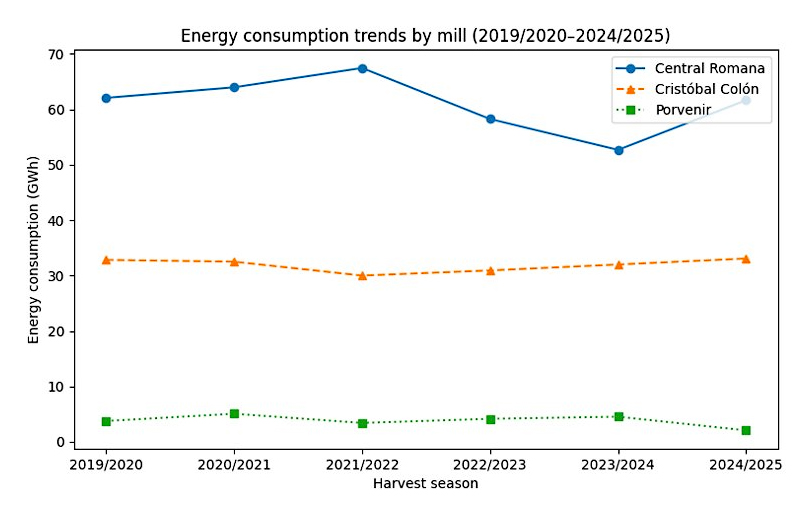 Figure 4.
Energy consumption trends for Central Romana, Cristóbal Colón, and Porvenir during the 2019/2020–2024/2025 harvest seasons. Note: Water and energy consumption values represent estimated annual totals derived from operational data and are used for comparative trend analysis.
To complement the quantitative results, official documents, technical notes, and insights gathered through semi-structured interviews with mill staff and environmental specialists were reviewed and analyzed through thematic content analysis. Recurring themes were grouped into four categories: operational performance, resource management, environmental challenges, and structural constraints. The following synthesis presents the most representative findings from each category, illustrating the contextual factors that explain the quantitative patterns documented in Section Quantitative Analysis. Direct quotations have been translated from Spanish and anonymized; participant codes reflect professional role (E = engineer/technical staff, M = manager/director, S = safety and occupational health personnel) and mill affiliation (CR = Central Romana, CC = Cristóbal Colón, IP = Porvenir).
Resource management and energy performance. Participants across all three mills acknowledged the central role of bagasse combustion in meeting internal energy needs, a practice that reduces external energy dependency and contributes to SDG 7 objectives. However, a recurring concern was the management of combustion residues. As one technical participant noted: “The ash from the boilers is a persistent problem. We generate more than we can handle, and storage space during peak harvest periods becomes a real limitation” (E-CR). This aligns with the quantitative finding that Central Romana’s scale generates the highest absolute by-product volumes in the region. Regarding water management, multiple participants confirmed that real-time monitoring of industrial effluents is limited, making it difficult to detect discharge anomalies during peak milling periods: “We monitor at fixed intervals, but during intensive milling we do not always have visibility into what is leaving the plant in real time” (E-CC). Operational challenges and structural differences. The operational differences documented in the quantitative data were consistently reflected in the interview evidence. At Porvenir, participants identified a convergence of constraints: “The main problem here is getting enough cane. When the harvest is disrupted by rain, we cannot make up the volume because there is no buffer—the supply chain is too fragile” (M-IP). Equipment reliability was also raised as a critical factor: “Unplanned stoppages are frequent, and every hour we are not milling is cane we cannot recover” (E-IP). In contrast, participants at Cristóbal Colón described a more stable operational environment: “Our process is predictable. We know our yields, we know our equipment, and we plan accordingly” (E-CC). At Central Romana, the most frequently cited concern was the decline in available cane, linked to climate variability and field management pressures: “The fields have become less reliable. Weather affects the harvest calendar, and we end up with more operating days but less cane than projected” (M-CR). Sustainability and structural barriers. Across all mills, participants identified the absence of standardized environmental monitoring as the primary barrier to improved sustainability performance: “There are no unified reporting requirements for water or energy consumption. Each mill does what it can internally, but there is no benchmark to compare against or regulatory framework to follow” (M-CR). The absence of such standards directly limits the sector’s capacity to demonstrate progress toward SDG 12 targets and to participate in international sustainability benchmarking exercises.
Taken together, these qualitative insights confirm that each mill operates under structurally different conditions that the quantitative data alone cannot fully explain. The thematic analysis reveals a consistent pattern: resource management challenges are present across all mills but manifest differently depending on scale and operational maturity; structural and supply-side constraints are the primary drivers of performance divergence; and the absence of standardized environmental reporting is a sector-wide limitation that affects all three operations. These findings reinforce the study’s central conclusion that sustainability strategies must be differentiated by mill profile rather than applied uniformly across the sector.
The multi-year patterns observed across the three mills in the eastern Dominican Republic are broadly consistent with trends documented in other sugar-producing regions, yet they also reveal dynamics that are specific to the Caribbean context and that have not previously been captured in the literature.
The positive relationship between production scale and resource consumption observed in this study aligns with findings from Brazil and India, where larger mills consistently show higher absolute water and energy use even when their per-unit efficiency is comparable to smaller operations [2,10]. Central Romana’s profile, combining high industrial yield with elevated resource consumption, mirrors this pattern and confirms that scale-driven environmental pressure is not exclusive to the largest sugar industries in the world but is also present in Caribbean operations of regional significance.
The stability observed in Cristóbal Colón over six consecutive seasons is consistent with what Lima and Beacorn (2022) [1] describe as a balanced agro-industrial model, where moderate production volumes and controlled process management allow mills to maintain competitive efficiency without the volatility associated with rapid expansion or contraction. This type of operational profile has been associated with better long-term sustainability outcomes in comparative studies of mid-scale sugar operations.
Porvenir’s trajectory reflects a pattern of structural decline that has been documented in smaller sugar mills across several regions when cane supply instability combines with aging infrastructure and limited investment capacity [12,13]. The near-collapse of industrial yield in the 2024/2025 season, driven in part by intense rainfall that reduced harvesting efficiency and sucrose concentration in the standing crop [15], illustrates how climate variability can amplify pre-existing structural vulnerabilities in small-scale operations, a dynamic that Renouf et al. (2013) [4] identified as a key risk factor in life cycle assessments of sugarcane production systems.
The application of LCA-based frameworks to the Dominican sugar industry, as demonstrated in Cedano et al. (2024) [9], established that environmental and energy burdens in this sector can be systematically quantified. The present study extends that foundation by providing a multi-year, multi-mill comparative perspective that was previously unavailable for this context.
Production Scale, Industrial Yield, and Operational DivergenceThe three mills follow structurally different trajectories that cannot be explained by a single regional factor. Central Romana’s sustained contraction in cane supply after 2021/2022, accompanied by a decline in industrial yield from 2022/2023 onward, suggests that its primary constraint is not process efficiency but rather the availability and scheduling of raw material, a challenge consistent with the climatic variability and field management pressures reported by technicians during the interviews. This finding is relevant because it shifts the focus of sustainability improvement from industrial optimization toward upstream supply chain management and cane field resilience.
Cristóbal Colón’s narrow and stable yield range throughout the study period, between 9.56% and 10.66%, reflects a well-calibrated industrial process that has been maintained consistently across varying cane supply conditions. The extension of its operating season to 240 days in 2024/2025 without a proportional increase in sugar output suggests that the mill is already operating close to its processing efficiency ceiling, and that future gains will depend more on improvements in cane quality and supply regularity than on internal process adjustments.
Porvenir’s progressive decline in industrial yield, from approximately 6.8% in 2020/2021 to 0.94% in 2024/2025, represents a structurally different situation. This trajectory reflects the cumulative effect of limited cane availability, equipment constraints, and climate-related disruptions on a mill that lacks the scale and resource buffer to absorb these shocks. The two-factor ANOVA confirms that the Mill effect is statistically significant. The Mill × Year interaction cannot be tested on its own in this design, since it serves as the error term. The annual series still show that the three operations are not simply at different points on the same trajectory: Central Romana contracts after 2021/2022, Cristóbal Colón stays within a narrow band throughout, and Porvenir declines season after season. This divergence is reported here as a descriptive observation.
As shown in Figure 1 (Section Multi-Year Production, Yield, and Resource Consumption Trajectories), the three mills follow markedly different production trajectories. Central Romana shows a sharp contraction after the 2021/2022 harvest, Cristóbal Colón maintains a relatively stable output throughout the study period, and Porvenir exhibits pronounced instability, culminating in a production collapse during the 2024/2025 harvest.
Resource Use and Sustainability ImplicationsThe resource consumption patterns observed in this study confirm that sustainability challenges differ fundamentally across the three mills and cannot be addressed through a uniform sectoral policy. Estimated water and energy consumption trends for all three mills across the six harvest seasons are shown in Figures 3 and 4, respectively. These patterns carry direct implications for the sector’s alignment with the United Nations Sustainable Development Goals, particularly SDG 6 (clean water and sanitation), SDG 7 (affordable and clean energy), SDG 9 (industry, innovation, and infrastructure), and SDG 12 (responsible consumption and production).
Central Romana’s water and energy use, while declining in absolute terms after 2021/2022, remain the highest in the region due to the mill’s scale. From an SDG 9 perspective, the mill’s installed capacity and technical infrastructure create favorable conditions for targeted investments in closed-loop water systems, bagasse valorization, and effluent monitoring—interventions well-documented in the literature for mills of comparable scale [10,11]. From an SDG 12 perspective, the qualitative evidence indicates that ash accumulation from bagasse combustion and the management of industrial effluents are areas where improvements are both needed and feasible, representing concrete opportunities to move toward more responsible production practices.
For Cristóbal Colón, the stability of its resource consumption profile suggests that incremental modernization is the appropriate strategy. Its predictable consumption patterns create favorable conditions for introducing efficiency improvements gradually, including condensate recovery and optimization of steam use, as documented in similar mid-scale operations [12].
For Porvenir, the priority is not resource efficiency in the conventional sense but operational stabilization. The reduction in water, electricity, and steam consumption observed in recent seasons reflects declining activity rather than efficiency gains, a distinction that is critical for policy design. Without first stabilizing cane supply and restoring basic operational continuity, investments in efficiency improvements are unlikely to yield meaningful results.
Normalized Resource IndicatorsNormalizing the resource indicators leads to two observations. Expressed per ton of cane milled, the four estimated indicators are identical across the three mills, because all of them were derived from cane throughput using the common conversion factors declared in Section Estimation of Resource Consumption Indicators. They therefore cannot discriminate between mills on this basis. Expressed per ton of sugar produced, each indicator becomes the corresponding factor divided by the industrial yield of the mill, so all four reproduce the yield ranking exactly and in the same proportion: Porvenir requires 2.12 times the resources per ton of sugar of Central Romana, and Cristóbal Colón 1.07 times, for water, energy, steam, and bagasse alike. The one indicator that varies independently between mills is therefore the quantity of sugar obtained per ton of cane, that is, the industrial yield, which is analyzed in Panel B of Table 5. This is a useful constraint on the interpretation: differences in absolute resource consumption reflect scale, differences in resource use per ton of product reflect conversion efficiency, and only the second says anything about operational performance. These normalized indicators are summarized in Table 6.
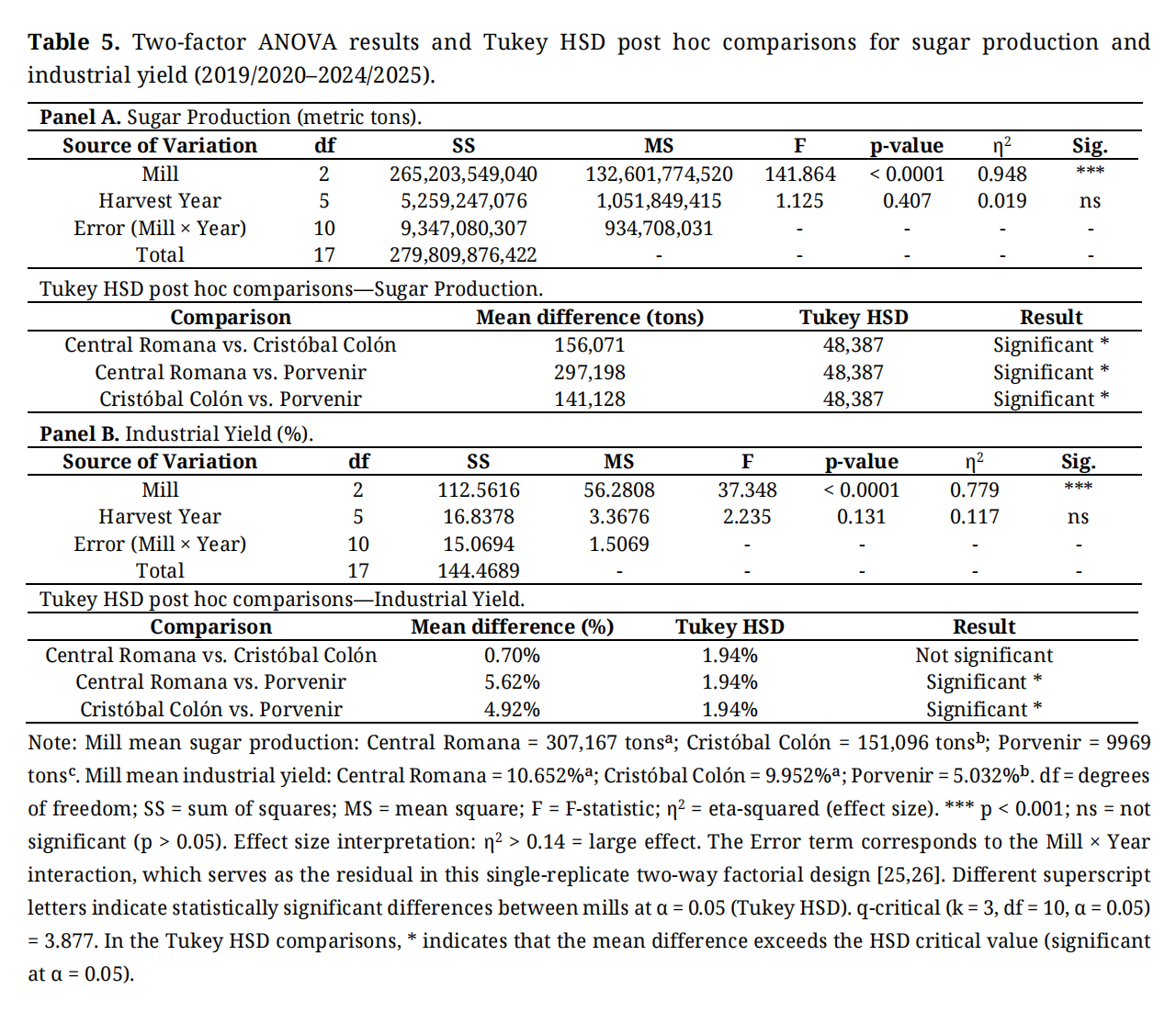 Table 5.
Two-factor ANOVA results and Tukey HSD post hoc comparisons for sugar production and industrial yield (2019/2020–2024/2025).
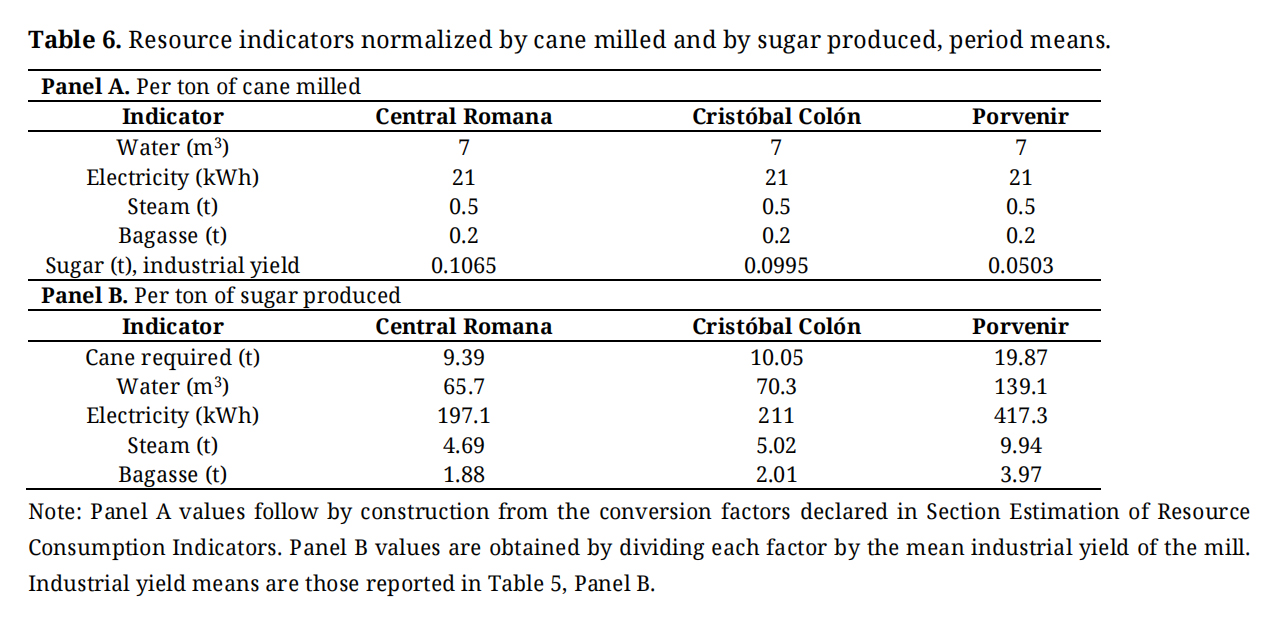 Table 6. Resource indicators normalized by cane milled and by sugar produced, period means.
These findings carry direct implications for the design of sustainability and modernization strategies in the Dominican sugar sector. The divergent trajectories of the three mills show that differentiated, mill-specific approaches are necessary. Large mills facing scale-driven resource pressure require strategies focused on by-product management, water recycling, and supply chain resilience. Mid-scale mills operating near their efficiency ceiling benefit most from gradual technological upgrades and cane quality improvements. Smaller mills in structural decline require prior stabilization of their operational base before efficiency-oriented interventions can be meaningful.
At the sectoral level, the absence of standardized resource consumption reporting across Dominican mills, which required the use of estimated indicators in this study, represents a significant gap that limits the country’s ability to monitor environmental performance over time and to compare its sector with international benchmarks. Establishing systematic data collection protocols at the mill level would substantially strengthen the evidence base for future sustainability assessments and policy decisions.
Statistical Evaluation of Differences Among Mills (ANOVA)Two-factor ANOVA is a standard statistical approach for comparing performance across multiple factors and time periods and has been widely applied in agro-industrial and environmental assessments [4,25]. To validate whether the differences observed among the mills are statistically meaningful, a two-factor ANOVA (Mill + Year) was applied using data from the 2019/2020–2024/2025 harvests.
The results confirm that the Mill effect is statistically significant for both sugar production (F = 141.864, p < 0.0001, η2 = 0.948) and industrial yield (F = 37.348, p < 0.0001, η2 = 0.779). The Mill factor accounted for 94.8% of the total sum of squares for sugar production and 77.9% for industrial yield. Since the study is observational and the three mills differ widely in scale, these proportions describe how the variability is partitioned in this model, and they should not be read as a causal attribution.
Both represent large effects by conventional criteria (η2 > 0.14). The Harvest Year effect was not statistically significant for either variable (sugar production: p = 0.407; industrial yield: p = 0.131), suggesting that year-to-year variation was secondary to the fixed structural differences among mills. The ANOVA results and Tukey HSD post hoc comparisons are presented in Table 5.
Post-hoc Tukey comparisons confirm that all three mills differ significantly from one another in sugar production. For industrial yield, Central Romana and Cristóbal Colón do not differ significantly from each other (mean difference = 0.700%, below the HSD threshold of 1.943%), but both differ significantly from Porvenir, whose mean yield of 5.032% is substantially lower than Central Romana (10.652%) and Cristóbal Colón (9.952%). From a methodological perspective, these results reinforce the descriptive interpretation: each mill operates under distinct structural and operational conditions, and therefore modernization, sustainability, and process optimization policies must be mill-specific rather than uniform.
These patterns are illustrated in Figure 5A,B, where observed annual values are displayed for each Mill × Year combination. The non-parallel trajectories across mills illustrate the divergence described in Section Production Scale, Industrial Yield, and Operational Divergence and were not tested statistically.
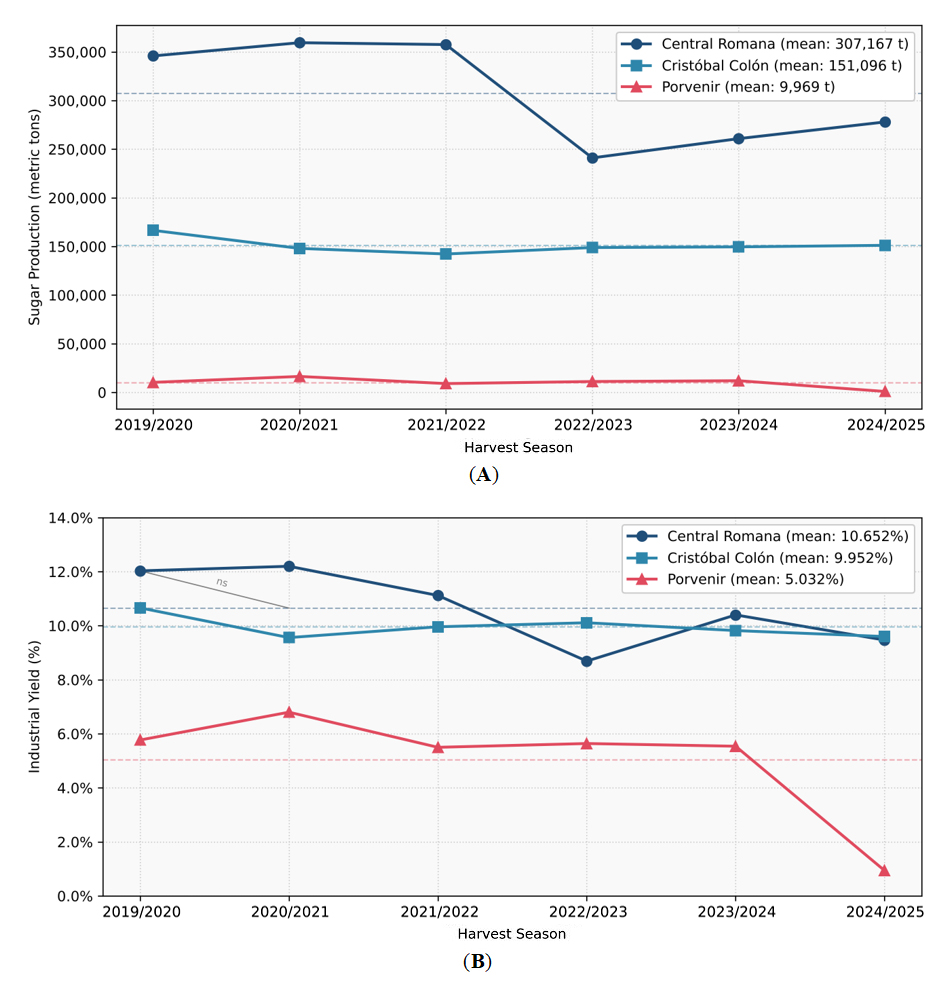 Figure 5.
(A) Interaction Plot (Mill × Year): Sugar Production. Two-factor ANOVA—F(Mill) = 141.864, p < 0.0001. (B) Interaction Plot (Mill × Year): Industrial Yield. Two-factor ANOVA—F(Mill) = 37.348, p < 0.0001. Note: Values represent observed annual outcomes for each Mill × Year combination (one value per cell). Dashed lines represent mill mean values. Tukey HSD comparisons indicate that Central Romana and Cristóbal Colón do not differ significantly from each other in industrial yield, but both differ significantly from Porvenir (mean difference > HSD threshold of 1.943%).
Several limitations of this study should be acknowledged. Resource consumption indicators for water, energy, steam, and bagasse were estimated using conversion factors from the literature rather than measured directly, as standardized mill-level reporting is not currently available in the Dominican Republic. While the factors applied are consistent with values used in comparable agro-industrial assessments, the resulting figures should be interpreted as order-of-magnitude estimates rather than precise measurements.
A further limitation follows from the estimation procedure itself. Because the water, energy, steam, and bagasse indicators were derived from cane milled using conversion factors held constant across mills and seasons, their absolute values are determined mechanically by cane throughput. They describe the scale of resource use and how it has changed over time, but they cannot work as independent indicators of resource efficiency, and no such inference is drawn from them in this study. The one indicator that reflects conversion performance independently of these assumptions is the industrial yield.
The dataset consists of one observation per Mill × Year combination, which is the natural structure of aggregate annual reporting at the mill level. This precludes independent error estimation within the ANOVA framework and limits the analysis to a comparative inferential approach rather than a fully replicated experimental design. The results are therefore most appropriately interpreted as evidence of structural differences among mills rather than as precise effect size estimates.
Although semi-structured interviews provided valuable contextual information, the qualitative component of this study was limited to professionals directly involved in mill operations. Perspectives from cane growers, environmental regulators, and rural communities would enrich the analysis and are recommended for future research.
Finally, the study covers the eastern region of the Dominican Republic exclusively and does not include the Barahona mill, which operates in a different agro-climatic zone. Extending this type of multi-year assessment to include all active mills in the country would provide a more complete picture of the national sugar sector’s sustainability trajectory.
This study set out to do something that had not been done before for the Dominican sugar sector: compare the sustainability and resource efficiency performance of all three large-scale mills operating in the eastern region across six consecutive harvest seasons, combining production data with qualitative evidence from interviews and official reports. The results show clearly that the three mills do not share a common trajectory, and that understanding why requires looking at each one on its own terms.
The two-factor ANOVA confirms what the data already suggested visually: the differences among mills are statistically significant. The design does not allow the Mill × Year interaction to be tested, but the annual series show that the three mills have also followed different paths over time. Central Romana, Cristóbal Colón, and Porvenir are not simply at different points on the same path. They are following structurally different paths altogether.
Central Romana is the largest mill and the one that concentrates the most production, the most resource consumption, and the most environmental pressure in the region. Its industrial yields have remained relatively solid over the years, which means the problem is not internal efficiency. The problem is what happens before the cane reaches the mill: availability, climatic variability, and field scheduling. That is where the real sustainability challenge lies for a mill of this scale, and that is where improvement efforts need to focus.
Cristóbal Colón is the most stable of the three. Its production, its industrial yield, and its resource use have stayed within a consistent range across all six seasons, which is not easy to maintain when cane supply fluctuates and external conditions keep changing. This mill represents what a balanced operational model looks like in this context, and its main challenge going forward is keeping that stability as competitive pressures grow.
Porvenir is the most concerning case. Its performance has declined continuously, and the 2024/2025 season brought a near-collapse of industrial yield to 0.94%, driven by a combination of structural limitations and the impact of intense rainfall on harvesting efficiency and sucrose concentration in the standing crop [15]. The reduction in its environmental footprint is not a sign of efficiency; it is a sign of declining activity. Before any efficiency-oriented strategy can work for this mill, the operational base and cane supply need to be stabilized first.
What all of this means for the sector is straightforward: a uniform sustainability policy—one that prescribes the same resource management targets, modernization investments, and environmental monitoring requirements for all mills regardless of their operational profile—will not work here. Large mills need strategies built around resource efficiency, by-product valorization, and supply chain resilience. Mid-scale mills benefit from gradual modernization that does not disrupt the stability they have already achieved. Smaller mills need structural intervention before anything else.
This study builds on the LCA-based work of Cedano et al. (2024) [9] for the Dominican sugar industry and extends it by providing the multi-year, multi-mill comparative perspective that was missing. The six-season timeframe makes it possible to see structural trends that a single year of data would never reveal. The research generates evidence that did not exist before for this context and offers a concrete foundation for the mill-specific policies and technical decisions that the Dominican and Caribbean sugar sector needs to move forward. From a sustainability systems perspective, the findings demonstrate that effective alignment with SDG 9 (industry innovation) and SDG 12 (responsible production) in the Dominican sugar sector requires differentiated, mill-specific interventions rather than uniform sectoral mandates. This principle—that sustainability policy must match the structural reality of each productive unit—is applicable to other agro-industrial sectors in the Caribbean and the broader tropical region where productive capacity, resource access, and institutional support vary substantially across operations of different scales. The approach used here could be extended to the Caribbean as a whole. Placing the national and regional sugar industries within the global technological, commercial, and sustainability frame would allow their performance to be compared against international practice and would support the design of strategies to raise competitiveness and to reverse declines of the kind documented here for Porvenir.
The following supplementary material is available online: Table S1: Semi-structured interview guide/Guía de entrevistas semi-estructuradas.
The production data used in this study are publicly available through the official annual harvest reports published by the Dominican Sugar Institute (INAZUCAR), available at https://web.archive.org/web/20260108164703/https://www.inazucar.gov.do/, and through the USDA Foreign Agricultural Service Sugar Annual reports for the Dominican Republic, available at https://www.fas.usda.gov/data/gain/2024/04/dominican-republic-sugar-annual. Qualitative data obtained through semi-structured interviews are not publicly available due to the confidential nature of the information provided by participants; anonymized thematic summaries are available from the corresponding author upon reasonable request. No custom code or proprietary software was used in this study. Statistical analyses were performed using standard two-factor ANOVA procedures as described in the MATERIALS AND METHODS section.
DCC: Conceptualization, data collection, formal analysis, methodology, writing–original draft, and writing–review and editing. MJB-C: Supervision, writing–review and editing. RV-C: Supervision, writing–review and editing.
The authors declare that they have no conflict of interest.
This research received no external funding.
1.
2.
3.
4.
5.
6.
7.
8.
9.
10.
11.
12.
13.
14.
15.
16.
17.
18.
19.
20.
21.
22.
23.
24.
25.
26.
27.
28.
29.
Cedano DC, Bastante-Ceca MJ, Viñoles-Cebolla R. Multi-year Operational Divergence and Resource Efficiency in Dominican Republic Sugar Mills: A Mixed-Methods Comparative Analysis. J Sustain Res. 2026;8(4):e260085. https://doi.org/10.20900/jsr20260085.

Copyright © Hapres Co., Ltd. Privacy Policy | Terms and Conditions


